There are some songwriters who come up with a title first, then write the song to go with it. This song is the only song I ever wrote that way. The title was a typo.
Back in the Fall of 2003, I received a brochure in the mail for an upcoming concert series at a nearby venue. On the page of the brochure with the information about how one could order tickets to a show, there was a careful explanation that “members” would be given first choice of seats, those buying season tickets would be next in line and then “remaining seas” would be available to the general public after such and such a date.
“Remaining seas.”
Hmm.
Here’s what I came up with.
(If you’re new to this, click on the blue line below – it is a link to a recording of the song – and… wait for it!)
Disc records were commercially produced starting in 1901. In 1910, a diameter of ten inches was established as the standard size and in 1925, the playing speed of 78 revolutions per minute became the norm. These mediums for analog sound storage, now known as “78’s,” were thick and heavy and made of a brittle, shellac-based compound.
The “LP” (long-playing) record was introduced by Columbia Records in June of 1948.
This new record was made of polyvinyl chloride, measured 12 inches in diameter and was meant to be played at a speed of 33 and 1/3 rpm. The lightweight, somewhat-flexible vinyl disc was inscribed with a spiral groove that was only .003 inches wide. This new “microgroove technology” allowed for up to 22 1/2 minutes of music to be stored on each side of the disc.
Since a 78 could contain only about 3 1/2 minutes of music per side, the longer playing time of the new LP became one of its major selling points.
In February, 1949, RCA (Radio Corporation of America) Records introduced the 7-inch, 45-rpm record that became known as the “single.”
This new disc was also made of vinyl and used microgroove technology. RCA proclaimed that the faster playing speed made for a better sounding record than the 33 1/3 rpm LP, even though the “45” could hold only the same amount of music per side as a 78.
In 1952, RCA took the 7-inch, 45-rpm record one step further by figuring out how to fit up to 7 1/2 minutes of music per side. This “extended play” disc became known as the EP.
EP’s were very popular in the United Kingdom throughout the 1950’s and 1960’s. They were not so popular in the United States and thus not so easy to obtain, but nevertheless, I have three EP’s in my record collection.
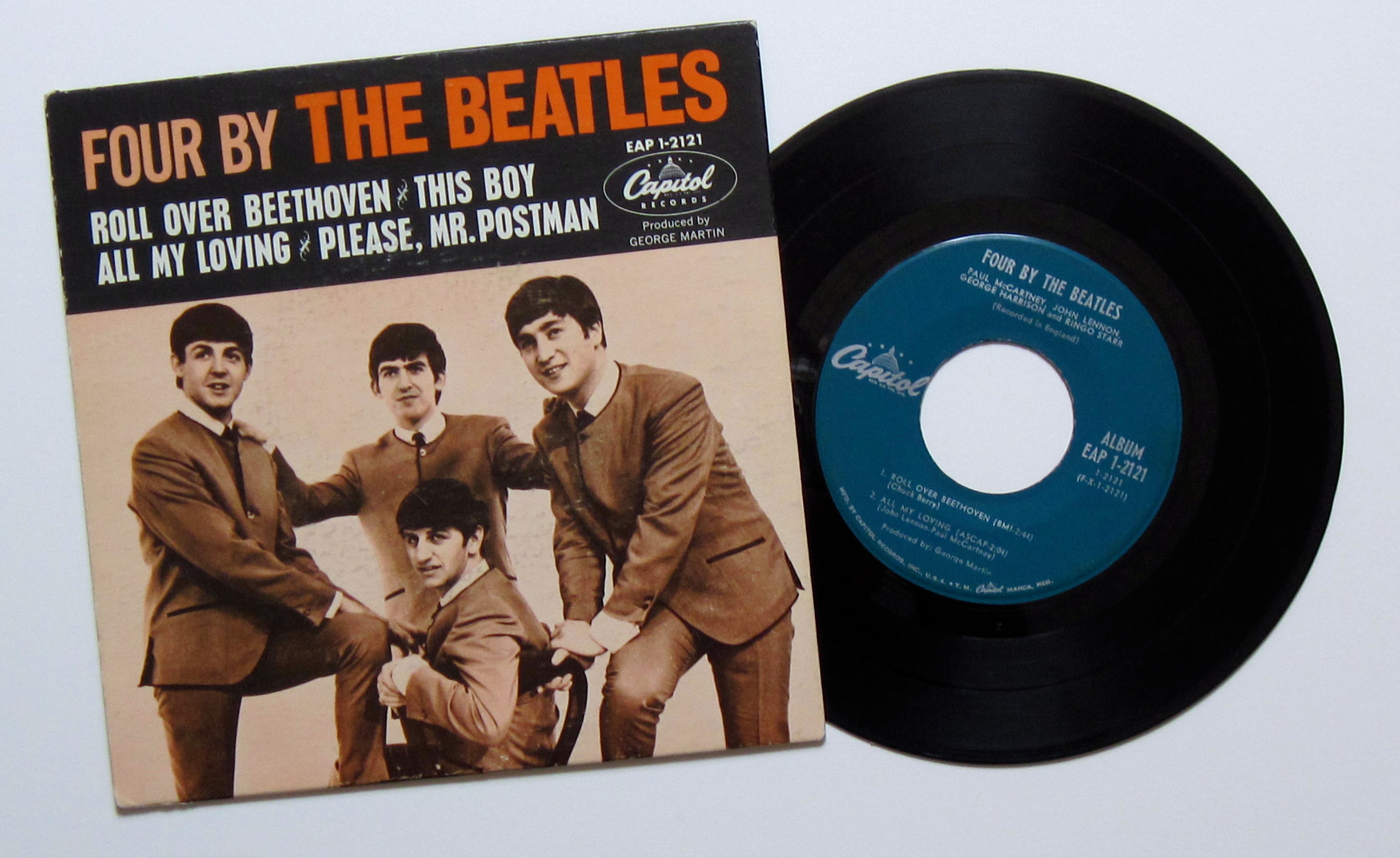
The first EP that I purchased was called Four By The Beatles.
Released on May 11, 1964, it was one of only two Beatles’ EP’s produced by Capitol Records in the US. (In the UK, EMI records released a total of 21 EP’s of music by The Beatles. Four By the Beatles was the 7th.) Side one contains “Roll Over Beethoven” and “This Boy.” Side two holds “All My Loving” and “Please, Mr. Postman.” All four tracks are studio recordings; two of them are The Beatles’ cover versions of songs by American R&B artists.
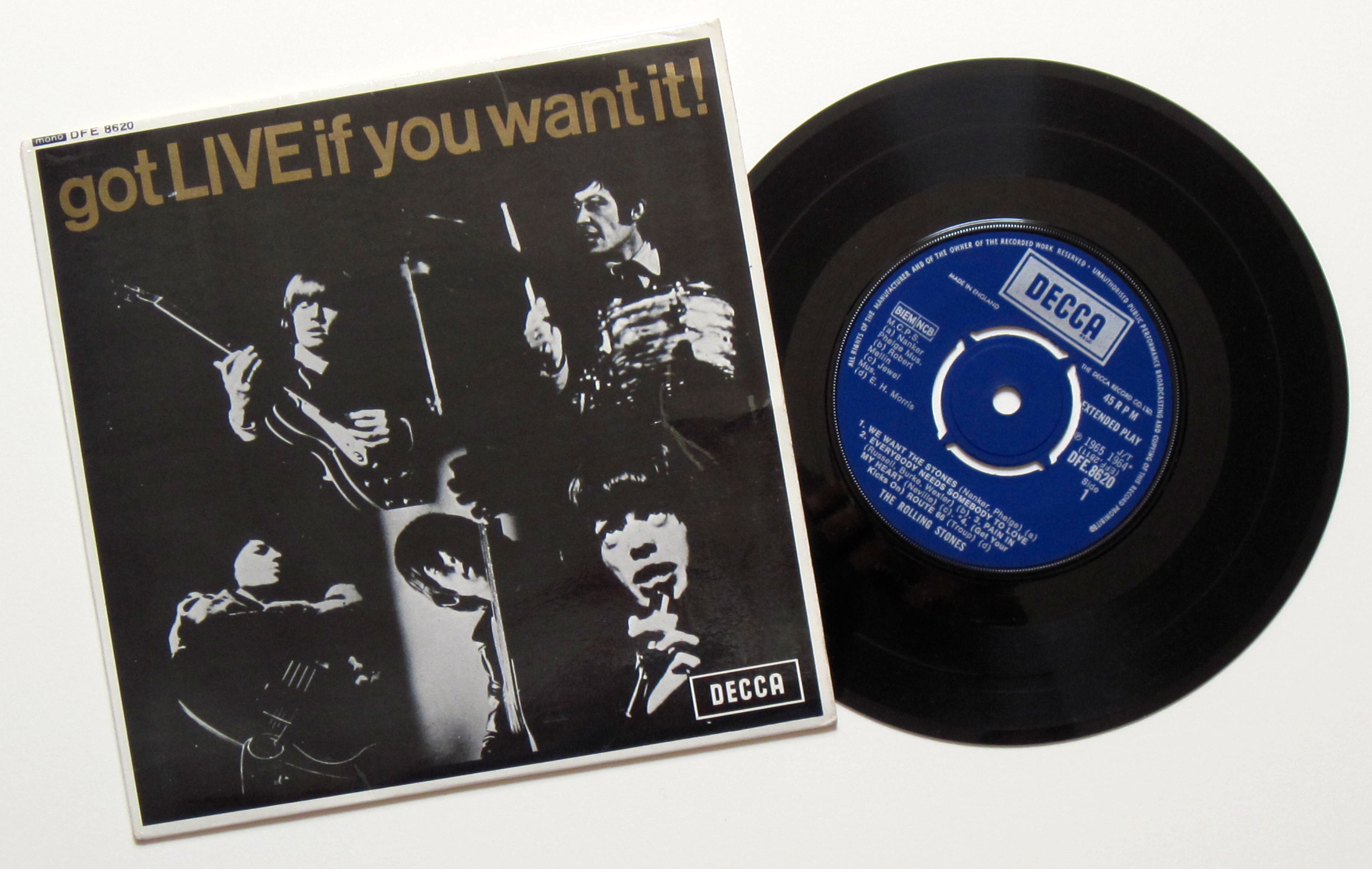
The second EP that I added to my collection was got LIVE if you want it! by The Rolling Stones.
Released on June 11, 1965 by England’s Decca Records, the EP contains six “live, in-concert” recordings. “We Want The Stones,” “Everybody Needs Somebody To Love,” “Pain In My Heart” and “(Get Your Kicks On) Route 66” fill up side one. “I’m Moving On” and “I’m Alright” take up side two. Four of these are The Stones’ cover versions of songs by American artists. I heard the version of “(Get Your Kicks On) Route 66” from this EP one night in a record store in Cambridge, MA and just had to have it.
The last EP I bought was The Pink Parker by Graham Parker & The Rumour.
Released in the UK in early 1977, the EP followed hot on the heels of the band’s second LP – and my favorite – Heat Treatment. (That album came out in October, 1976.)
The Pink Parker contains two studio tracks – recorded “somewhere in Germany” – on side one: “Hold Back The Night” and “(Let Me Get) Sweet On You.” Side two has live recordings of “White Honey” and “Soul Shoes,” songs from Graham Parker & The Rumour’s first album, Howling Wind (July 1976).
The Pink Parker was a Top-30 hit on the British charts in March, 1977.
“Hold Back The Night” is a song originally written and recorded by The Trammps – an American Disco/Soul band that were together from 1973 to 1980. Originally released in 1973, “Hold Back The Night” became an international hit upon its re-release in 1975. The Trammps are best known for their song “Disco Inferno” thanks to its inclusion in the soundtrack to the movie Saturday Night Fever.
Graham Parker & The Rumour’sjoyous cover version of this lyrically rather sad and despondent song is high on my list of “you absolutely cannot resist dancing around the living room when this one’s playing” records.
Check it out for yourself!
The musicians on that recording are: Graham Parker, lead vocals; Bob Andrews, keyboards & backing vocals; Brinsley Schwarz, guitar & backing vocals; Stephen Goulding, drums; Andrew Bodnar, bass guitar; Martin Belmont, guitar & backing vocals; and special guest, Thin Lizzy guitarist Brian Robertson.
Recently rediscovering this EP and the Heat Treatment LP has reminded me what a big fan of Graham Parker & The Rumour I had been back in my younger days.
I fondly remember the night – Sunday, October 23, 1977, to be precise – when my girlfriend (now wife) and I hopped into my 1972 Karmann Ghia and drove from our apartment in downtown Exeter, NH to a concert at the Orpheum Theater in Boston, MA. Graham Parker & The Rumour were the opening act for Thin Lizzy, a British band riding high on their hit song, “The Boy’s Are Back In Town.” After Graham Parker & The Rumour’s exultant, rocking-to-the-rafters, 45 minute set, we left and quite contentedly drove home.
Ah, records… and cover versions… and British Rock & Roll bands…
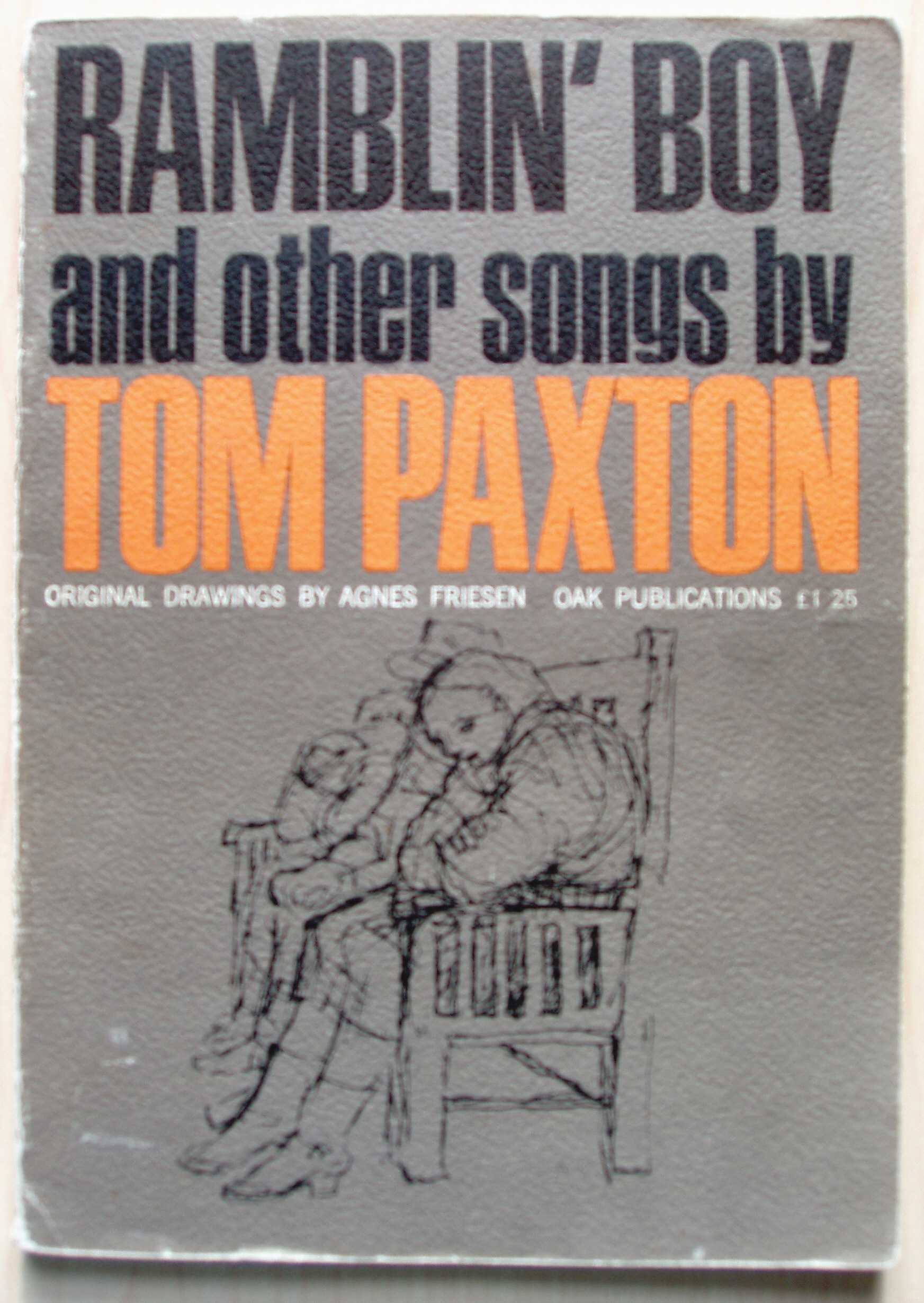
In the summer of 1970, I bought my first guitar – a chocolate-brown Harmony steel-string acoustic – and a songbook: Ramblin’ Boy and other songs by Tom Paxton.
The only song in that slender 1964 Oak Publications publication that I recognized was on page 38-39, in the chapter titled Children’s Songs. The song was “My Dog’s Bigger Than Your Dog.”
Here’s why I knew it.
That 1964 Ken-L-Ration dog food commercial ran so often that anyone (including my then-10-year-old self) who watched TV at all back then soon had “My dog’s better than your dog…” permanently ingrained in his/her brain. I’d never thought about who wrote the song until I bought that Tom Paxton songbook.
Tom Paxton recorded the song in 1962 on his first LP, I’m The Man That Built The Bridges. The album was an independently produced collection of live recordings done at the Gaslight Cafe in New York City’s Greenwich Village.
Here’s “My Dog’s Bigger…” from that album.
Having learned “My Dog’s Bigger Than Your Dog” from the transcription in Mr. Paxton’s songbook, I found the Gaslight Cafe recording rather surprising the first time I listened to it. Where were all the verses?
In the songbook, there are eight verses, arranged in pairs. The second of each pair is an “Answering Verse” to the first, like two kids going back and forth, trying to one-up each other.
“My dog’s bigger…” is answered with “My dog’s better…” (“His name is King and he had puppies”)
“My Dad’s tougher…” is answered with “My Dad’s louder…”
“Our car’s faster…” is answered with “Our car’s older…” (“It stops running and Daddy kicks the fenders.”)
“My Mom’s older…” (“She takes smelly baths, she hides the gray hairs.”) is answered with “My Mom’s funnier…”
I loved those verses and whenever I would perform the song, I’d sing all of them, doing a different “voice” for each “kid.”
Mr. Paxton did not record “My Dog’s Bigger Than Your Dog” again until 1974 when he recorded an album called The Tom Paxton Children’s Songbook for a British record company. (This album was released stateside in 1984 by Flying Fish Records and re-titled The Marvelous Toy & Other Gallimaufry.)
In the 1974 version, Mr. Paxton again only sings four of the verses, one of each pair, and the chorus. (“I’m not afraid of the dark anymore, I can tie my shoes…”) He also adds a kid-like “nyah, nyah” in two places and changes the Dad of the second verse from being “meaner” to being “tougher.”
Just to let you know, neither of these recordings of “My Dog’s Bigger Than Your Dog” is among the hundreds of songs/recordings by Tom Paxton that are available on iTunes! I was only able to find them as soundtracks to videos on YouTube.
A search of iTunes for the song (by its title) did produce two cover versions of “My Dog’s Bigger Than Your Dog.” One was by Folk singer Peter Morse and the other by the duo of Leroy Inman & Ira Rogers.
Mr. Morse’s version follows Mr. Paxton’s arrangement but, to my delight, the Inman & Rogers version – from an album released in March 2012, called The New FolkGeneration – contains all eight verses (with only a few slight changes from the original, Ramblin’ Boy and other songs by… lyrics)! Hooray!!
One final note on “My Dog’s Bigger Than Your Dog.”
For some reason, when I taught myself how to play the song all those years ago, I made a rather substantial change to the chorus: I doubled the length of the rhythmic value of every note of the melody. What that means is: I sing every one beat, 1/4 note as a two beat, 1/2 note; every half-beat 1/8 note as a full-beat, 1/4 note. So, when I listen to Tom Paxton and Leroy Inman & Ira Rogers sing the song, the chorus sounds very rushed and rather diminished.
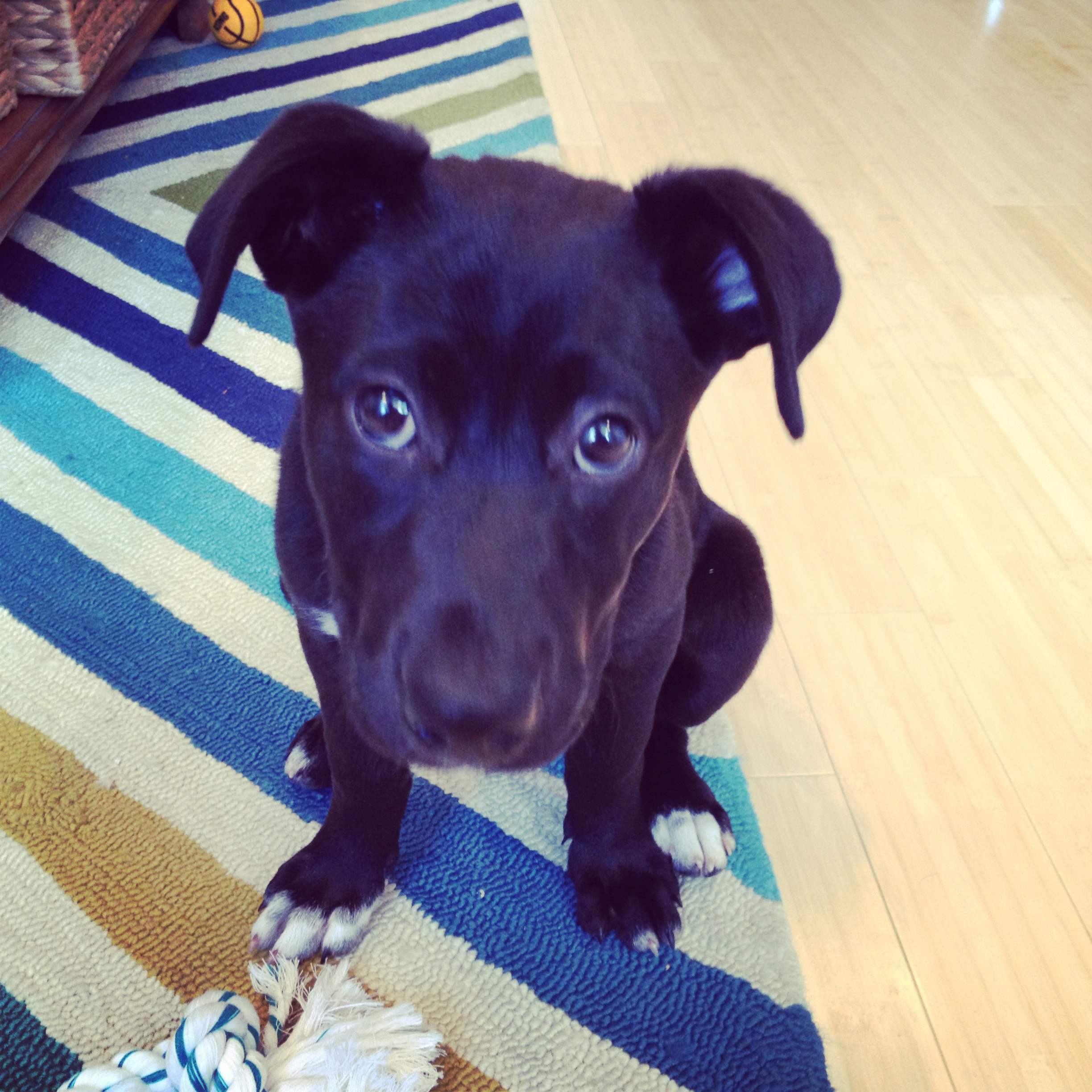
P.S.: This post was inspired by and is dedicated to Lutra, the newest member of our family. Lutra is the Texas-born, black lab/german shepherd puppy adopted on June 1, 2014 by my daughter and son-in-law down in Washington, D.C.
This quote caught my ear on the Saturday, January 25, 2014 broadcast of the long-running, Boston-based NPR sports show It’s Only A Game, hosted by Bill Littlefield.
The piece was by reporter Doug Tribou and it was called “Fans Hedge Super Bowl Ticket Hopes On Team’s Success.” A gentleman named Rick Harmon, the chairman of the company Forward Market Media, said:
“The fact of the matter is that we and all the rest of the people on this good Earth of ours spend hugely greater amounts of time anticipating things than actually doing things.”
“As I Went Out One Morning” is a Bob Dylan song. It is the second song on John Wesley Harding, Dylan’s eighth album.
Written and recorded in the Fall of 1967, the John Wesley Harding LP followed Dylan’s BlondeOn Blonde, a double album released in May, 1966. In a broader historical context, John Wesley Harding was created five months after the release of Sgt. Pepper’s Lonely Hearts Club Band and two months after the death of Woody Guthrie.
According to Brian Hinton’s 2006 book, Bob Dylan Complete Discography, Dylan intended John Wesley Harding to be “an album of songs.” Hinton quotes from a 1968 interview that Dylan gave to Jann Wenner, then of Rolling Stone magazine. Dylan described the approach to songwriting that he started taking with the songs on John Wesley Harding: “What I’m trying to do now is not use too many words. There’s no line that you can stick your finger through. There’s no blank filler. Each line has something.”
The results?
Blonde On Blonde contains 14 songs – 9 of which are over 4 minutes long – and has a total running time of 73 minutes. John Wesley Harding contains 12 songs – only two are over 4 minutes long – and has a total running time of just under 39 minutes.
Clinton Heylin, writing in his 1995 book Bob Dylan: The Recording Sessions [1960-1994], claims that John Wesley Harding is “Dylan’s most perfectly executed album.”
Of the twelve songs on John Wesley Harding, Brian Hinton puts “As I Went Out One Morning” among the ten which Dylan once described as having been “written out on paper, and I found the tunes for them later,” then adding, in reference to this method: “I didn’t do it before, and I haven’t done it since.”
Lyrically, “As I Went Out One Morning” is a ballad. Its three, eight-line verses present a first-person account of the events of an initially innocent morning stroll.
(Let me see if I can do this Harry Smith/Anthology of American Folk Music-style: “Man taking a walk encounters beautiful-but-desperate young woman with questionable intentions. Man is quickly and aggressively rescued by apologetic land owner.”)
Musically, Dylan sets the lyrics to a 4/4-time melody in the key of F#m, harmonized by a 23-measure, four chord progression. There are four phrases to the complete melodic line – which repeats with each verse – and the melodic curve soars to its penultimate note in the third phrase, brilliantly highlighting the lyric each time it comes around. (Verse 3, for instance: “As she was letting go her grip…, up Tom Paine did run.”)
“As I Went Out One Morning” was recorded in Nashville, Tennessee at Columbia Records’ Music Row Studios on November 6, 1967. Bob Johnson was the producer. This was the second of the three recording sessions that were needed to complete John Wesley Harding.
Bob Dylan sings and plays acoustic guitar and harmonica on the track. He is accompanied by bassist Charlie McCoy and drummer Kenneth Buttrey.
Specifically, on the recording of “As I Went Out One Morning,” Dylan plays his acoustic guitar capoed at the fourth fret, allowing him to finger the chords in the key of D-minor. (The chords he uses are thus: Dm, C, F and Am. I have always liked the sound of playing it with my guitar capoed at the second fret and fingering Em, D, G and Bm.)
Even in a collection that includes “All Along The Watchtower,” “I Dreamed I Saw St. Augustine” and “I’ll Be Your Baby Tonight,” “As I Went Out One Morning” stands tall; a shinning, perfectly polished gem of a song. It amazes me that, according to one source, Dylan has rarely performed the song in concert.
If Bob Dylan’s original recording was available, I’d have an embedded link right here for you to click on and listen to. There are several cover versions of “As I Went Out One Morning” by a variety of artists posted on YouTube, but after careful listening, I decided that not even one of them could hold a candle to Dylan’s presentation of this truly remarkable song.
So, you’ll just have to buy it – buy the whole album! – to find out for yourself.
P.S.: Yesterday, May 24, 2014, was Bob Dylan’s 73rd birthday.
The first part of this post is a replay of a piece I wrote on May 11, 2010 under the title Yesterday In Music History. I’ve added the section about “Wildwood Flower” and an embedded YouTube “video” featuring the Carter Family’s original recording for your listening pleasure.
“She’d hook that right thumb under that big bass string and just like magic the other fingers moved fast like a threshing machine, always on the right strings, and out came the lead notes and the accompaniment at the same time. The left hand worked in perfect timing, and the frets seemed to pull those nimble fingers to the very place where they were supposed to be, and the guitar rang clear and sweet with a mellow touch that made you know it was Maybelle playing the guitar.”
That was June Carter Cash describing her mother, Maybelle Carter, playing the guitar.
Maybelle Addington Carter was born on May 10, 1909 in Nicklesville, Virginia. While still a teenager, she played guitar and sang back-up in a trio with Sara Carter, her cousin, and A.P.Carter, Sara’s husband. Sara sang lead and played autoharp and guitar. A.P. sang bass. The group was known as the Carter Family.
On August 1, 1927, in Bristol, Tennessee, the Carter Family made their first recordings for Ralph Peer, a traveling talent scout for Victor Records. From then until 1943, when A.P. and Sara left the group, the Carter Family recorded hundreds of songs and sold millions of records.
Thanks to those records and several years of live radio broadcasts, Maybelle’s guitar style, her “Carter Scratch,” was heard all over the country and adopted by generations of guitar players.
To try to put the extent and importance of her influence simply:
Maybelle Carter was Woody Guthrie’s favorite guitar player.
Woody Guthrie was one of the primary influences of Bob Dylan.
And who did Bob Dylan influence?
Well, as a student said when I posed that question in class one day:
“Everyone.”
Maybelle Carter passed away on October 23, 1978.
The Carter Family recorded “Wildwood Flower” for Victor Records on May 10, 1928 in Camden, N.J., in the Trinity Baptist Church. In the photo below, that’s Maybelle on the left, holding her big Gibson guitar. Sara Carter, the vocalist on “Wildwood Flower,” is seated on the right. A.P. Carter is in the middle. On the recording, 19-year-old Maybelle plays the guitar during the introduction and throughout this famous song.
In 1961, Columbia Records released an album called The King of the Delta Blues Singers. The album, conceived by the legendary Columbia talent scout and record producer John Hammond (1910-1987), was a compilation of recordings originally made in 1936 and 1937 for Vocalion Records by a Mississippi-based Blues musician named Robert Johnson.
One of the sixteen songs on The King of the Delta Blues Singers (Side 1, track 3) was a number called “Come On In My Kitchen.” The hypnotic performance featured Johnson’s dazzling slide guitar playing behind his intense and passionate vocals.
“Come On In My Kitchen” was recorded on November 23, 1936 at Johnson’s first recording session, held at the Gunter Hotel in San Antonio, Texas.
On The King of the Delta Blues Singers, Robert Johnson was given songwriting credit for “Come On In My Kitchen.” But where the lyrics are definitely original, the melody had been around for some time.
The melody dates back as far as 1925 and a song called “How Long Daddy How Long” by Ida Cox. Subsequent songs by Tampa Red (“Things ‘Bout Coming My Way,” 1934), The Mississippi Sheiks (“Sitting On Top Of The World,” 1930), Blind Blake (“Depression’s Gone From Me Blues,” 1931) and others made use of the same tune.
Though each artist put his or her personal stamp on the rendering of this melody, no one, before or since, sang it quite like Robert Johnson did.
Robert Leroy Johnson was born this day, May 8, 1911 in Hazlehurst, Mississippi. He passed away under mysterious circumstances on August 16, 1938.
That’s how long it has been since I wrote my first post – “Hello, World” – and established a quote from Jelly Roll Morton – “Good music doesn’t get old” – as the official motto of this adventure I call sixstr stories.
During those four years, the archives of sixstr stories has grown to contain 254 posts. Those posts are accessible by month as well as through one (or more) of nine different categories. In 2013 I introduced a new category that I’m excited about and planning to do more with: QuotationsMarked.
The total number of reader comments generated by all of those posts has reached 272.
As of this morning, the total number of “views” of sixstr stories has reached well beyond the 15,000 mark. The past year saw sixstr stories’ “best ever” viewing day with my July 14, 2013 post about Jazz pianist Tommy Gallant. That one welcomed 121 visitors.
Before I get the party started, please allow me to extend my heartfelt thanks and gratitude to you, each and every one of you, who visit, follow, read, listen to and comment on my musings and enthusiasms here at sixstr stories.
In celebration of this anniversary, I offer a bit of (to me) newly-discovered music.
On July 16, 1958, Jazz organist Jimmy Smith along with baritone saxophonist Cecil Payne, electric guitarist Kenny Burrell and drummers Art Blakey and Donald Bailey gathered at the Van Gelder Recording Studio in Hackensack, New Jersey to lay down some Blues.
Five of the six pieces the quartets recorded that day were not released until 1999 when Blue Note Records put them all together on a CD called Six Views Of The Blues.
I picked up my copy – because I love Jimmy Smith and Kenny Burrell – this past Wednesday at the Newbury Comics store at the North Shore Shopping Center in Peabody, MA.
For your listening and dancing pleasure – I dare you to sit still – I present to you Track #5 from that album, the appropriately-titled: “Blues No. 4”
Donald Bailey is the drummer on this cut and, after the band plays the Jimmy Smith-composed “head,” guitarist Kenny Burrell takes the first solo. Oh, boy!
This may be a long piece of music, but it is 10 minutes and 54 seconds of absolutely joyous music making. You won’t be disappointed.
On Sundays, I like to listen to music when I do my morning exercise routine. (On weekdays, I listen to the news on NPR via NHPR.)
Lately, I’ve been listening my way through an album I found on iTunes a few months back called Musical History Of America. The 57-track collection was released in October, 2009 by Masters Classics Records. I was intrigued by its inclusion of a wide variety of the expected artists – Bessie Smith, Blind Willie McTell, Duke Ellington and Woody Guthrie, for example – along with several that were new to me: Fiddlin’ Arthur Smith, The Gidden Sisters and Lydia Mendoza, to name a few.
This past Sunday, after a fine Sister Rosetta Tharpe song called “Rock Daniel,” I was struck by an outstanding acoustic guitar and vocals number that was equal parts Blues and Country with some very hot guitar solos.
“Whoa!,” I thought, as the song concluded. “Who was that?”
After I’d finished my exercises, I scrolled back on my iPod and found that track #21 was Sam McGee playing “Railroad Blues.”
Sam McGee? That name sounds familiar. Time to do some research.
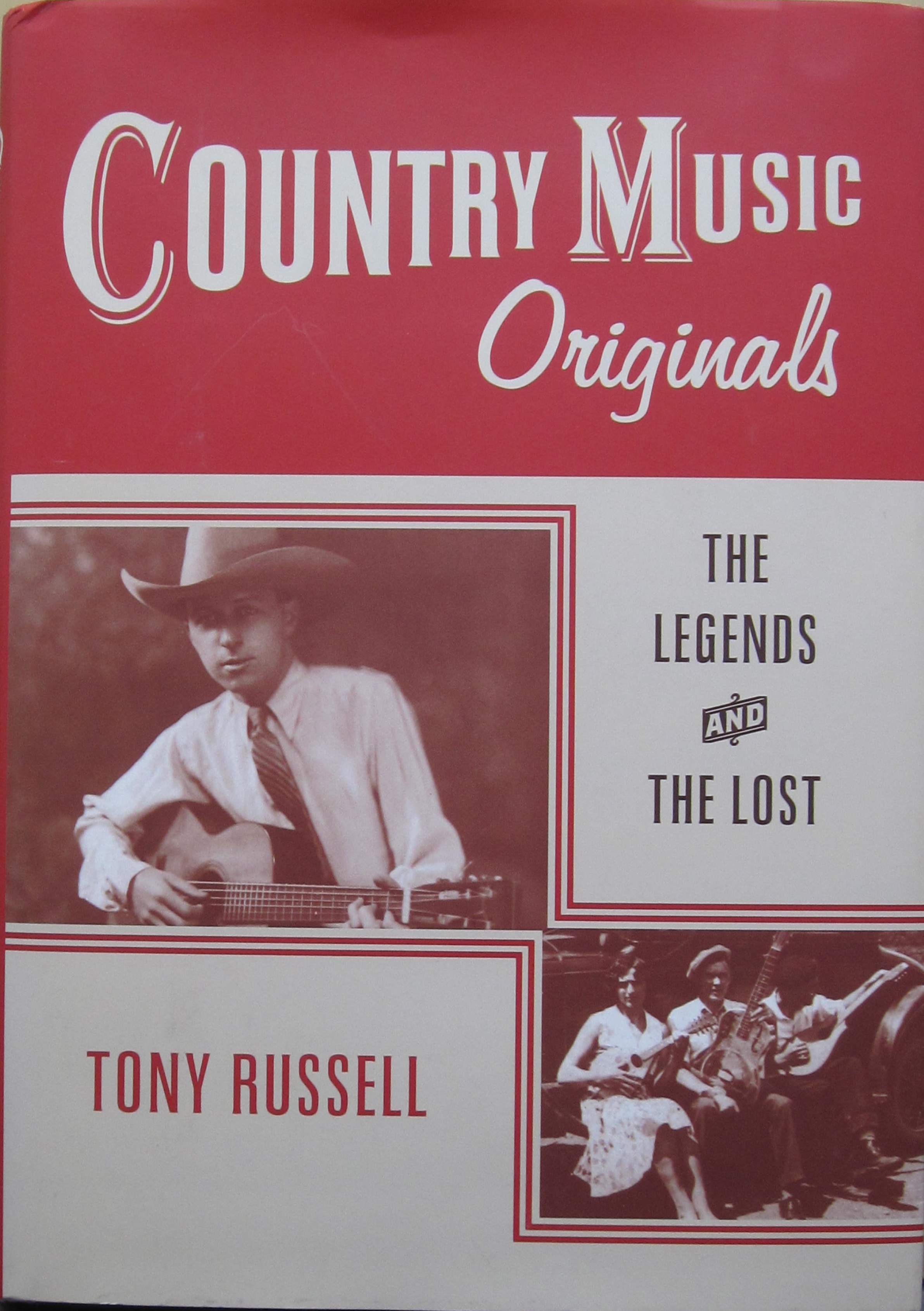
In the reference section of my library I have a treasure chest of a book called “Country Music Originals – The Legends and The Lost” by Tony Russell.
Over breakfast, I took a look.
Sure enough, there was a chapter on Sam McGee (1894-1975). The chapter starts: “Sam McGee recorded country music’s first guitar instrumentals. The fact is unarguable, a matter of historical record in both senses.”
Now, that’s my kind of fact.
Mr. Russell identified those instrumentals, recorded “in a New York studio” by “the quiet farmer from Franklin, Tennessee,” as “Buck Dancer’s Choice” and “The Franklin Blues.”
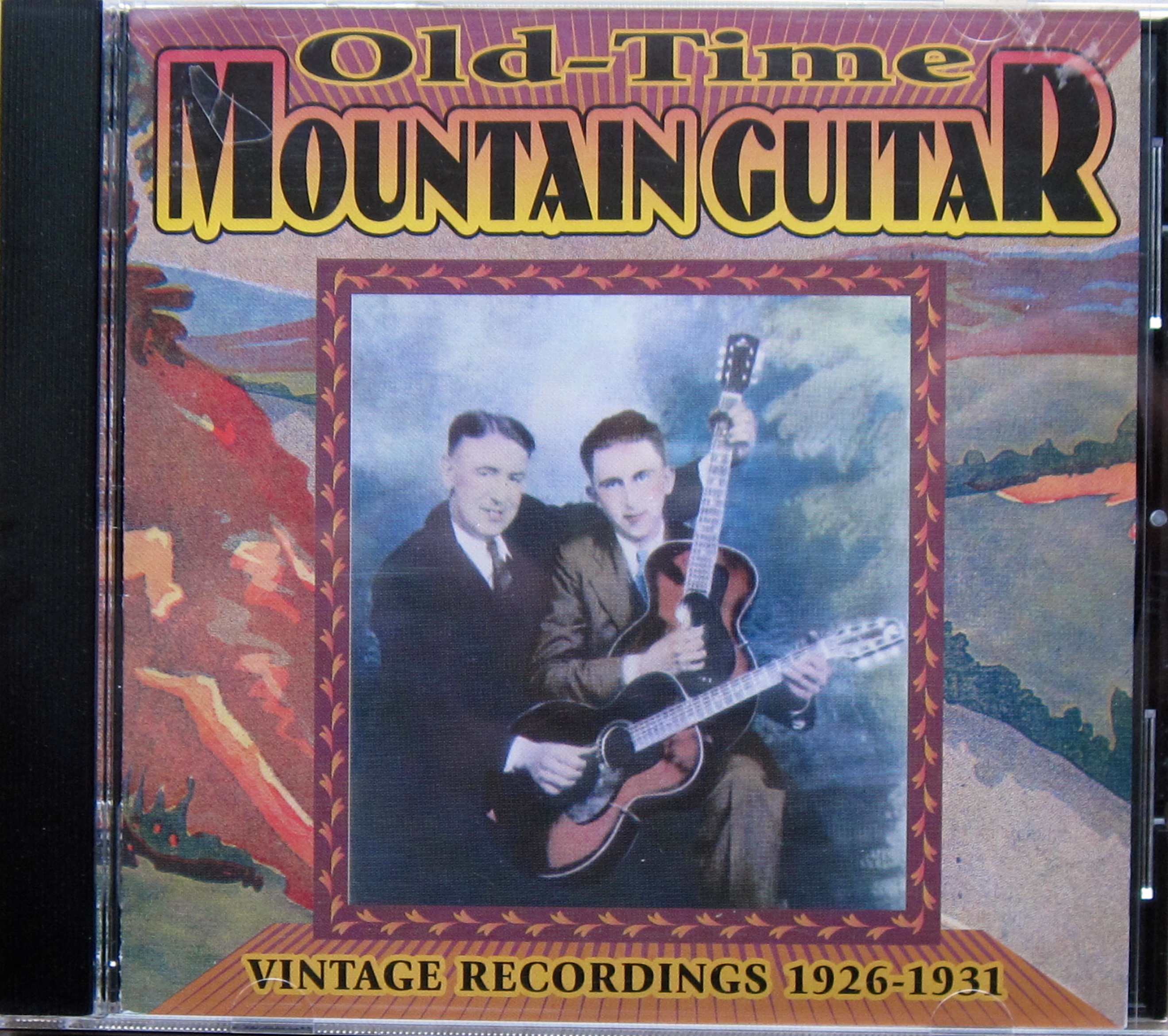
One of the best features of Mr. Russell’s book is that each chapter concludes with a “Playlist.” This box provides the interested reader with a list of CDs that feature or include recordings by the chapter’s artist or group. According to the Sam McGee playlist, both of those instrumentals were on a County Records CD – #3512 – titled Old-Time Mountain Guitar.
“Really?,” I thought. “I own a copy of that CD!”
A quick look through my meticulously organized CD library and there it was: Old-Time Mountain Guitar: Vintage Recordings 1926-1931, compiled and released in 1998 by County Records in Floyd, Virginia.
Track #2 was “Buck Dancer’s Choice” and track #9 was “The Franklin Blues.” The track listings identified Sam McGee as the guitarist with “spoken comments by Uncle Dave Macon” and stated the two pieces were “recorded April 14, 1926 in New York City, NY.”
I felt a blog post coming on.
Here, thanks to the never-ending wonders of YouTube, are those two pieces: the first Country music guitar instrumentals ever recorded, eighty-eight years to the day later.
In the photo that accompanies “Buck Dancer’s Choice,” that’s Sam McGee on the right holding the guitar and his brother, Kirk, on the left.
Later on that Sunday, I finally remembered why the name Sam McGee was initially so familiar to me.
Many years ago I bought two books of transcriptions of fingerstyle acoustic guitar music put together by musician Happy Traum. One of them was Fingerpicking Styles for Guitar, released in 1966 by Oak Publcations. I owned a copy of the “revised and updated edition” that came out in 1980.
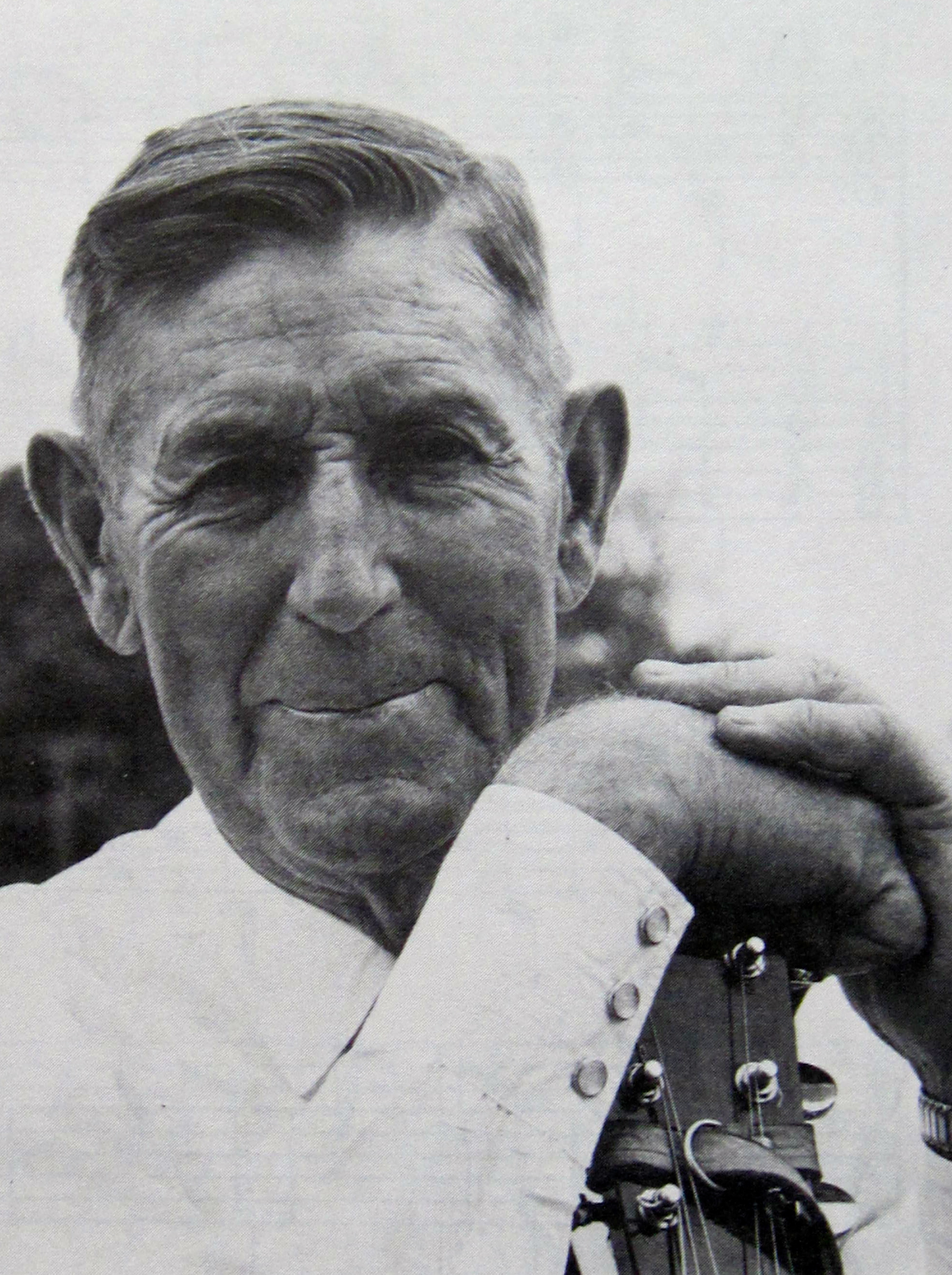
On page 39 of the slim volume, there is a short bio and a photo (by David Gahr) of Sam McGee.
Mr. Traum wrote: “Sam McGee and his brother, Kirk, sang and played old-time string music for over forty years. Their exuberance and good humor made them one of the Grand Ole Opry’s most popular acts.”
Starting in 1926, Sam and Kirk were members of Uncle Dave Macon’s Fruit Jar Drinkers and, in 1931, formed The Dixieliners with Fiddlin’ Arthur Smith. In 1957, with the help of Folk musician Mike Seeger, the McGee Brothers and Arthur Smith reunited. For the next several years, the trio set off on a rejuvenated career of recording and performing; highlighted by a well-received appearance at the 1965 Newport Folk Festival.
On pages 40-41 of Fingerpicking Styles for Guitar there was a transcription of “Buck Dancer’s Choice,” taken from a version of the piece that appeared on a 1964 Folkways recording titled The McGee Brothers and Arthur Smith. The album is now called Look! Who’s Here: Old Timers of the Grand Ole Opry on the Smithsonian Folkways label.

 sixstr stories