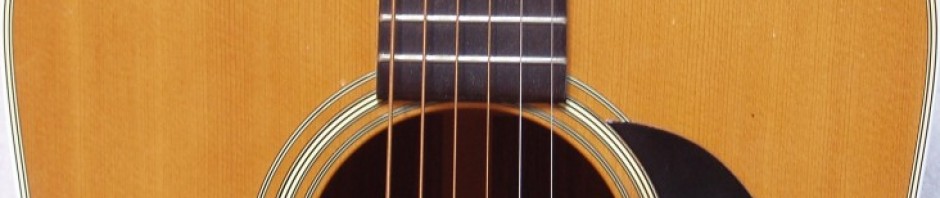
The sound of a musical instrument is generally referred to as its “tone.” Among many definitions, the Merriam-Webster Dictionary says that tone is: “sound quality” and “accent or inflection expressive of an emotion.” In the recent issue of Acoustic Guitar Magazine, “New Gear” columnist Scott Nygaard uses the words “warmth,” “sparkle” and “chang” to convey his impressions of the tone quality of a new Collings dreadnaught-size, steel-string acoustic guitar. In a previous post, I used the words “searing” and “soulful” to try to describe the sound of Albert King’s guitar playing.
Late the other afternoon as my wife and I were beginning to prepare our dinner, I put on a 1992 CD by a prominent Jazz Fusion electric guitarist. Before the second piece had finished, I found that the electronic, effects-laden sound of the guitar had gotten to be rather annoying.
When I came back into the kitchen, my wife asked why I’d changed the music.
I told her that I liked the clear, round sound of the guitars better on this one.
She smiled. “Round?”
“I know,” I replied. “But yes, round. The sound of each note is round and clear, like a teardrop or a falling drop of rain.”
“Hmmm,” she pondered.
I continued: “It’s not easy to do. It’s like trying to describe a color. How would you describe the sound of a guitar?”
P.S.: the second CD was “Conversations In Swing Guitar” from 1999 with Duke Robillard and Herb Ellis. Highly recommended.
 sixstr stories