Newfields Road

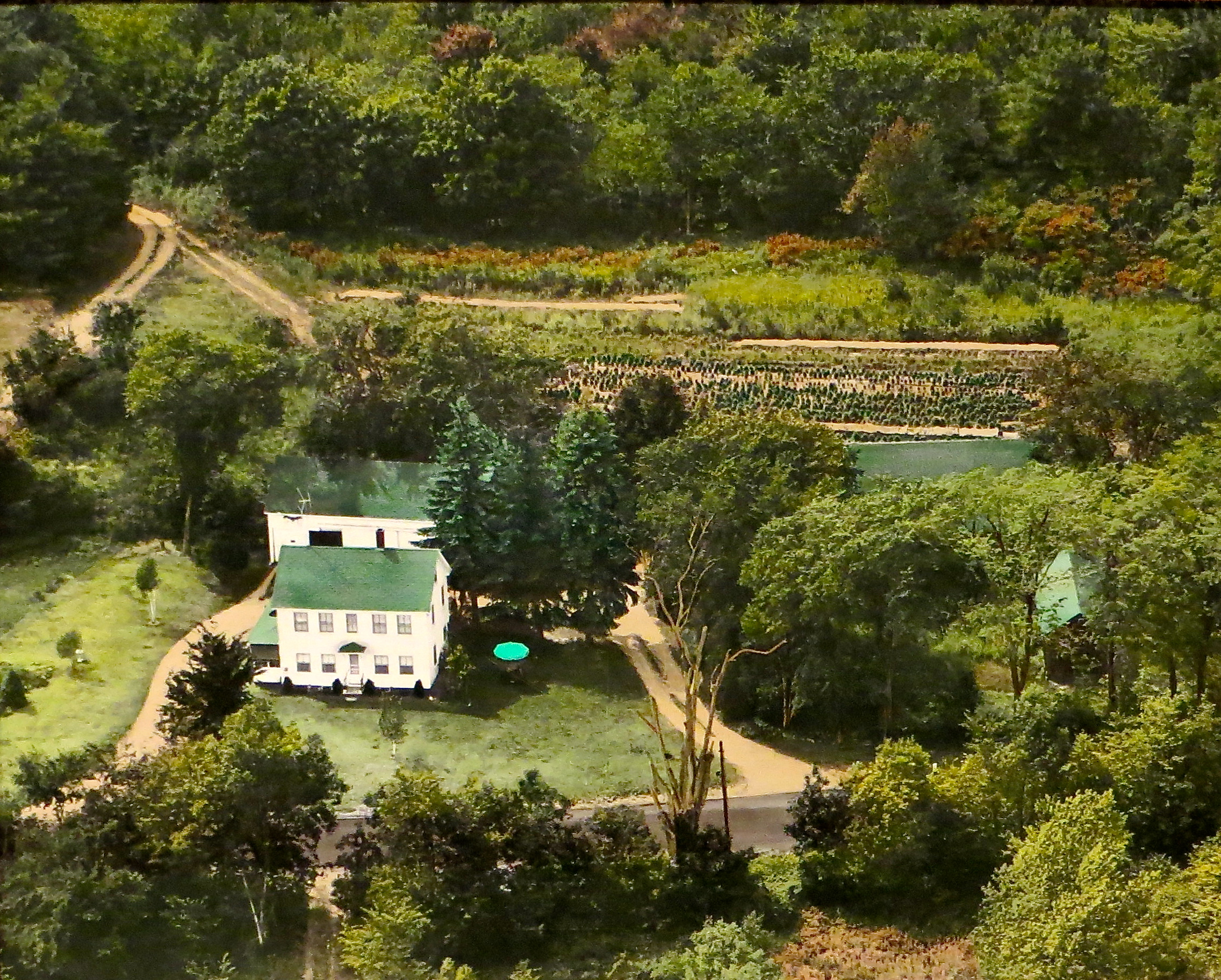
On June 11, 1962, my parents, Francis & Avis Sinclair, took ownership of the buildings and land in the picture below. Purchased from Mr. Charles H. Williams, the house, garage/workshop, and a large barn with an attached carriage shed, were situated on 4 & 1/2 acres of land on the outskirts of Exeter, NH, about half a mile from the Exeter/Newfields town line.

The long-neglected interior of our new house required several weeks of cleaning, repairing and redecorating, but finally, at the beginning of August, just before my ninth birthday, Dad, Mom, my dog Scamp and I moved in.

The original mailing address for the property was R.F.D. 1 – Newmarket Road. Over the years, however, the U. S. Postal Service changed the address several times, leaving my parents and me to refer to our home simply as: Newfields Road.
IMG_2517 - Version 3

Newfields Road was the place.

This was where Music grabbed a hold of my soul and said, “You’re coming with me.”

My life’s journey began in the rooms of that house.

Here are some memories and moments, snapshots, if you will, from Newfields Road.

In my bedroom – all 9′ x 11′ of it; the second floor, front corner room, on the right or “Newfields side” of the house – listening to the Top-40 broadcasts of Boston-based WBZ-AM, delivered to my bedside table by the boxy, black and chrome Philco solid state AM/FM radio that my parents gave me for my tenth birthday.

In the living room – first floor, on the “Exeter side” – sitting on the couch in front of our black & white console television set and watching The Beatles introduce themselves to America on that now-historic Sunday night in February, 1964.

In my bedroom… playing my slowly-growing collection of 45-rpm records – Beatles!, Rolling Stones!, Beach Boys!, Monkees! – on a portable, two-tone beige and brown Magnavox stereo, the kind with one speaker in the detachable lid.

In my bedroom… standing before my blue sparkle snare drum and shiny, bronze-colored cymbal, practicing the rudiments that Mrs. Prebble taught me in my weekly drum lessons.

Evenings in the living room… regularly watching not just the Ed Sullivan Show, but also Shindig!, Hollywood Palace, The Dean Martin Show, The Smothers Brothers’ Comedy Hour and on occasion, to keep my parents company, The Lawrence Welk Show.

Late one night in my bedroom… hearing Dave Maynard on WBZ-AM talk about a new band from San Francisco called The Grateful Dead.

One afternoon in the living room… sitting behind my 4-piece blue sparkle drum set, waiting for Jerry and Ricky, my friends and 7th-grade classmates, to tune their electric guitars. We were rehearsing for our first gig – playing at our school’s annual end-of-the-year party for the graduating 8th graders – and the first order of business was a Ventures-inspired rendition of “Secret Agent Man.”

In my bedroom… immersing myself in each monthly-arriving issue of Down Beat magazine, discovering a world of Jazz and Blues music that I wasn’t hearing on the radio.

In my bedroom… figuring out how to re-wire my Magnavox to drive a pair of larger, bookshelf speakers – Radio Shack Optimus 1‘s – and have a junction box where I could plug in a set of headphones!

In the front hallway… sitting on the white central staircase with Alan, Danny and Jim – my high school friends and bandmates – taking a break from rehearsing to pose for a group picture; my Mom working the Instamatic.

One night in my bedroom… turning on my radio – now tuned to Boston’s WBCN-FM – and stumbling into the middle of a heart-stopping electric guitar solo from a live recording by Blues musician Albert King.

In my bedroom… listening to records through my Radio Shack headphones and playing along on my seven-piece (now upgraded with an all-chrome, Rogers “Dyna-sonic” snare drum) blue sparkle drum set. Donovan’s “Hurdy Gurdy Man,” “I Can’t See Nobody” by The Bee Gees and “Psychotic Reaction” by Count Five were among my go-to numbers for these practice sessions.

In my bedroom, towards the end of my junior year in high school… spending a Thursday afternoon sitting on the floor with a borrowed acoustic guitar; coaxing my left hand fingers back and forth across the bronze and steel strings; switching between two chords – E minor to D major to E minor to D major; strumming and singing and trying to mend a broken heart with the one line refrain from a song by The Doors.

In my bedroom… cradling my very own, brand new Harmony acoustic guitar and gradually, after many months of studying and listening to and practicing, over and over, my favorite songs by the songwriters I’d loved for so long, learning how to play that guitar.

Starting to think that maybe, just maybe, I could write some songs of my own.

In my bedroom… perching, guitar in hand, on a tall, wooden stool in front of a microphone plugged into my Kenwood reel-to-reel tape deck, ready to record my latest batch of newly-composed songs. (A tape deck purchased at the Tech Hi-Fi in Cambridge, MA, thanks to a very generous gift from my godparents when I graduated from high school.)

In the living room… watching as a black, second-hand Needham upright piano takes its place along the wall where the couch had always been. On that piano, practicing the little J. S. Bach and Vincent Persichetti pieces I was learning in my piano lessons with Dr. Ruth Edwards at the University of New Hampshire.

Around this time, finally admitting that I really didn’t play them anymore, and sadly selling my set of drums.

Several evenings in the dining room – first floor, right front – chatting at the dinner table with my Dad and my trio-mates, pianist Gary and bass guitarist Andy, waiting for my Mom to serve one of her now-famous pre-rehearsal home-cooked meals. (These weekly feasts and rehearsals occurred throughout the first semester of my senior year at UNH.)

After graduating from UNH… getting my first job teaching music at the Lincoln St. Elementary School in Exeter.

As easy and comfortable as it was living with my parents at Newfields Road, I wanted a place of my own. So, in the Fall of 1975, I moved into a four-rooms-with-a-river-view apartment over a paint and wallpaper store on Water St. in downtown Exeter. My guitars, my stereo system, my record collection, my stack of sheet music and songbooks and my piano moved in with me.

My parents continued to live at Newfields Road for another twenty years. The memories that I, my wife and our children have of the many times we spent during those years at Newfields Road with Nana and Grampa are among the most cherished and dearest in our hearts.

When the time came and we needed to sell the property, Newfields Road was purchased by a developer who had already bought the house next door and much of the land behind the original 4 & 1/2 acres.

Today, Newfields Road is owned and being lovingly restored and rejuvenated by a determined and enthusiastic couple with three teenage children.

The photograph that started this piece – an original hand-tinted, black & white print – was taken and sold by a company called Maine Air Views from West Brook, Maine. After extensive detective work through old family photo albums, I have narrowed the date of the photo to sometime in the summer of 1965 or 1966.

Finally, the aqua oval just to the left of center in the photograph is an umbrella that provided shade to our picnic table. My Mother and I always thought that the little light gray patch, barely visible under the umbrella, is a newspaper being held up and read by my Father.

Posted in Random Topics | Tagged , , , , , , , , , , , | 3 Comments

This Historic Day In Music: Little Richard

There aren’t many songs that hit the ground running and roar off into the stratosphere with a better opening line than: “Gonna tell Aunt Mary ’bout Uncle John, he claims he had the mis’ry but he had a lot of fun, oh baby…”

And there aren’t many hook lines – if any – that are so much fun to belt out at the top of your lungs and never fail to bring the house down like: “Have some fun tonight!”

What song is this, you might be asking?

“Long Tall Sally.”

Don’t believe me? Ask Paul McCartney and Robert Plant. They know.

“Long Tall Sally” was the A-side of Little Richard’s second release for the Los Angeles-based record label Specialty Records.

“Long Tall Sally” was written by Little Richard, Robert Blackwell and Enotris Johnson. (Robert “Bumps” Blackwell was Little Richard’s record producer at Specialty Records. Enotris Johnson was Little Richard’s adoptive father.)

Little Richard recorded “Long Tall Sally” at J&M Studios in New Orleans, LA on February 10, 1956. Richard sang and played piano on the recording and was accompanied by J&M Studio’s top in-house session players: Edgar Blanchard, guitar; Frank Fields, bass; Earl Palmer, drums; Lee Allen, tenor saxophone; and Alvin Tyler, baritone saxophone.

Specialty Records released “Long Tall Sally” b/w “Slppin’ and Slidin” in March, 1956. Sales of the 45-rpm single kept “Long Tall Sally” in the #1 position on the Billboard Rhythm & Blues chart for six weeks.

Within a year or so, “Long Tall Sally” was being covered by a wide variety of American musicians including Elvis Presley, Eddie Cochran & Wanda Jackson. In 1964, two British Invasion bands – The Kinks and The Beatles – each recorded and released their version of the song.

The Beatles, who were big fans of Little Richard, had been performing “Long Tall Sally” for some time before they recorded it for a 4-song EP in the spring of 1964. “Long Tall Sally” was the last song of The Beatles first American concert, held at the Washington Coliseum in Washington, D.C. on February 11, 1964. It was also the last song of their last official public concert, held at Candlestick Park in San Francisco, CA on August 29, 1966.

The British Rock band Led Zeppelin used “Long Tall Sally” as a high-energy encore number in many of their concerts from 1968 into the early 1970’s.

Here, for your listening pleasure, is Little Richard’s original recording.

By the way, if you listen to this and don’t move at least some part of your body, you better call an ambulance and get yourself to a doctor right away.


Little Richard was born Richard Wayne Penniman in Macon, Georgia on this day, December 5, in 1932. He was the third child of Leva Mae & Charles Penniman.

He started his performing career at the age of 14 with the help of Sister Rosetta Tharpe. From 1949-1950, he sang with his first band, Buster Brown’s Orchestra. Little Richard cut his first records with RCA Victor in 1951. He recorded his first hit record – “Tutti Frutti” – for Specialty Records in September of 1955.

Little Richard was inducted into the Rock & Roll Hall of Fame in 1986.

Little Richard announced his retirement from the music business in September, 2013.

Happy 82nd Birthday, Little Richard!

Posted in Posts with Video, This Historic Day In Music | Tagged , , , , , , , | 1 Comment

Happy Thanksgiving

Oh how diff’rent the view that my camera did capture

From my window this morning here in southeast New Hampshire.

IMG_0003


Best wishes to you and yours for a Happy Thanksgiving and/or a Splendid November 27!

Posted in Random Topics | Tagged | 2 Comments

As Autumn Ambles Along

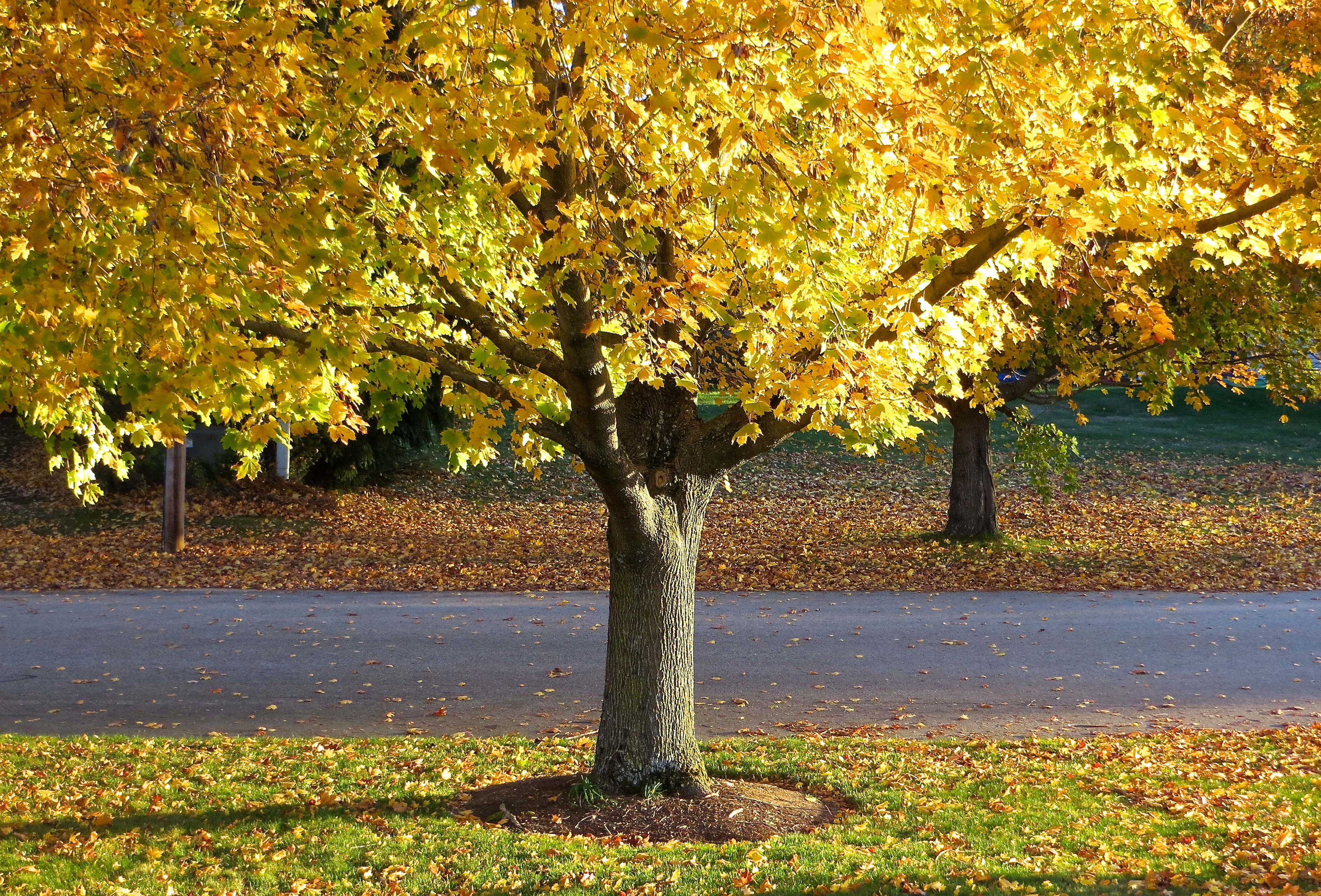
Out back, the dogwood, oak and birches have long since surrendered.

But as of this morning, the maple in my front yard is still a contender.

IMG_2567

Posted in Random Topics | Tagged , , | Leave a comment

This Historic Day In Music: Guy Clark

Guy Clark was born today, November 6, in the year 1941 in Monihans, Texas.

Guy Clark is a songwriter, singer, guitarist, performer, recording artist and a luthier.

His first album, Old No. 1 came out in 1975. Thirty-eight years later, in July, 2013, Guy released his 15th album, My Favorite Picture Of You. On January 26, 2014, at the 56th Annual Grammy Awards, My Favorite Picture Of You was awarded the Grammy Award for Best Folk Album of 2013.

On November 6, 2010, I published my first post about Guy Clark. I thought this old one was worth playing again. And this time, it has a Guy Clark song in it for your listening pleasure.

In September, 1995, author Joyce Maynard published her new novel, Where Love Goes, with something extra: a CD. The hardcover first edition of the book came with a 19-track mix CD of Maynard’s favorite songs from the albums and artists she’d listened to and been inspired by as she wrote the book.

Seeing as my wife was a big fan of Joyce Maynard, I purchased a copy as a Christmas present for her. In January, I made a cassette tape copy of the CD, editing out the two or three songs that were too “Country” for my wife’s tastes, and that collection got pretty regular airplay around the house and in the car right on through the whole rest of the year.

One song in particular became a favorite of mine: “Baby Took A Limo To Memphis.”

The song was by Guy Clark.


In October, 1997, Acoustic Guitar magazine had a feature article about Guy Clark that included a rave review of his newest CD: Keepers – A Live Recording. Writer John Herndon starts the article by saying: “Guy Clark is one of the very few songwriters for whom the term poet should be reserved.” He ends the article like this: “For Guy Clark, the simple folk song is an art form every bit as moving and significant as any of the great works of Western civilization.”

Keepers was the very next CD I purchased. It was, and is, an album full of wondrous songs.

On March 28, 2003, my friend, Jim, and I went into Boston for a concert at the Orpheum Theatre. It was billed as “An Evening with Lyle Lovett, John Hiatt, Guy Clark and Joe Ely.” It consisted of over two hours of the four singer/songwriter/guitarists sitting in a row of chairs across the stage, taking turns singing songs and spinning stories. Spellbinding, to say the least. But all throughout the show, Lyle, John and Joe paid their respects to the man who sat at the right hand end of the row: Guy Clark.

One of the songs Guy Clark played that night was called “Stuff That Works” and I was so taken buy it, that the next day I was on the computer, searching out what CD of his it was on. Before too long Dublin Blues (1995) was spinning in my player, amazing my ears and I was adding “Stuff That Works” to my performing repertoire.

Over the following years, my Guy Clark CD collection continued to grow: Cold Dog Soup (1999); The Dark (2002); The Essential Guy Clark (1997); and Somedays The Song Writes You (2009). From album to album, track to track, Guy’s songs are never less than great and some are absolutely devastating.

In August, 2009, my wife and I saw Guy Clark, with his dear friend, singer/songwriter/guitarist Verlon Thompson, perform at that summer’s version of the Newport (RI) Folk Festival.

At first on that Sunday afternoon, it seemed that Guy was not having the best of days. He had great difficulty climbing the short staircase up to the stage and as he stood, awaiting his introduction, he appeared to be in pain. At one point during the show, he even ackowledged his discomfort saying that he was dealing with “an old songwriting injury.”

But for nearly an hour he played his guitar and sang his songs. His words and music and stories filled the tent and long, warm, loving applause rolled up to embrace and support him song after gorgeous song. Among his last numbers, he performed “Stuff That Works” and “Dublin Blues.” 

At the beginning of that set, Guy Clark spoke the best lines I heard from a performer all weekend. He looked across the packed Fort Stage area and said: “We have come here today to sing you some songs we’ve written. Some we know. We don’t use a set list. We just kind of wing this and, ah, we have no agenda, we have no clue, but we have no fear.”

If you’ve never heard any of Guy Clark’s music, I recommend the CD Dublin Blues as the best place to start with Cold Dog Soup, Keepers and My Favorite Picture Of You as very close seconds.

Happy Birthday, Guy. All the best.

Posted in Posts with Video, This Historic Day In Music | Tagged , , , | 1 Comment

Quotations Marked 4

“The real musician is not the one who can knock your eyeballs out with fast, difficult runs. A real musician can make the simple songs vibrate and sparkle with the life that is within them.”

That quote has been posted on the door of my teaching studio for some time now.

I found it on page 9 of my copy of the 1964 Oak Publication: The Folksinger’s Guide To The 12-String Guitar As Played By Leadbelly: An Instruction Manual” by Julius Lester & Pete Seeger.

IMG_2549

Page 9 is where Julius & Pete introduce the first song in the manual: “Skip To My Lou.”

As simple as a Folk song can be, there aren’t many that are simpler – or as much fun to play and sing – than this play-party song from America’s frontier days. A guitar player needs to only know two chords and a bit of basic strumming technique to provide a perfectly acceptable accompaniment and even the most melodically-challenged singer can easily master the catchy tune that both the chorus and verses are set to.

“Lost my partner, what’ll I do?

Lost my partner, what’ll I do?

Lost my partner, what’ll I do?

Skip to my lou, my darling.”

See what I mean?

(At one time, by the way, the word lou meant “sweetheart.” It was derived from loo, a Scottish term meaning “love.”)

So if even a musical novice can manage to pull off an adequate rendition of “Skip To My Lou,” what do you get when a “real musician” takes on this little number?

Vibrations and sparkles, of course. Vibrations and sparkles.

Hear for yourself.


That was recorded in New York City in July, 1941 for Asch Records. “Skip To My Lou” was first released as one of six songs on a set of three 78 rpm discs. This “album” was called Play Parties in Song and Dance as Sung by Lead Belly. Lead Belly accompanies his vocals on that recording with his 12-string acoustic guitar.

The song “Skip To My Lou” has its roots in the American West of the mid-19th century. According to the liner notes by Jeff Place and Guy Logsdon from Pete Seeger’s American Favorite Ballads – Volume 1 CD (Smithsonian/Folkways, 2002), the main source of entertainment for young and old alike in those days out on the frontier was something called the “play-party.”  Clapping and singing along to “Skip To My Lou” and other songs provided the “musical fun and frolic” in puritanical communities “where dancing was a sin” and “the fiddle, other musical instruments, and the dance caller were forbidden.”

Here’s Pete Seeger’s version of “Skip To My Lou” from that Smithsonian/Folkways collection. Pete cut this track in 1957 for the original American Favorite Ballads series on Folkways Records. He accompanies his vocals on this recording with his long-neck, 5-string banjo.


Clearly, to again quote Mr. Place and Dr. Logsdon, “Pete’s banjo accompaniment would not have been acceptable at a frontier play-party.”

There you go: Pete Seeger, Lead Belly, two versions of “Skip To My Lou,” a little American history and, in this post’s featured quote, the truth.

Say it again.

“The real musician is not the one who can knock your eyeballs out with fast, difficult runs. A real musician can make the simple songs vibrate and sparkle with the life that is within them.”   

Posted in Posts with Video, Quotations Marked | Tagged , , , , , , , | 1 Comment

Introducing: “Sixstr – The sixstr stories Theme”

Can a blog have a theme?

Most blogs, I would guess, have a Theme: “a subject or topic of discourse or of artistic representation.” (The Merriam-Webster Dictionary, New Edition, 2005)

Movies, television shows and radio programs have Themes: “Instrumental music, sometimes with a very singable melody, often has foreground status during the opening credits.” (The Harvard Dictionary of Music, Fourth Edition, edited by Don Michael Randel, 2003)

For example?

Well, there’s the big one: the Star Wars (Main Theme) – also known as Luke’s Theme. This grand symphonic masterpiece was composed by John Williams for the original “Star Wars” movie in 1977 and has been featured in each of the sequel and prequel films since.

Similarly, there’s the James Bond Theme – created in 1962 by Monty Norman, a British singer, pianist and electric guitarist-turned composer, for the first James Bond movie, “Dr. No.”

One you might not know is Paris, Texas – a haunting acoustic slide guitar piece created and performed by Ry Cooder for the 1984 Wim Wenders film, “Paris, Texas.”

From the small screen, there’s Dog On Fire.

Dog On Fire?

I hadn’t known it was called that either, but every episode of “The Daily Show” on the Comedy Central channel kicks off with this high-energy rocker. Originally composed by Husker Du singer/guitarist Bob Mould, the version used on “The Daily Show” is performed by the band They Might Be Giants.

My all-time-favorite theme music from a television show is the main title theme from thirtysomething. Composed by guitarist W.G. Snuffy Walden, the soundtrack for the opening credits of this Emmy Award-winning ABC drama delightfully danced its way across my living room for the first time in 1987.

Finally, the theme music that I’ve probably heard more times than all of the others on this list combined: the Morning Edition Theme by B.J. Leiderman for National Public Radio’s Monday-thru-Friday morning news program.

Movies, television shows, radio programs. So, why not a blog?

Why not, indeed!

Here, without further ado, I give to you:

“Sixstr – The sixstr stories Theme” – composed and performed by Eric Sinclair

(To listen, click on the blue link above and… wait for it…!)

“Sixstr” was created/composed on March 24, 2013 and (at last!) recorded in my “home studio” on the afternoon of Monday, September 22, 2014.

I hope you enjoyed it.

P.S.: This post is dedicated to my dear friend, Eugene J. Barrack of Washington Township, New Jersey who passed away on Tuesday, October 7, 2014.

Gene was 82 years old.

He was truly a remarkable man.

Posted in EFS Music, Posts with Audio, Random Topics | Tagged , , , , , , , , , , , , , , | 3 Comments

Baseball

Today was the last day of the 2014 baseball season for my beloved Boston Red Sox.

This year’s team suffered from the same kind of inconsistent pitching and lackluster hitting that continually cursed the Red Sox teams that I grew up with. Any hopes for back-to-back World Series Championships were long gone by the end of July. At least the 2014 Boston Red Sox didn’t lose as many games as the 2012 Boston Red Sox.

Ah, well. Wait’ll next year!

In the celebration of victory and the resignation of defeat, the game of baseball has long been a source of inspiration for creative artists of every persuasion. I feel quite safe in stating that the novelists, journalists, essayists, poets, short story writers, reporters, biographers and bloggers of the world have produced more published written works about – or in some way involving – baseball than any other sport.

Songwriters have had to contend with the fact that the quintessential baseball song was written by Albert Von Tilzer and Jack Norworth in 1908. Some may have been daunted, but many have not been deterred.

Bob Dylan, Bruce Springsteen, John Fogarty, John McCutcheon, Ry Cooder and Tom Paxton – to name a few – all have a song or two in their repertoire about baseball.

High on my list of favorite baseball songs is one by the great Steve Goodman (July 25, 1948 – September 20, 1984). The sad-but-hilarious “A Dying Cubs Fan’s Last Request” is one of three songs that Steve wrote about his beloved hometown baseball team, the Chicago Cubs.

In my post of May 3, 2013 called Staying Through The Credits, I wrote about “Did You See Jackie Robinson Hit That Ball,” one of the classic R&B numbers on my list. Written by pianist and singer Woodrow “Buddy” Johnson, the absolutely essential recording of this song was cut by Count Basie and his Orchestra in July of 1949.

There’s even a whole album on my list. The Baseball Ballads is the 2002 CD by North Carolina-based songwriter, singer & guitarist Chuck Brodsky. This unique and highly recommended collection contains 10 outstanding original baseball-themed songs including “The Ballad of Eddie Clepp” and “Gone To Heaven.”

Just recently, I’m pleased to say, my list got one song longer.

Earlier this month, I was in the iTunes store picking up a copy of Doc & Merle Watson’s 1982 version of “Take Me Out To The Ballgame” for a playlist I was putting together when something caught my eye. At the bottom of the far right hand column of the “Listeners Also Bought” section on the page for Doc & Merle Watson’s Guitar Album was a link to a song called “Baseball” by Sam Baker.

I clicked the preview button and, not even letting the preview finish, immediately purchased the track. As I sat back and listened to the entire recording, I fell in love with this song.

Here’s a live version from March 22, 2014, filmed at a place in The Woodlands, Texas, called “Dosey Doe.”

Take a few minutes and listen to “Baseball” for yourself.

Accompanying songwriter, singer & guitarist Sam Baker are Chip Dolan on keyboards and Tim Lorsch on cello.


So, how did you like that?

Sam Baker was born in Itasca, Texas in 1954. “Baseball” is from his first album, Mercy, that he released in 2004. Sam’s fourth and latest album, Say Grace, came out in 2013.

Check him out.

P.S.: If you liked the video/live version of “Baseball,” get the studio version from Mercy. It’s even better.

P.S.S.: I’ll be rooting for the Washington Nationals in the post-season. Go Nats!

Posted in Posts with Video, Random Topics | Tagged , , , , , , | 1 Comment

As Summer Turns To Fall

Here in New Hampshire,

IMG_2492

Summer lingers.

Posted in Random Topics | Tagged , | Leave a comment

Quotations Marked 3

My wife Andrea is a long time member of the Chapter to Chapter book club. The club’s book for September (at Andrea’s suggestion) was The Social Animal – The Hidden Sources of Love, Character and Achievement (2011) by David Brooks. Mr. Brooks is best known as an op-ed columnist for The New York Times.

Over dinner the other evening, Andrea shared some excerpts from The Social Animal with me that were about music.

I’d like to share them now with you.

In Chapter 21, “The Other Education,” Mr. Brooks writes:

“Listening to music involves making a series of sophisticated calculations about the future….When the music conforms to our anticipations, we feel a soothing drip of pleasure.

But the mind also exists in a state of tension between familiarity and novelty. The brain has evolved to detect constant change, and delights in comprehending the unexpected. So we’re drawn to music that flirts with our expectations and then gently plays jokes on them.

Life is change, and the happy life is a series of gentle, stimulating, melodic changes.”

Here’s to Andrea, Mr. David Brooks and a happy life.

Posted in Quotations Marked | Tagged , , | Leave a comment