This Historic Day In Music: The End, Officially

On this day, April 10, in 1970, a British newspaper, the Evening Standard, published an interview with Paul McCartney conducted by journalist Peter Brown.

The piece contained this exchange.

Peter Brown: “Have you (The Beatles) any plans for live appearances?”

Paul McCartney: “No.”

Peter Brown: “Is your break with The Beatles temporary or permanent, due to personal differences or musical ones?”

Paul McCartney: “Personal differences, business differences, but most of all because I have a better time with my family. Temporary or permanent? I don’t know.”

Peter Brown: “Do you foresee a time when Lennon-McCartney becomes an active songwriting partnership again?”

Paul McCartney: “No.”

On April 17, 1970, Apple Records released McCartney, Paul’s first solo album.

Posted in On This Day In Music History | Tagged , | Leave a comment

This Historic Day In Music: Muddy Waters

In October, 1976,  the then-32-year-old Texas Blues-Rocker Johnny Winter had a dream come true: he recorded and produced an album with his hero, the legendary Chicago Blues singer/guitarist Muddy Waters. The album – Muddy’s 12th studio album – was called Hard Again. It was released on Blue Sky Records on January 10, 1977.

In an article that appeared in the March 1994 issue of Guitar Player magazine, author Jas Obrecht quotes Johnny Winter explaining his approach to the creation of Hard Again: “My whole thing was to make the record that Muddy wanted to make with the musicians he wanted to work with. He was the boss.”

The musicians that Winter and Waters gathered for the recording sessions, most of whom had worked with Muddy many times before, were: James Cotton, harmonica; “Pine Top” Perkins, piano; Bob Margolin, guitar; Charles Calmese, bass guitar; and Willie “Big Eyes” Smith, drums. Muddy Waters sang and played guitar while Johnny Winter added his guitar and “miscellaneous screaming.”

In an interview that appeared in the August 1983 issue of Guitar Player, Muddy Waters described the way the sessions worked this way: “We didn’t practice. We just got in there, and we’d run over a song and put it down. We caught it. The whole album took two days. We would’ve been done before, but Johnny would get tired and say, ‘Well, let’s come back tomorrow.'”

Johnny explained: “I couldn’t believe how he was running me ragged. The studio was downstairs and the control room was upstairs, and I was running back and forth saying to myself, ‘God damn, Muddy, you’re gonna kill me.’ I figured we’d play about four hours, take a break, and work some more. But Muddy said, ‘No, I don’t want to take no break, man!’ It was one song after another, and they kept getting better and better.”

The first track on Hard Again was “Mannish Boy.”

Written by Muddy Waters, Mel London and Bo Diddley, “Mannish Boy” had been a hit for Muddy in 1955 on Chess Records. The song is built on a short, five note, stop-time figure or riff played over and over by the whole band. Muddy sings, moans, shouts and exclaims during, around and in response to this riff.

The 1955 recording clocks in at two minutes and fifty-five seconds. The version on Hard Again lasts for five minutes and twenty-three seconds and that riff is repeated eighty-five times. (Yes, I counted.)

You absolutely have to hear this recording. I promise you won’t be disappointed.

OK?

Sit back, take a deep breath and check it out.


Right?

The other eight tracks on Hard Again are just as passionate and joyous and hard-driving as that one. Highly recommended.

Muddy Waters was born in Rolling Fork, Mississippi on this day, April 4, in 1915. His birth name was McKinley Morganfield. He was the second son of sharecropper Ollie Morganfield and Bertha Jones. Muddy passed away peacefully in his sleep on April 30, 1983.

“Oh, yeah. Oh, yeah…

Everything, everything, everything’s gonna be alright this morning!

Oh, yeah!”

Posted in Posts with Video, This Historic Day In Music | Tagged , , , , | 3 Comments

Home Alone

It’s been a while since I posted a piece of my music for your listening pleasure.

So, here’s a guitar instrumental that I came up with a few years back, inspired by the music and playing of Elizabeth Cotten, Doc Watson and John Fahey.

I called the piece “Home Alone” because I had the house to myself on the afternoon that I created it. I recorded it on a Sony cassette tape deck in my “home studio” on November 9, 2008.

To listen, click on the blue link below.

“Home Alone” – created & performed on acoustic guitar by Eric Sinclair

There you go!

Posted in EFS Music, Posts with Audio | Tagged , , , | 4 Comments

A Trip To The Museum

In Boston, Massachusetts, at the Museum of Fine Arts, there is a gallery – #103 – devoted to musical instruments. (The gallery – it’s hanging sign and heavy glass door, both proclaiming: “Musical Instruments” – is located just inside the Museum’s Huntington Avenue entrance, off the right hand hallway that leads to the Rotunda.)

In the back of the Musical Instrument gallery is a tall, glass display case containing three very cool, very old guitars.

The oldest of the three guitars is the one on the right in the picture below.

IMG_2063 MFA Guitars 1


That guitar was built in 1628 by Jacopo Checchucci in Livorno, Italy.

Jacopo built this 10-string guitar (5 pairs of strings, each pair called a “course”) out of spruce (for the front or “top”), ebony and ivory (for the sides, back and decorative trim). The strings and the frets – which are tied around the neck – are made of gut (yes, that would be from an animal) and inside the sound hole is an ornamental rosette made of “delicately cut pieces of parchment.”

The guitar on the left in the picture above was made in 1725.

This instrument, also known as a “chitarra battente,” was built by Jacopo Mosca-Cavelli in Perugia, Italy. The luthier used bloodwood, spruce, pearl and tortoiseshell for this guitar and strung it with fourteen metal strings. The strings are arranged in five courses, four of the courses containing three strings, and one course with just two strings. This is a very unusual instrument!

The third guitar in the case, the one in the center, is shown in the picture below.

IMG_2064 MFA Guitars 2

This guitar was built by Nicholas Alexandre Voboam II in 1680 in Paris, France.

Nicholas built this nine string guitar – four double courses, one single string – out of red cedar, spruce, ebony and ivory (especially noticeable in the “roped” edging all around the top of the instrument). The strings are made of gut and the bridge – where the strings connect to the top – is in a design known as a “moustache.”

You can see the back of this instrument in the center of the first picture. In the second picture, the striped back of the Mosca-Cavelli instrument is on the right, and the highly-decorated back of the Checchucci instrument on the left.

For reference sake, the first guitars manufactured in America were made in 1833 in New York City by Christian Frederick Martin. (Christian was born in Markneukirchen, Germany in 1796.)

The world of guitars is a vast, wonderful and fascinating place.

Posted in Random Topics | Tagged , | 2 Comments

Quotations Marked

This is going to be a new “category” here at sixstr stories. To start things off, here are two quotes about Folk music.

“All music is Folk music. I ain’t never heard no horse sing a song.”

Louis Armstrong (1901-1971)

American Jazz musician.

“Folk music is that which remains when everything else is discarded.

It is where the song is more important than the singer.

If it has found a useful and essential place in people’s lives, it is Folk music.

In the end it is the sound of hope because it speaks to life.”

John Gorka (1958-)

American Folksinger, songwriter & guitarist.

[From the forward to “Folk and Blues: the Encyclopedia” (2001).]

There you go. Let me know what you think. Lots more where those came from!

Posted in Quotations Marked | Tagged , , | Leave a comment

This Historic Day: Avis Louise Foss Sinclair

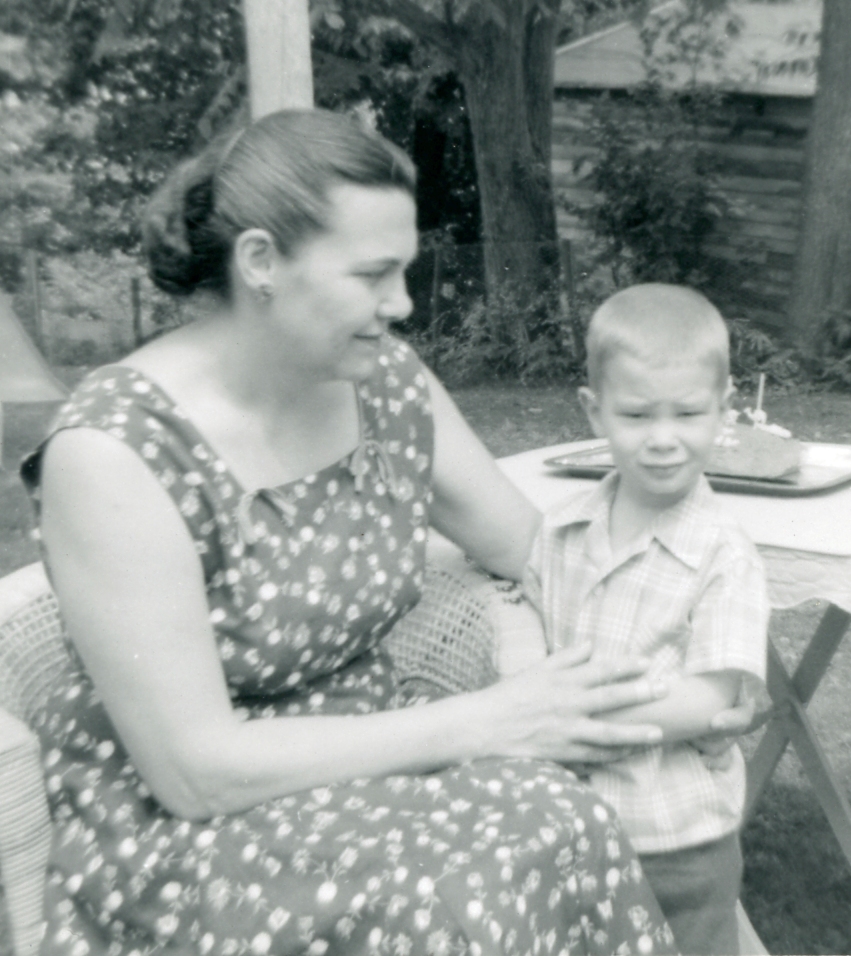
One hundred years ago today, on March 8, 1914, my Mother was born.

Avis Louise was the first born of the six children of George P. and Stella (Libby) Foss. Growing up in Center Strafford, New Hampshire, Avis went to high school at Austin Cate Academy. She played cello in the school orchestra and center for the girl’s basketball team. Avis graduated from Austin Cate in 1932.

Avis had been accepted to next attend Plymouth (N.H.) State College where she hoped to major in Physical Education, but for some reason her parents could not afford the tuition and she had to turn down her acceptance. Instead, Avis attended the Exeter (N.H.) Hospital Training School for Nurses. Nursing students paid for their room, board and tuition by working shifts at Exeter Hospital between their classes and study hours. Somehow and somewhere along the way, she also learned to play the piano.

Avis graduated from the Exeter Hospital Training School in 1936. Not long after, she moved to Orlando, Florida, where she worked for about a year, living with her half-sister, Marion Brown and Marion’s husband, Harley. Eventually, Avis returned to Exeter, where she met my Father.

In May of 1941, Avis Louise Foss married Francis Matthew Sinclair. Because Avis was not a Roman Catholic (as Francis was), the small wedding ceremony was held in the living room of the priest’s house, next door to St. Michael’s Church, in Exeter.

Professionally, Avis loved being a nurse. She was justifiably proud to have passed the state board exams and earned the distinction of being a Registered Nurse. She was employed as an RN at Exeter Hospital for many years and was honored to be among the small group of nurses chosen to work in the hospital’s first Recovery Room.

Personally, Avis and Francis were trying to start a family. After much heartbreak and with thanks to one of the doctors that she worked with at Exeter Hospital who suggested that she get her thyroid checked, Avis finally became a mother in August of 1953.

Avis Louise Foss Sinclair was thirty-nine years old. I would be her only child.

Avis1956

My Mother really loved her family and being a mother.

From the earliest times that I can remember, my Mother supported and encouraged me in whatever I wanted to do. When, at the age of ten, I first expressed an interest in playing music, she gave me my first snare drum and cymbal and arranged for me to take drum lessons. When my seriousness in this endeavor was firmly established, she helped me in purchasing my first complete drum set.

When I was in high school, my Mother was quite pleased when I took up the guitar. I soon started writing my own songs and eventually doing some performing. As supportive as they both were, neither of my parents were quite sure what to say when I told them that this performing thing was what I wanted to study in college and eventually do for a living. But when I ultimately announced during my sophomore year at the University of New Hampshire that I had decided that I wanted to be a music teacher and do my singing, guitar playing, songwriting and performing “on the side,” both of my parents, though my Mother especially, were thrilled and quite relieved.

All throughout those years however, from seventh grade through college, my Mother frequently allowed me to turn her living room into a rehearsal space for whatever band or ensemble I was playing with at the time. The bass guitarist in my college trio (who is still a good friend and occasional bandmate) has many fond memories of the dinners my mother served up on the evenings we’d rehearse at the house on Newfields Road.

In the years ahead, my Mother found that she also loved being a mother-in-law. And then, when the time arrived, she absolutely reveled in being “Nana” to her granddaughter and grandson. My Mother gifted her grandchildren with many precious memories and experiences that they cherish to this day.

Avis1994

My Mother suffered a slow and tragic decline of her health over the last six years of her life. With a mere shadow remaining of the woman we all loved so much, Avis Louise Foss Sinclair passed away on Sunday, August 5, 2001. She was eighty-seven years old.

As my Mother would always say, “God love you!”

Happy 100th Birthday, Mom! You’d have been a great centenarian.

Posted in Random Topics | Tagged , , , | 2 Comments

A Valentine’s Day Song

“And I Love Her” was Paul McCartney’s first ballad.

Though John Lennon may have helped a bit with the “middle eight” – the part that starts: “A love like ours, could never die…” – this song was the first in a long line of melodically-gorgeous songs that made Paul McCartney… well, Paul McCartney.

The Beatles recorded “And I Love Her” at Abbey Road Studios in London over three days of recording sessions, February 25 – 27, 1964. The song was released as the fifth cut on the first side of the album A Hard Day’s Night on July 10, 1964. The recording features an outstandingly-perfect guitar part created and performed by George Harrison on a Ramirez classical guitar.

When a song has the kind of melody that “And I Love Her” has, it is possible for a gifted instrumentalist to forgo the lyrics and create an arrangement of the song wherein his or her instrument “sings” the song.

Such a gifted instrumentalist is guitarist Pat Metheny.

In 2011, Pat Metheny released the album What’s It All About.

The album contains 10 original arrangements of some of Metheny’s all-time favorite Pop songs. Metheny performs these arrangements on a variety of acoustic instruments, the primary instrument being a “Nashville-tuned baritone acoustic guitar.”

Track 10 is his rendition of “And I Love Her.”

Here, for your Valentine’s Day listening pleasure, is a beautiful video of Pat Metheny performing his (in my mind) dazzling arrangement of this classic love song.

Happy Valentine’s Day to you and yours… and mine.

Posted in Posts with Video, Random Topics | Tagged , , , , | 1 Comment

This Very Historic Day

Here I am again.

It’s a Sunday afternoon, a February 9th, and I can’t wait for 8:00 pm.

Fifty years ago today, on that Sunday afternoon – February 9, 1964 – the ten-year-old me couldn’t wait for 8:00 pm because that was when The Ed Sullivan Show was going to be on TV.

Ed Sullivan’s special guests that evening were The Beatles.

Thanks to Jeanette, the teenage girl who lived next door and took care of me after school until my parents got home from work, I knew all about The Beatles. I knew their names (Ringo was my favorite), where they were from (I’d never heard of Liverpool before) and, thanks to Jeanette’s record collection, I knew and loved every one of their songs. I also knew that their performance on The Ed Sullivan Show that evening would be their first time playing live and in person here in America.

Well, as I said, here I am again.

Thanks to my generous and thoughtful New Jersey sister-in-law, I received a Christmas present a few years back of a DVD set called: “The Four Complete Historic Ed Sullivan Shows Featuring The Beatles.”

So, in honor of the 50th anniversary of that very historic day, my wife and I are going to sit down together at 8:00 pm and watch that very same Ed Sullivan Show – the whole show, commercials and all – from February 9, 1964.

I’m very, very excited.

Posted in This Historic Day In Music | Tagged , , | 2 Comments

This Historic Day… My Daughter

What?

It’s your birthday again?

Whoa.

Time does fly.

Well, you know what to do!

Par-taaaaaaaaaaaaaaaaaay!!!!!!!!!!!

The very happiest of birthdays to you, my dear daughter.

Rock on!

Posted in Random Topics | Leave a comment

Playing It Again

On May 3, 2010, I wrote and published my sixth post on sixstr stories.

It was an “On This Day In Music History” post in celebration of Pete Seeger’s 91st birthday.

In the days since he died, I’ve really wanted to say something more about Pete Seeger than what I’d posted at 6:00 am last Tuesday not long after I heard the sad news. Looking back in the archives, I thought this old song was worth playing again.

So, here it is.

In the room where I teach, on the wall behind where I sit, hung so that my students can see it just over my left shoulder, is a framed quote: “Practice may not make perfect but it sure as hell makes for improvement.”

The quote is from Pete Seeger, found in the introduction to his children’s picture book Abiyoyo (1985).

On May 3, 1919, in New York City, Charles and Constance Seeger welcomed their third son, Peter, into the world. At the age of 8, Pete learned to play the ukulele. When he was 13, he took up the 4-string banjo and then switched to 5-string banjo when he was 19. When Pete was around 21, Huddie Ledbetter taught him to play the 12-string guitar.

In March of 1940, he gave his first concert performance. He went on to perform and record as a member of the Almanac Singers and then the Weavers, who in 1950, had a #1 hit record with their version of “Goodnight, Irene.” As a solo performer, Pete sang and played for decades in schools, coffehouses, concert halls, on college campuses and in all sorts of venues across America and around the world; inspiring countless numbers of people, young and old, with folk music.

From 1957-1962, Pete recorded a five-album series for Folkways Records entitled “American Favorite Ballads.” In 2002, Smithsonian Folkways Recordings began releasing the series on CD in five volumes. Listening just to Volume 1, I am enthralled by and thankful for the incredible, timeless songs that Pete has preserved. “John Henry,” “Shenandoah,” “Home On The Range,” “Oh, Susanna,” “Wayfaring Stranger” and “Frankie and Johnny” to name a very few.  His renditions are joyous, alive and though the songs are for the most part simple, he makes them “vibrate and sparkle with the life that is within them.” (From: The Folksinger’s Guide To The 12-String Guitar As Played By Leadbelly: An Instruction Manual by Julius Lester and Pete Seeger, 1965)

Last August, not long after celebrating his 90th birthday with a star-studded concert at New York City’s Madison Square Garden, Pete took to the stage again. This time it was at Fort Adams State Park in Newport, RI, for the first night of George Wein’s Folk Festival 50, a two-day celebration of the 50th anniversary of the first Newport Folk Festival (which Pete helped organize and also played at). And, thanks to my amazing wife and the best Father’s Day/birthday present ever, I, as I kept incredulously telling myself, was there.

As Pete strode on stage, with his banjo in one hand and 12-string guitar in the other, the 9000-plus  in the audience stood and roared in excitement and wonder and with much love. Starting with the 12-string, he picked out the notes of the melody of  “Turn! Turn! Turn!” and, after apologizing for not having much of his singing voice left, turned the singing over to us, lining out the lyrics as we went along.

His next songs paid tribute to his old guitar teacher (“The Midnight Special”) and Irving Berlin (“Blue Skies”). Then, line by line, he taught us his song “Take It From Dr. King.”  The stage soon filled with the other musicians who had played during the day at the festival, and the evening air was filled with sing-along after fabulous sing-along: “This Little Light,” “Guantanamera,” “Worried Man Blues,” “If I Had A Hammer” and the finale “This Land Is Your Land.”

That was Saturday, August 1st, 2009. The next night, Sunday, in the rain, he and about 7800 of us, did it again.

If you want to hear Pete Seeger, his Greatest Hits CD on Columbia features his original songs and the American Favorite Ballads series on Smithsonian Folkways features all those great old folk songs. If you want to see Pete Seeger, the DVD Pete Seeger: the Power of Song is outstanding and if you want to read about him, How Can I Keep From Singing: Pete Seeger by David Dunaway is the definitive biography.
 

Posted in Random Topics | Tagged | 3 Comments