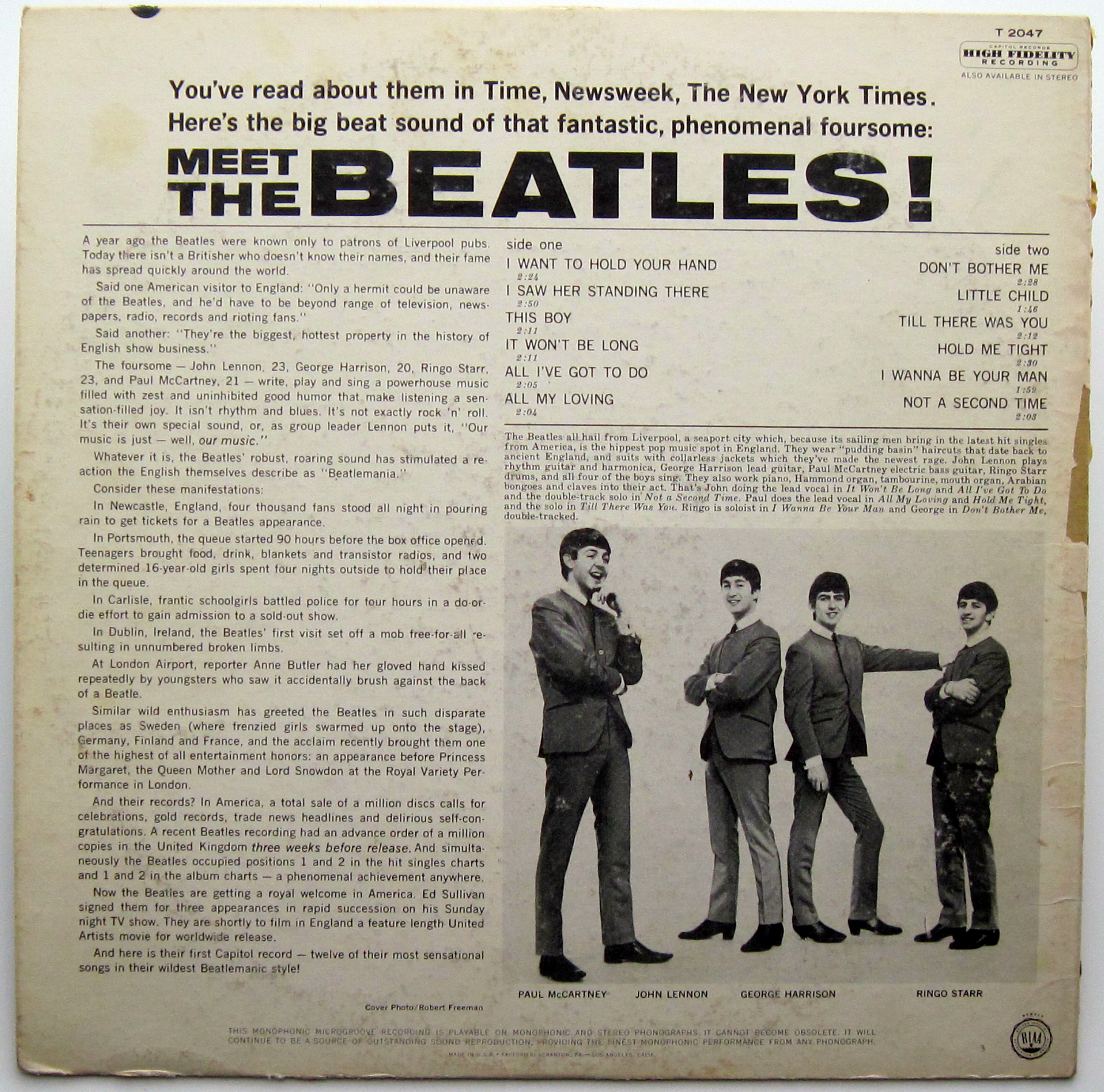
All of the 12 songs on The Album had already been released in England.
“I Saw Her Standing There” was the oldest, having been released on March 22, 1963. This song was the first track on the EMI/Parlophone LP Please Please Me.
“I Want To Hold Your Hand” and “This Boy” were the A & B sides of the EMI/Parlophone single (R 5084) that came out on November 29, 1963.
The remaining 9 songs on The Album were from the EMI/Parlophone LP With The Beatles, which had hit the stores in England on November 22, 1963.
The Album had been programmed, remixed and mastered by Dave Dexter, Jr., an executive at Capitol Records, who was assigned the task of assembling tracks from the EMI/Parlophone records for an American release. Author Dave Marsh, writing in his 2007 book, The Beatles’ Second Album, describes Mr. Dexter as someone who: “despised Rock’n’Roll as a whole, believing it inferior to what he called ‘legitimate’ music.”
Because Capitol Records feared that “remakes” or cover versions of previously-recorded songs would turn off American listeners, eleven of the twelve songs selected for The Album were written by the members of the band.
The only cover version on The Album was of the Meredith Wilson song, “Till There Was You,” a selection from the 1957 musical play, The Music Man.
The Album reached #1 on the Billboard Top LP chart for the week of February 15, 1964 and held the #1 spot for eleven weeks in a row.
The Album of which I write, as you’ve probably guessed by now, is Meet The Beatles!
It was released in the United States on January 20, 1964, 50 years ago today.
The album is called High Hopes and, as one would expect, its release has triggered a cacophonous accompaniment of articles, interviews and record reviews. Though I have certainly not read and/or heard them all, the ones I have perused have made much of the fact that the new collection contains three covers: “Just Like Fire Would” by Chris Bailey from the band known as The Saints; “Dream Baby Dream” by Suicide; and the title track, “High Hopes” by Tim Scott McConnell.
As much as I’m looking forward to hearing the new album – I haven’t had a chance to stop by Bull Moose Records in Portsmouth to pick-up a copy yet – all the talk about Bruce Springsteen doing cover versions made me think about the album of his that is all covers: We Shall Overcome: The Seeger Sessions.
Released on April 25, 2006, the album – the 14th studio album of his career – contains recordings made by Bruce in 1997, late 2005 and early 2006. All of the 13 songs come from the repertoire of Folk musician Pete Seeger and most are listed in the credits as being “traditional” – i.e.: nobody really knows who wrote it – Folk songs.
In the liner notes, Bruce himself writes of the recording sessions that produced these tracks: “It was a carnival ride, the sound of surprise and the pure joy of playing. Street corner music, parlor music, tavern music, wilderness music, circus music, church music, gutter music, it was all there waiting in those songs, some more than one hundred years old. It rocked, it swung, it rolled.”
One of my favorite cuts from the album is track #4: “O Mary Don’t You Weep.” This song is described in the liner notes as being: “One of the most important Negro spirituals, adapted by black Pentecostal churches, the song then made its way into the freedom song repertoire of the civil rights movement.”
Here is a wonderful video of the making of the recording of “O Mary Don’t You Weep,” in a slightly longer version than the one that was released on the album.
The musicians on this recording are: Bruce Springsteen, acoustic guitar and lead vocals; Sam Bardfeld, violin; Art Baron, tuba; Frank Bruno, guitar; Jeremy Chatzky, upright bass; Mark Clifford, banjo; Larry Eagle, drums; Charles Giordano, accordion; Ed Manion, saxophone; Mark Pender, trumpet; Richie Rosenberg, trombone; Patti Scialfa, backing vocals; and Soozie Tyrell, violin and backing vocals.
Now, that’s a band!
I hope you’ll sit back and give yourself the seven minutes and six seconds it takes to watch and listen to this example of truly remarkable music making.
We Shall Overcome: The Seeger Sessions was awarded the Grammy Award for “Best Traditional Folk Album” in 2007.
My friend Chuck is a follower and frequent comment-leaver (#2 for 2013!) of this blog.
His first comment of 2014 was left on my first post of 2014 – Happy New Year.
Chuck wrote: “Just like a hazy shade of winter.”
Thanks to my wife’s extensive knowledge of Top 40 music from the 1960’s, I soon found the song that Chuck was referencing. “A Hazy Shade of Winter” by Simon & Garfunkel was right there on the second side of our LP copy of Bookends, the duo’s classic 1968 album.
Thanks to Wikipedia, I learned that all of the songs on the second side of Bookends were “unused songs intended for The Graduate soundtrack.”
And there among those songs on the second side of that album, songs rejected by the producers of the movie, The Graduate, I found a very old and dear friend: “Punky’s Dilemma.”
I hadn’t thought of that song in years. I hadn’t listened to that song in years. (I haven’t played and sung that song in years, either.)
I have just listened to it again (twice actually) and oh, what a joy it was. It put such a big smile on my face that I simply had to share the song – and, I hope, the smile – with all of you.
So, ladies and gentlemen, may I present to you: “Punky’s Dilemma” by Simon & Garfunkel.
As the sun sets behind the hemlocks and the birches in my New Hampshire backyard on this first day of 2014…
…I wish you all – followers, readers & comment-leavers; viewers, listeners & frequent or just-occasional visitors – a happy, healthy, prosperous, peaceful, music-filled and magical New Year.
On Thursday evening, January 31, 1974, I attended a concert at The Music Hall – now known as the Citi Performing Arts Center’s Wang Theatre – in Boston, Massachusetts.
Joni Mitchell was the headliner. The very popular singer, songwriter, guitarist, pianist and Appalachian mountain dulcimer player was touring in support of her sixth album, the just-released Court and Spark. I was a fan of her 1970 album, Ladies of the Canyon.
The opening act was Jackson Browne. The 25-year-old singer, songwriter, guitarist and pianist had two albums to his credit at that time: 1972’s Jackson Browne and For Everyman, released in October of 1973. With both of these albums being frequently-played selections from my record collection, I was looking forward to hearing Jackson Browne that night as much I was to hearing Joni Mitchell.
The one song that I still remember from Jackson Browne’s performance that night was a spirited, crowd-pleasing rendition of Chuck Berry’s “Sweet Little Sixteen.” It seemed a bit odd at the time for such a sensitive singer-songwriter type to break into a classic 1950’s Rock & Roll number, but how could a Folk-Rocker worth his salt do a show in Boston and not play the song that starts: “They’re really rockin’ in Boston…?”
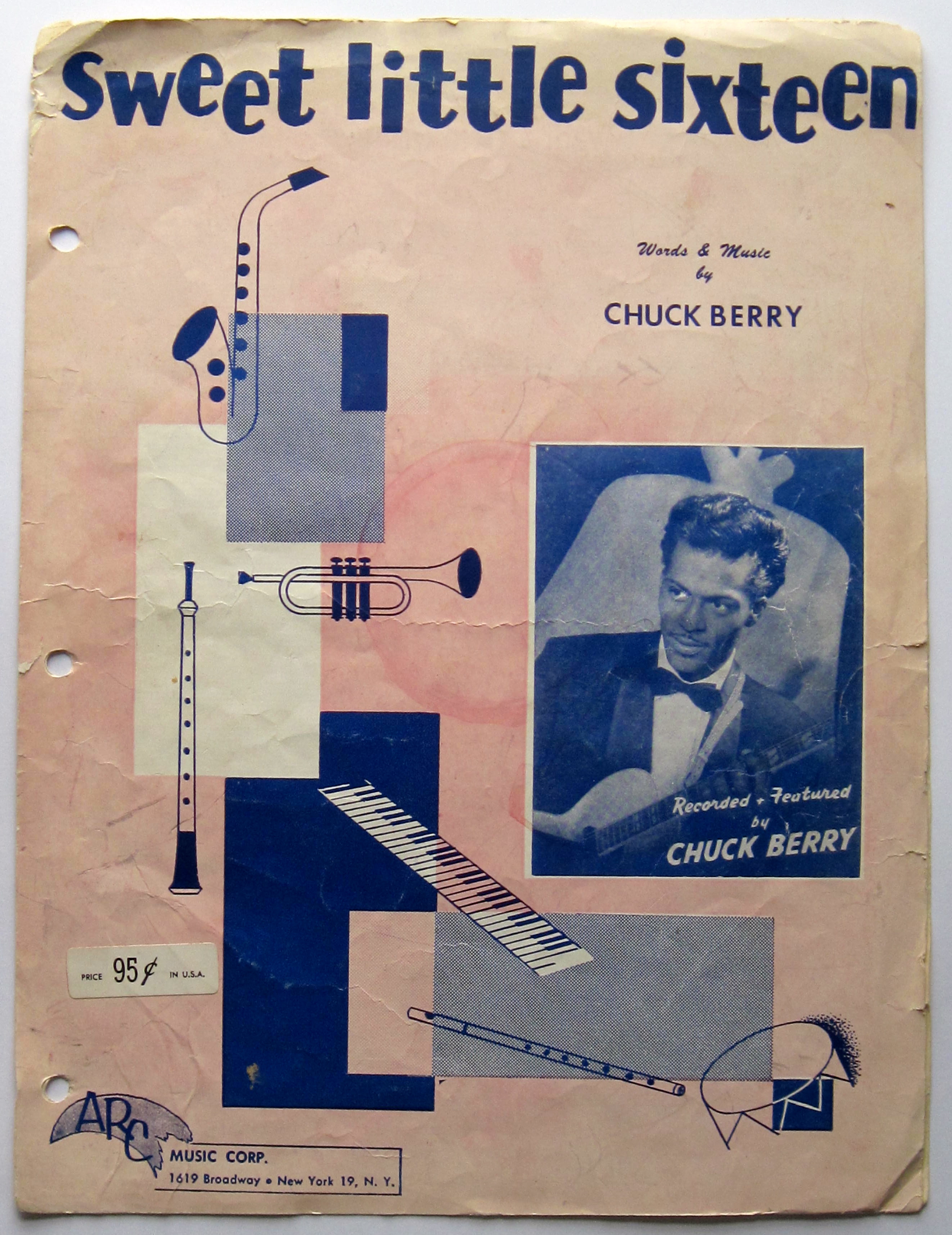
Jackson Browne’s performance that night inspired me to learn how to play and sing this great, great song. Not long after, I purchased a copy of the sheet music for “Sweet Little Sixteen”…
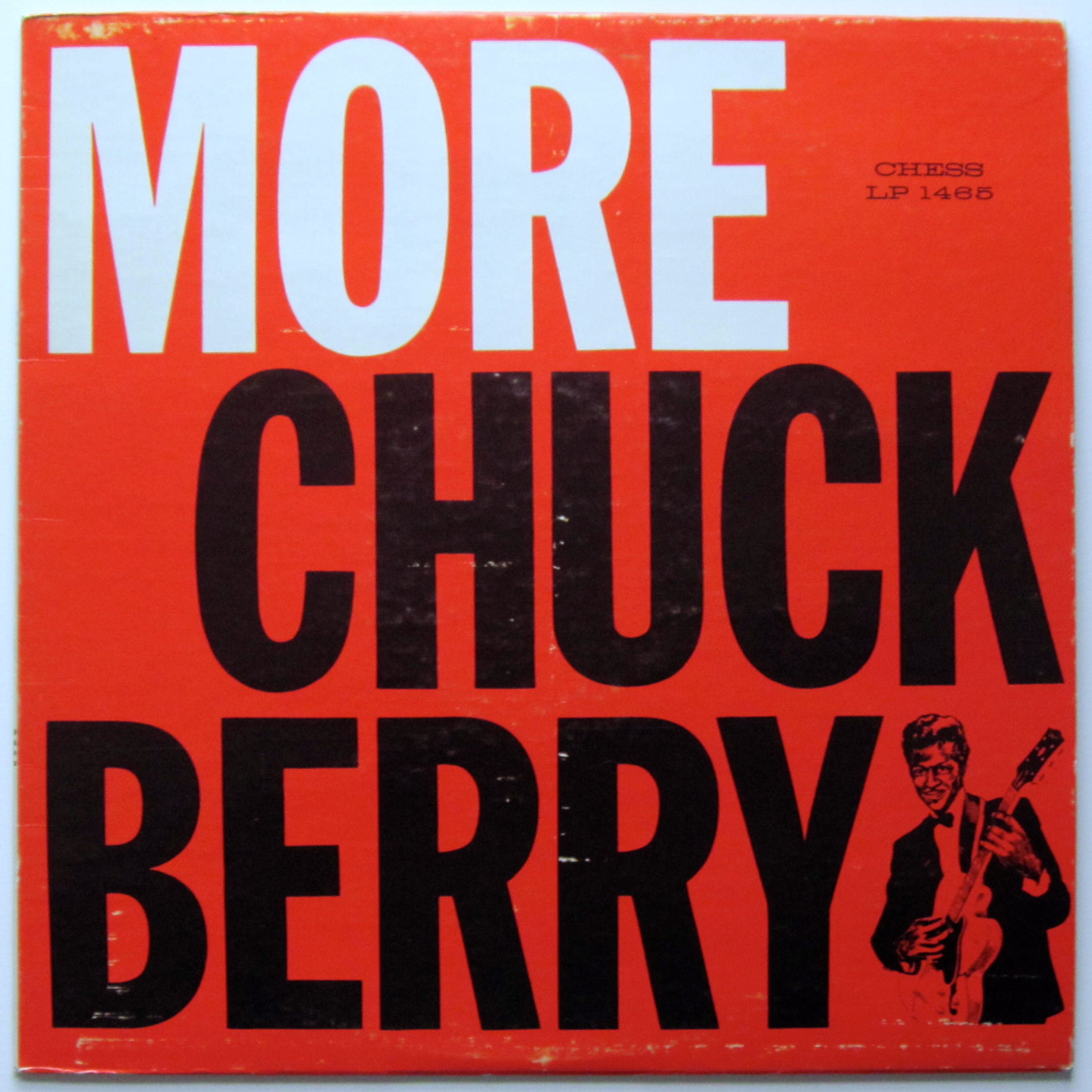
…and a Chuck Berry LP containing the original recording…
…and was soon belting out “All the cats wanna dance with… Sweet Little Sixteen” for myself.
So, what does this story have to do with today?
Let me tell you.
On December 29, 1957, singer, songwriter and electric guitarist Chuck Berry entered the recording studios of Chess Records in Chicago, Illinois to record the follow-up record to his previous single, “Rock and Roll Music.” In a session that extended into the next day, Chuck Berry and his band – Lafayette Leake, piano; Willie Dixon, bass; Fred Below, drums – cut finished recordings of two new songs: “Reelin’ and Rockin'” and “Sweet Little Sixteen.”
Chess Records released “Sweet Little Sixteen” b/w “Reelin’ and Rockin'” as Chess single #1683 in January, 1958. “Sweet Little Sixteen” went on to be the second highest-charting single of Chuck Berry’s career. Rolling Stone magazine placed it as #272 on it’s 2004 list of The 500 Greatest Songs of All Time. In his 1989 book, The Heart of Rock & Soul: The 1001 Greatest Singles Ever Made, author Dave Marsh ranks “Sweet Little Sixteen” at #180.
Check it out for yourself.
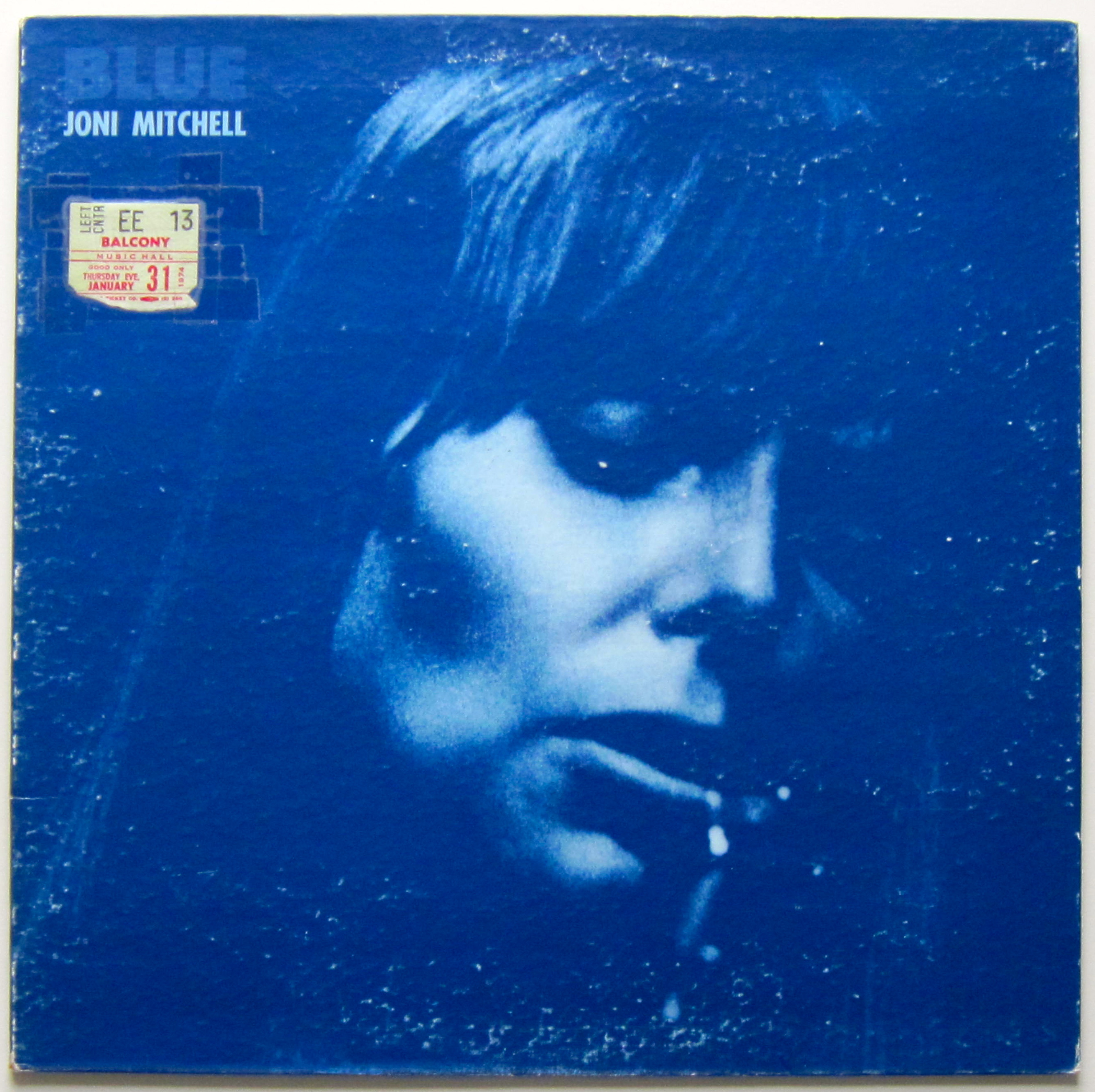
P.S.: In February of 1975, I met the dazzling young woman who would become – and still is – my wife. One night, while trading stories about concerts we’d seen, we discovered that she’d been (with her good friend – to this day – Patty) at that Joni Mitchell concert in Boston, too! She even had her ticket stub – taped to the record jacket of her prized and well-worn copy of Joni Mitchell’s 1971 album Blue – to prove it!
In 1993, I became the guitarist for The Amity Singers, a contemporary Christian vocal group at First Parish Church Congregational in Dover, New Hampshire.
After I’d been with the group for a few months, I presented them with an arrangement I’d done of one of my songs “There Are (Songs To Be Sung).” It soon became one of the group’s favorite performance pieces and I invited them to join me on the choruses when I recorded “There Are (Songs To Be Sung)” for my 1995 CD of the same name.
(You can find a link to that recording in my August 14, 2010 post called “Many Thanks, Again.”)
In the Fall of 1994, I tried writing a new song specifically for The Amity Singers. “Sing to the Lord” however, quickly became “Sing To The World.” Any song I was going to write had to be inclusive. But, according to my songwriting journal from that time, my good intentions soon got distracted by other ideas and I didn’t really devote myself to finishing the song until the Fall of 1995. Finally, with inspiration from a variety of sources that included Rev. David Slater (First Parish Church’s minister back then), Lech Walesa, Sir Isaac Watts and Woody Guthrie, and after seven pages of drafts, edits and minuscule refinements I finished the four verses of this decidedly hymn-like song on April 2, 1996.
I never did write a four-part, choral arrangement of “Sing To The World,” so The Amity Singers – disbanded for quite some time now – never sang the song. It did become a satisfying, set-opening staple of my solo performance repertoire for many years after. A few days ago, “Sing To The World” again served in that role for this year’s edition of the annual holiday-themed concert that I give at the school where I teach.
The song starts:
“Sing to the world a new song, sing with a joyful heart,
Sing to the world a song that welcomes all with open arms,
Sing to the world with countless voices joined in harmony,
Sing to the world a new song that all the world can sing.”
Here is a brand new, home-studio recording of “Sing To The World” for your holiday (or any day) listening pleasure.
“‘Over The River And Through The Woods’ is a Christmas song.”
Well…
Here’s the story.
The words to “Over The River And Through The Woods” were taken from a poem.
The poem was called “The New-England Boy’s Song About Thanksgiving Day” and it was written by Lydia Maria Child. The original 12 verse poem was included in Ms. Child’s book, Flowers for Children, Vol. 2 and was published in 1844.
Lydia Maria Child was born on February 11, 1802 in Medford, Massachusetts. She was a prolific author, a journalist and an active antislavery and women’s rights activist. Her first novel, Hobomok: A Tale of Early Times, was published in 1824. Her last publication, Aspirations of the World, came out in 1878.
Lydia Maria Child passed away on October 20, 1880 in Wayland, Massachusetts. She was 78 years old.
No one seems to know who set the poem to music or when. One source suggests 1870 and another cites a published version of the song dated 1897. One source believes the melody to be “an old French Folk tune.” The song is generally listed as being “traditional,” or authored by “Anonymous.”
I’ve long enjoyed this song, both the words and its jaunty, infectious melody. We have home videos of past Thanksgivings with me merrily whistling the tune in the background, a soundtrack for the family craziness.
For your Thanksgiving listening pleasure, I have arranged and recorded a brand new, fingerstyle, acoustic guitar arrangement of this timeless song.
To listen, click on the blue link below… wait for it!
On behalf of everyone here at sixstr stories, I hope you have a most happy and festive Thanksgiving Day.
PS – Here’s a holiday music quiz! Can you name the other well-loved holiday song written by a songwriter who lived in Medford, MA? While you’re at it, can you name the songwriter? Click on “leave a comment” to send your answer.
The latest issue of Acoustic Guitar magazine – January 2014, Issue 253, Vol. 24, No. 7 – arrived in today’s mail. The monthly collection of song transcriptions in this issue – “6 Songs To Play” – is an especially good one. It includes “Dublin Blues” by Guy Clark, “Luka” by Suzanne Vega and – I was excited to see – “T-Bone Shuffle” by T-Bone Walker.
“T-Bone Shuffle” is a favorite of mine. Long time readers of this blog will know that. I’ve written about the piece twice: on April 21, 2010 in a post titled On This Day In Music History – “T-Bone Shuffle” and on May 15, 2011, Revisiting The “T-Bone Shuffle.”
So, after lunch, as I set about doing advance preparations for Thanksgiving day dinner, I put my favorite T-Bone Walker CD on the stereo – Low Down Blues – and clicked on the speakers in the kitchen.
Low Down Blues is a 1986 Charly Records compilation of 22 recordings made by T-Bone Walker between late 1946 and early 1948 in Los Angeles, California for the Black & White label. Starting off with “Don’t Leave Me Baby,” the album goes on to offer up such delights as “It’s A Low Down Dirty Deal,” “T-Bone Jumps Again” and “Call It Stormy Monday.” This is music that Alan Balfour accurately describes in the liner notes as: “easy listening of the best sort, all delivered with stylish aplomb and musical brilliance.”
As the afternoon pleasantly progressed, one track really caught my ears: “Too Much Trouble Blues.” The song starts, as many of his songs do, with an introduction featuring one of T-Bone Walker’s brilliant guitar solos. This one in particular is quintessential T-Bone, the kind of electric Blues guitar playing that strongly influenced such equally-influential players as B.B. King and Chuck Berry.
Whatever you’re doing this afternoon or this evening, take a few minutes and check it out for yourself: “Too Much Trouble Blues” by the legendary singer and electric Blues guitarist, Mr. T-Bone Walker.
“Dublin Blues” is the title of an album and a song by songwriter, singer, guitarist & luthier, Guy Clark.
The album, Dublin Blues, was released in 1995 and was Guy’s 8th album. (His first, Old No. 1, came out in 1975.) It was recorded at EMI Studios in Nashville, Tennessee and produced by Miles Wilkinson and Guy. The 10 songs on the album were written either by Guy Clark alone or with one (or two) of six co-writers: Susanna Clark, Keith Sykes, Rodney Crowell, Jim Janosky, Jimmie Fadden and Verlon Thompson.
The song, “Dublin Blues,” is the first song on the album and was written entirely by Guy.
Musically, the song is in the key of E major and I’m pretty sure that Guy plays it with his guitar partial-capoed at the second fret (the sixth string is left open to provide its low E bass note) and fingered in the key of D. Harmonically, the chord progression of the song uses only three chords. (That is, after all, all you need for a Country song.)
Accompanying Guy’s guitar and lead vocals on the recording are: Verlon Thompson, acoustic guitar; Kenny Malone, drums & Irish drum; Travis Clark (Guy’s son), acoustic bass; Darrell Scott, acoustic guitar and penny whistle; Jonathan Yudkin, violin; Sam Bush, mandolin; and Nanci Griffith, harmony vocals.
Structurally, the song has three verses and a chorus with the chorus sung after each verse. (Nanci Griffith adds her lovely harmonies starting with the second statement of the chorus.) The instrumental introduction of the recording features Guy picking out a version of the melody from the verse of the song. He uses a bass-string guitar style that owes as much to Duane Eddy as to Maybelle Carter. The coda, or ending of the song reprises the first half of the first verse.
The lyrics of those three verses and the chorus of “Dublin Blues” are among the best that Guy Clark has ever written.
If you know anything of Guy Clark and his stature in the world of contemporary songwriting, that’s saying something.
But you should decide for yourself.
Listen.
Guy Clark was born on November 6, 1941 in Monihans, Texas.
He released his fifteenth album, My Favorite Picture Of You, in July, 2013.
If you’re a new visitor to this blog, the purpose of my Wrestling With The Angel series (or category) is to highlight and share individual songs that are on a list of mine entitled: Devastatingly Great Songs. The title phrase, “Wrestling With The Angel,” is my paraphrase of a line from a poem by Herman Melville called “Art.” You can read the complete poem in my archived post of November 4, 2011: “The Source.”



 sixstr stories