Guitar Music: “The Water Is Wide”

(To see more Guitar TAB transcriptions, click on Guitar Music in the Categories list!)

sixstr stories, as it says on the home page above the right hand corner of the close-up photo of my favorite guitar, is “Just another WordPress.com weblog.”

Last December, the nice folks at WordPress sent me an email titled “Your 2015 year in blogging.” It contained a personalized annual report detailing how sixstr stories did statistically in 2015. Using some very cool graphics, the report provided stats in six categories including “Crunchy numbers” (how many times my blog was viewed in 2015), “How did they find you?” and “Where did they come from?”

Under “Attractions in 2015,” I learned that the two posts that got the most views in the last year were: “Deep River Blues” (posted on April 7, 2013) and “Buck Dancer’s Choice – A Transcription” (posted on February 4, 2015).

Hmm.

Those are the only two posts in all of sixstr stories that contain a scanned reproduction of one of my handwritten transcriptions of a piece of fingerstyle guitar music.

Well, viewers, if you liked those transcriptions, here’s another!

On August 28, 2012, I wrote a post about the classic English Folk song, “The Water Is Wide.” After giving a brief history of the song, I included a link to the recording of my instrumental fingerstyle arrangement of “The Water Is Wide.” [I played it on the guitar pictured on my home page!]

Here again is that recording…

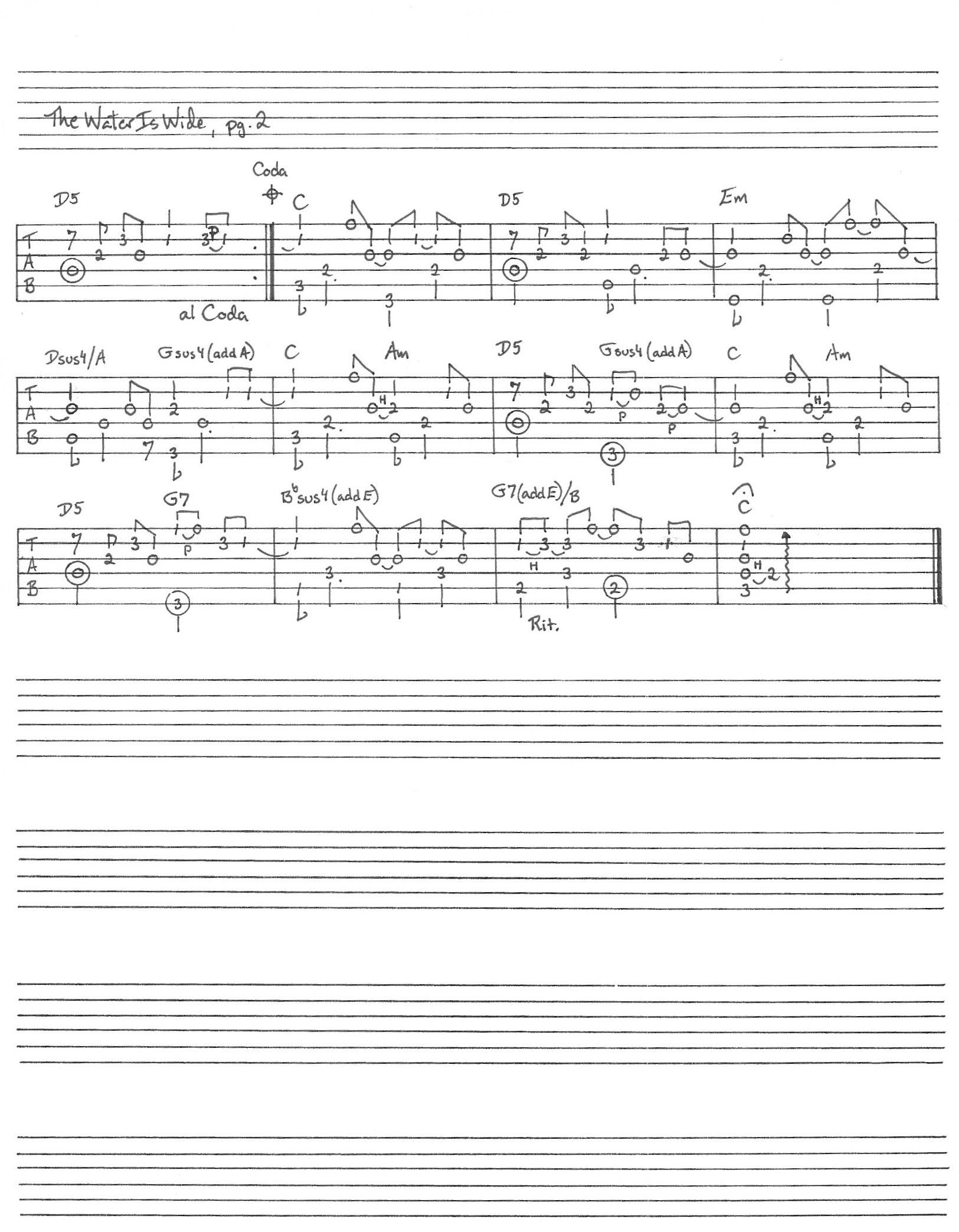
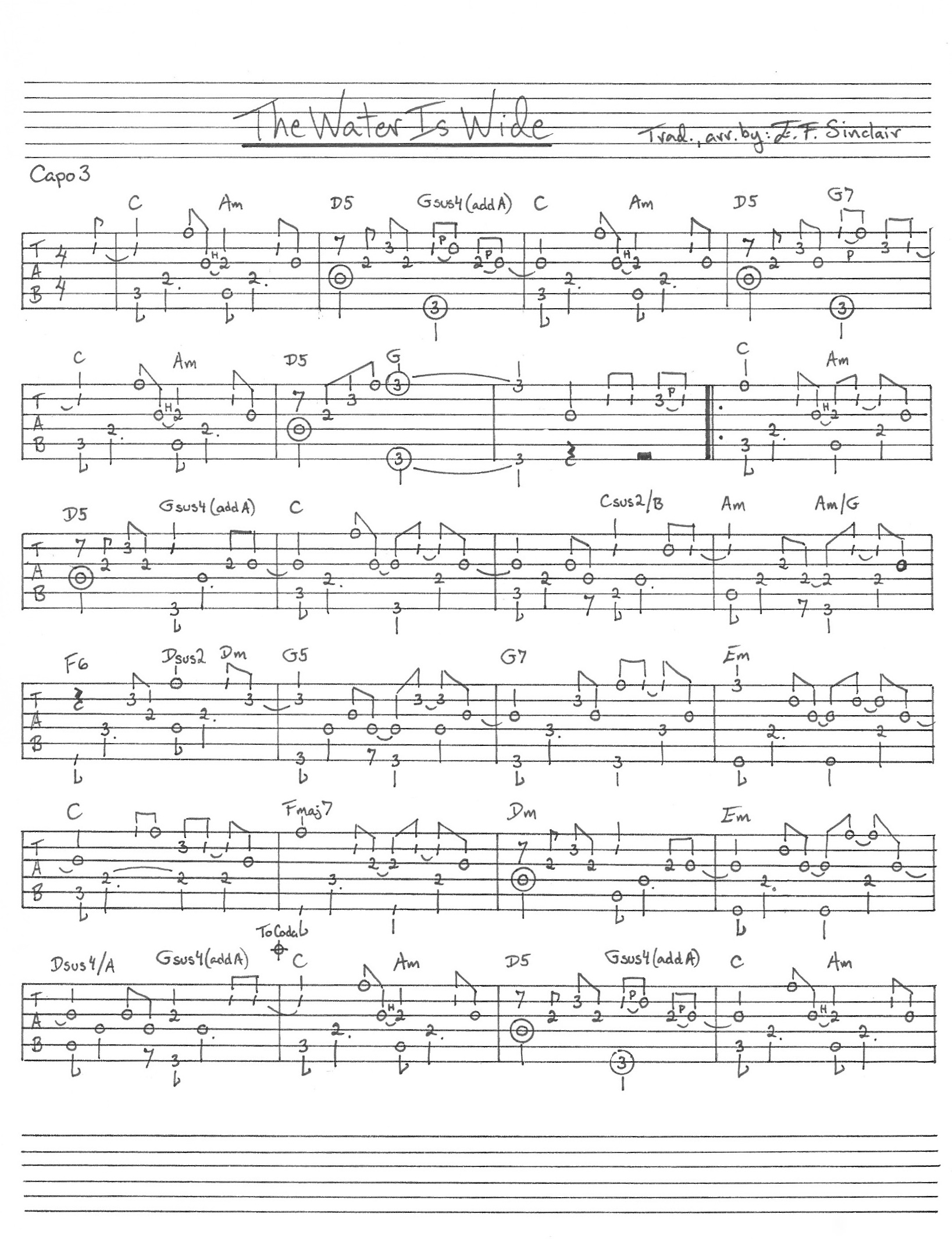
…and here is a transcription of my arrangement:

Scan 2

Scan

There you go!

Whenever I play “The Water Is Wide,” these are the lyrics that I hear in my head:

Verse 1) The water is wide, I can’t cross o’er, and neither have I wings to fly.

Give me a boat that can carry two and both shall row, my love and I.

Verse 2) There is a ship and she sails the sea, she’s loaded deep as deep can be.

But not so deep as the love I’m in, I know not how to sink or swim.”

If you’re a guitarist, I hope you’ll try out my arrangement. If you know a guitarist (or two) who would be interested, please share a link to this post.

Posted in EFS Music, Guitar Music | Tagged , , , , | 3 Comments

“O Holy Night”

I originally shared the recording of “O Holy Night” by The City of New Orleans on the occasion of sixstr stories’ first Christmas.

On December 22, 2010, I wrote:

This is my favorite recording/performance of Christmas music. Period. Hands down. No doubt. Head and shoulders above all the rest.

Back in 2006, there was a TV show called “Studio 60 on the Sunset Strip” on NBC. The series, by writer & director Aaron Sorkin, was about the goings on behind the scenes of a Saturday Night Live type of show. On December 4, Episode #11 aired. It was called “The Christmas Show.”

A group of displaced New Orleans musicians performed on the show-within-the-show. They were introduced as “The City of New Orleans.”

I did not mention in that “Merry Christmas” post that The City of New Orleans was a sextet: two trumpets, trombone, tenor saxophone, soprano saxophone and sousaphone.

Thanks to my son, I now know that the group’s dazzling lead trumpet player was Troy Andrews, the New Orleans-born, then-20-year-old, multi-instrumentalist also known as Trombone Shorty.

The City of New Orleans’ rendition of “O Holy Night” still stands as my all-time favorite recording/performance of Christmas music.

I hope you enjoy it, too. Headphones recommended!

“O Holy Night” by The City of New Orleans

(In case you’re wondering, NBC made that recording available as a free download.)

Best wishes to you and yours for a Very Merry & Musical Christmas from sixstr stories.

“Good music doesn’t get old.”


Posted in Posts with Audio, Random Topics | Tagged , , , , | 2 Comments

An Early Christmas Gift

Acoustic fingerstyle guitarist Ed Gerhard has performed in the Seacoast New Hampshire area during the holiday season every year for the past 33 years. For most of those years, “Ed Gerhard’s Annual Christmas Guitar Concert” has been held in the beautiful sanctuary of the Unitarian Universalist Church on State Street in downtown Portsmouth.

During the late 1990’s – early 2000’s, Ed shared the stage at his Christmas Guitar Concerts with the British guitarist/singer/songwriter Martin Simpson.

My daughter and I attended several of those “Ed & Marty” shows, making it our Christmas tradition throughout her high school years. Those truly magical evenings have remained cherished holiday memories for both of us ever since.

Well, tonight – Saturday, December 19, 2015 – another precious holiday memory was made.

My daughter’s surprise early Christmas present to me was dinner together in Portsmouth and tickets for us to go to Ed’s Christmas Guitar Concert!

What an evening it was!

We enjoyed a delicious, conversation-filled meal at The Rosa on State Street and made it to the church in time to get fourth row seats.

Ed did the concert all by himself this year. The set list featured many of his outstanding arrangements of well-known Christmas classics as well as a collection of Ed’s original pieces, his equally-excellent arrangements of several John Lennon/Beatles’ songs and even a rendition of “House of the Rising Sun.” We were quite pleased that Ed also played several of our old favorites including “In The Bleak Midwinter” and “The Water Is Wide.”

Just as in all the concerts we went to way back when, tonight’s concert ended with Ed playing his arrangement of “Silent Night” and my daughter and I adding our voices as the entire audience joined in to quietly sing the best-known first verse.

Pure Christmas magic.

Thank you, thank you, thank you, my daughter.

Here’s Ed to add a little magic to your holiday.

Go ahead, sing along!

Posted in Posts with Video, Random Topics | Tagged , , , , , | 1 Comment

These Wide Waters

Last July…

I spent the better part of a Wednesday morning and early afternoon in the emergency room of my local hospital.

Our 14-year-old family station wagon was suddenly reduced to a nearly-worthless pile of spare parts, scrap metal and junk.

The first verse of “The Water Is Wide” kept running through my head.

How could I not get an idea for a new song?

I finished the song in time to play and sing it for my wife on the occasion of our wedding anniversary in August.

And now that I’ve lived with it, recorded it, listened to it, played and sung it enough, I’m ready to share “These Wide Waters” with you.

I hope that you enjoy the song.

(To listen, click on the blue link below and… wait for it!)

“These Wide Waters” – Words & Music, Guitar, Harmonica & Vocals by Eric Sinclair

(By the way, if that link doesn’t work, please let me know via the “leave a comment” link at the bottom of this post.)

Posted in EFS Music, Posts with Audio, Random Topics | Tagged , , , | Leave a comment

Tasting The Universe

On the evening of Wednesday, September 2, 2015, the weather in Portsmouth, New Hampshire, was perfect: a bit more than seasonably warm and barely a cloud in the sky. Perfect for catching an outdoor concert in Portsmouth’s Prescott Park, the picturesque waterfront venue that is the annual summer home of the 41-year-old Prescott Park Arts Festival.

The headlining act that Wednesday on the Festival’s River House Restaurant Concert Series was Josh Ritter and The Royal City Band. The singer/guitarist/songwriter and his longtime back-up band were debuting songs (as in playing them live and in-public for the first time anywhere) from their recently-recorded (January 5-17, 2015, in New Orleans, LA) and soon-to-be-released (October 16, 2015) new album called Sermon On The Rocks.

I attended the concert that evening because I’d heard of Josh Ritter and because I love the Prescott Park Arts Festival. Since I didn’t know his music, every song that Josh and the outstanding Royal City Band played that night was brand new to me. But when their nearly two hour-long, thoroughly engaging and infectiously exuberant performance came to an end, I had become a most enthusiastic member of the Josh Ritter Fan Club.

Many bits and pieces of Josh Ritter’s songs danced through my head as I drove home after the show. By midnight, sitting at my desk, I’d downloaded a lengthy Josh Ritter playlist from iTunes. But one of the songs that had impressed me the most, “Homecoming,” he’d announced as being from the new album. So it wasn’t until October 17 that I was able to slip my new copy of the Sermon On The Rocks CD into my CD player, turn up the volume and immerse myself in this superb song again… and again… and again.

Listen.


I don’t remember when Josh Ritter and The Royal City Band played “Homecoming” in their set that night. I do know that right from the opening number, every song was excellent and I was soon beginning to think that I might have discovered a new favorite artist.  But when Josh Ritter sang the first lines of the last verse of “Homecoming” – “The air is getting colder now, the nights are getting crisp, I first tasted the universe on a night like this” – all doubt vanished.

It was one of those rare and magical nights of music.

Everything was perfect: the weather, the place, the musicians and the songs.

To me, on a night like that, it really does feel like I’ve tasted the universe.


Posted in Posts with Video, Random Topics | Tagged , , , , , | Leave a comment

This Historic Day In Music: Wanda Jackson

Wanda Jackson?

Let me introduce to you…

One of the pioneering artists in the history of Rock & Roll: singer, guitarist & songwriter Wanda Jackson, The Queen of Rockabilly.

Wanda Lavonne Jackson was born in Maud, Oklahoma on October 20, 1937. She was the daughter of Tom and Nellie Vera Jackson.

In 1954, Wanda Jackson made her first record: “You Can’t Have My Love,” a duet recorded with Country singer Billy Gray, for Decca Records. The record reached #8 on the Billboard Hot Country Singles chart.

Wanda was sixteen years old at the time and a student at Capitol Hill High School in Oklahoma City.

In 1955, Wanda Jackson went on tour with, and briefly dated, Elvis Presley. He encouraged her to move away from Country music and start playing and singing in the Rockabilly or Rock & Roll style that he was becoming famous for.

In 1956, Wanda Jackson signed with Capitol Records and took Elvis’ advice. “I Gotta Know” was her first single. Written by Thelma Blackmon, Wanda’s rendition of “I Gotta Know” reached #15 on the Billboard Country Singles chart.

Listen.

There’s plenty more where that came from!

To date, the Wanda Jackson discography includes 79 singles, 31 studio albums, 4 live albums and 22 compilation albums of her work. Her latest album, Unfinished Business, came out in 2012.

On April 4, 2009, Wanda Jackson was inducted into The Rock & Roll Hall of Fame as an “Early Influence.”

Doing anything this weekend?

Wanda Jackson is performing this Friday, October 23 at the “high-energy music venue” Saint Rocke in Hermosa Beach, California.

Happy 78th Birthday, Wanda Jackson!


Posted in Posts with Video, This Historic Day In Music | Tagged , , , | Leave a comment

This Historic Day In Music: John Winston Lennon

Seventy-five years ago today, on October 9, 1940, at 7:00 am in the Maternity Hospital on Oxford Street in Liverpool, England, John Winston Lennon was born. He was the first and only child of Fred and Julia Stanley Lennon.

John would grow up to be a guitar player; a singer; the leader of a skiffle band; a songwriter; and a recording artist. He would achieve his greatest success and most enduring fame as a member of the 1960’s British rock band known as The Beatles.

This sixstr story is about one of John Lennon’s songs. 

Not long after The Beatles – John Lennon, Paul McCartney, George Harrison & Ringo Starr – started recording for Britain’s EMI/Parlophone Records, Brian Epstein, the band’s manager, set a rather lofty goal for the quartet. He decreed that, henceforth, The Beatles would record and release two, 14 song, long playing record albums of new material during each calendar year.

And they did, at first.

In 1963, they produced Please Please Me and With The Beatles.

In 1964, A Hard Day’s Night (sadly, with only 13 songs) and Beatles For Sale topped the charts.

Help!, The Beatles’ fifth album, was released on August 6, 1965.

Fully aware of the pending end-of-the-year deadline, the band gathered at Abbey Road Studios in London, England, on Tuesday, October 12, 1965 to begin recording their sixth album. Working with them in Studio Two were producer George Martin and recording engineers Norman Smith, Ken Scott and Ron Pender.

The first two songs The Beatles worked on – “Run For Your Life” and “Norwegian Wood (This Bird Had Flown)” – had been written (mostly) by John Lennon.

Over the next seven days, they recorded three more songs for the new LP: Paul’s “Drive My Car” 0n October 13; George’s “If I Needed Someone” on October 16; and the John (mostly) & Paul collaboration, “In My Life,” on October 18.

(Also on October 16, The Beatles churned out the song “Day Tripper” and on October 20, they cut the song “We Can Work It Out.” These songs were not for the next LP, but would be released as a single on December 3, 1965.)

As good as the five numbers intended for the LP were, The Beatles needed more songs.

So, John Lennon went home.

He spent five hours trying to write a new song. As he told Beatles’ biographer, Hunter Davies, years later: “Nothing would come. I’d actually stopped trying to think of something. I was cheesed off and went for a lie down, having given up. Then I thought of myself as Nowhere Man – sitting in this nowhere land. “Nowhere Man” came, words and music, the whole damn thing.”

Late in the evening on October 21, 1965, The Beatles recorded two unsatisfactory takes of “Nowhere Man.”

On Friday, October 22, in a session that ran from 2:30-11:30 pm, they started over on “Nowhere Man” and produced the finished tracks for the song in three takes.

For the recording of “Nowhere Man,” John played the rhythm guitar part on his Gibson J-150 E acoustic guitar and sang the lead vocal. Paul played the bass guitar and Ringo played the drums. George played the lead guitar part on his new blue Fender Stratocaster electric guitar.

Paul and George sang harmony vocals with John on the song’s “A” sections. (“He’s a real Nowhere Man…,” “Doesn’t have a point of view…,” and “He’s as blind as he can be…”) They also added “Aaaaaah, la, la, la” back-up vocals to the “B” sections. (“Nowhere Man, please listen…” and “Nowhere Man, don’t worry…”)

For the song’s guitar solo, George and John (using his new Fender Strat) played the eight-bar melody in unison.

George Martin produced the mono and stereo mixes of “Nowhere Man” in Abbey Road’s Studio One on October 25-26, 1965.

“Nowhere Man” was released as the fourth track on the first side of the album Rubber Soul on December 3, 1965.

Listen.

There are two things about “Nowhere Man” that I really enjoy.

One is the gorgeous three-part harmony singing that The Beatles open the song with and continue using for every “A” section throughout the recording.

The other is the chord progression that John Lennon came up with to accompany those “A” sections.

John Lennon wrote and played “Nowhere Man” in the key of E major. In the third measure of the eight measure “A” section, John strums a big, open-position A major chord on his Gibson acoustic. (Listen behind the lyric “…knows not where he’s….”) A major is the standard “4 chord” or “IV chord” in the key of E. But then, in the sixth measure of the “A” section, John switches his fingering to an open-position A minor chord. This introduces a harmony that is outside of the key of E and is known as a “minor IV” chord. (Listen behind the lyric “…bit like you and…”)

Simply brilliant.

Listen again?

In the United States, the Capitol Records version of Rubber Soul did not include “Nowhere Man.” Instead, the company released it as a single (b/w “What Goes On”) on February 21, 1966.

Finally, “Nowhere Man” was one of the songs that The Beatles played in their last official public performance on August 29, 1966 at Candlestick Park in San Francisco, California.

1965 would be the last year that The Beatles released two albums of new material in the same calendar year.

Posted in Posts with Video, This Historic Day In Music | Tagged , , , , , , , , , , | Leave a comment

September’s Songs

On the sixstr stories calendar of historic days in music, no month has as many dates commemorating individual pieces of music than September.

Here’s the list! (Happy listening!)

September 4th

On this date in 1962, The Beatles – 21-year-old John Lennon; 20-year-old Paul McCartney; 19-year-old George Harrison; and 22-year-old Ringo Starr – entered Abbey Road Studios in London, England to record the songs for their first single for EMI/Parlophone Records. Under the direction of producer George Martin, the quartet recorded “How Do You Do It?,” a song by English songwriter Mitch Murray, and “Love Me Do,” a Lennon & McCartney original.

The September 4th recording of “Love Me Do” – with John Lennon on vocals & harmonica; Paul McCartney on vocals & bass guitar; George Harrison on acoustic guitar; and Ringo Starr on drums – would be released on October 5, 1962 in the United Kingdom as the A-side of the first run of The Beatles’ first 7-inch, 45-rpm record. (Another Lennon & McCartney song, “P.S. I Love You” was on the B-side.)

The September 4th recording of “Love Me Do” would not be released on an album until March 2, 1980. On that day it was featured as the first track on The Beatles’ Capitol Records LP Rarities. These days, the Ringo-on-drums/September 4, 1962 recording of “Love Me Do” is available on The Beatles’ Past Masters, Volume 1 CD.


September 6th

On this date in 1933, the American Southern Appalachian duo, Ashley & Foster – 37-year-old Clarence Ashley on guitar & vocals and 30-year-old Gwen Foster on guitar & harmonica – recorded “Rising Sun Blues” for Vocalion Records in New York, NY.

This would be the first commercial recording of the song that would one day be known as “The House Of The Rising Sun.”


September 11th

On this date in 1847, a small troupe of singers under the direction of Mr. Nelson Kneass – an actor, singer, pianist & banjo player – gave the first public performance of “Oh! Susanna” at the Eagle Ice Cream Saloon in Pittsburgh, PA. “Oh! Susanna” was the latest song by the up-and-coming, 21-year-old songwriter, Stephen Foster.

Here’s one of my favorites: James Taylor’s take on “Oh! Susanna” from his 1970 album, Sweet Baby James.


On September 11, 1962, The Beatles returned to Abbey Road Studios. At the suggestion of producer Martin, the group re-recorded “Love Me Do” with Andy White, a well-respected London recording session musician on drums instead of Ringo Starr. Ringo was relegated to playing the tambourine.

The September 11 recording of “Love Me Do” replaced the September 4th recording on all pressings of The Beatles’ Parlophone single sometime in early-1963. This is the recording of “Love Me Do” that is on Please, Please Me, The Beatles’ first album released in the UK on March 22, 1963. It is also the recording of “Love Me Do” that was released in the United States by Capitol Records as a single on April 27, 1964.


September 13th

On this date in 1947, 37-year-old American Blues singer & electric guitarist Aaron “T-Bone” Walker recorded his original song, “Call It Stormy Monday (But Tuesday Is Just As Bad)” for Black & White Records in Hollywood, California.

Accompanying T-Bone on the session were pianist Lloyd Glenn, bassist Arthur Edwards, drummer Oscar Lee Bradley, trumpeter John Bruckner and tenor saxophone player Hubert “Bumps” Myers.


September 15th

On this date in 1926, 35-year-old New Orleans Jazz pianist and composer Ferdinand Joseph “Jelly Roll Morton” LaMothe and his band, His Red Hot Peppers, recorded Mr. LaMothe’s composition, “Black Bottom Stomp” for Victor Records at the Webster Hotel in Chicago, Illinois.

The members of Jelly Roll Morton and His Red Hot Peppers on “Black Bottom Stomp” were: Jelly Roll Morton, piano; George Mitchell, cornet; Kid Ory, trombone; Omer Simeon, clarinet; Johnny St. Cyr, banjo; John Lindsay, bass; and Andrew Hilaire, drums.


On September 15, 1937, Library of Congress song collector Alan Lomax recorded 16-year-old Georgia Turner singing her favorite song, “Rising Sun Blues,” in Middlesboro, Kentucky.

Lomax collected two other renditions of “Rising Sun Blues” on the same trip through Kentucky, one by Bert Martin and another by Daw Henson. Lomax drew from all three recordings to create a transcription of “Rising Sun Blues” that he published in the 1941 songbook, Our Singing Country.

Georgia Turner’s recording of “Rising Sun Blues” was not released commercially until Rounder Records included it on the 2003 CD Alan Lomax: Popular Songbook.


If you’ve made it this far and you’re so inclined, you can find more of my posts on September’s Songs in the blog archives for September 2010, 2011, 2012 and 2013.

Writing this post reminded me of the quote from Jelly Roll Morton that I appropriated as the sixstr stories motto: “Good music doesn’t get old.”

Posted in Posts with Video, Random Topics | Tagged , , , , , , , , , , , , , | Leave a comment

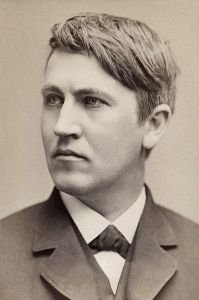
Thomas Edison’s First Phonograph

“Of all my inventions, I liked the phonograph best.”

Thomas Alva Edison (1847-1931)
thomasedison

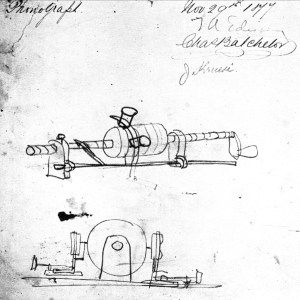
Thomas Edison wrote the date – November 29, 1877 – in the upper right-hand corner of the piece of paper on which he had drawn the sketch of his design for a new invention.

Working that Thursday at his Menlo Park, New Jersey laboratory, Edison had combined the results of his experiments on “an automatic method of recording telegraph messages” with what he’d learned from his experiments on the telephone about “the power of a diaphragm to take up sound vibration.” The “little machine” he envisioned used “a cylinder provided with grooves around the surface.” Over the cylinder “was to be placed tinfoil, which easily received and recorded the movement of the diaphragm.”

Thomas A. Edison called the invention in his sketch a “phonograph.”
Edison phonograph sketch November 29 1877

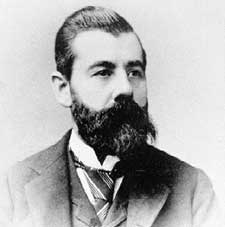
Edison gave the sketch (shown above) to John Kruesi (1843 – 1899), the Swiss-born machinist that he considered to be the best in his employ at Menlo Park.
John_Kruesi

John Kruesi’s job was to build a prototype of the machine from Edison’s sketch. When he had nearly completed the task, Kruesi asked Edison what the machine was for. Edison told him, “I was going to record talking, and then have the machine talk back.” Kruesi thought that Edison’s idea was “absurd.”

In early December of 1877 (possibly as early as Tuesday, December 4), John Kruesi presented Thomas Edison with the finished prototype of his phonograph.

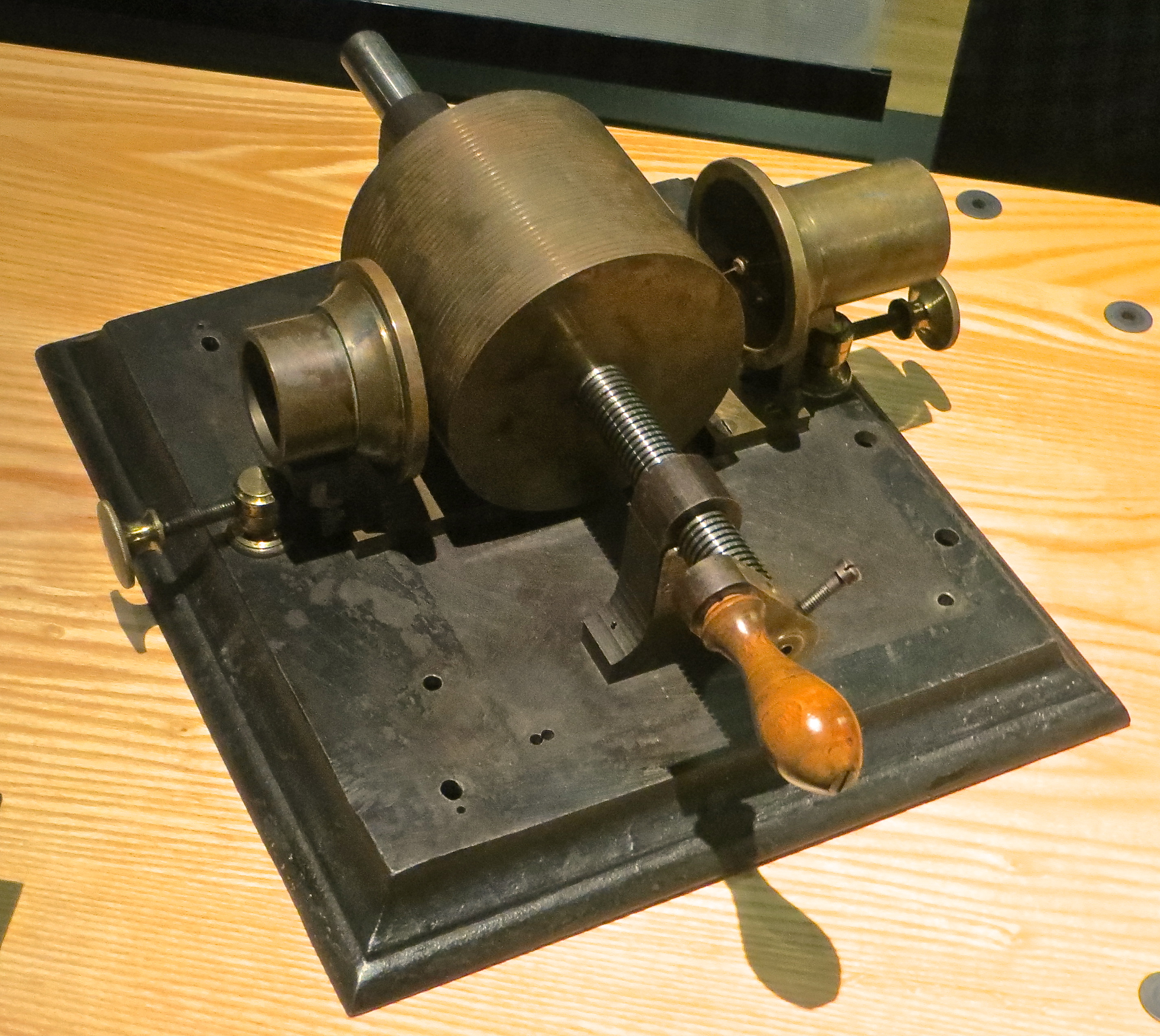
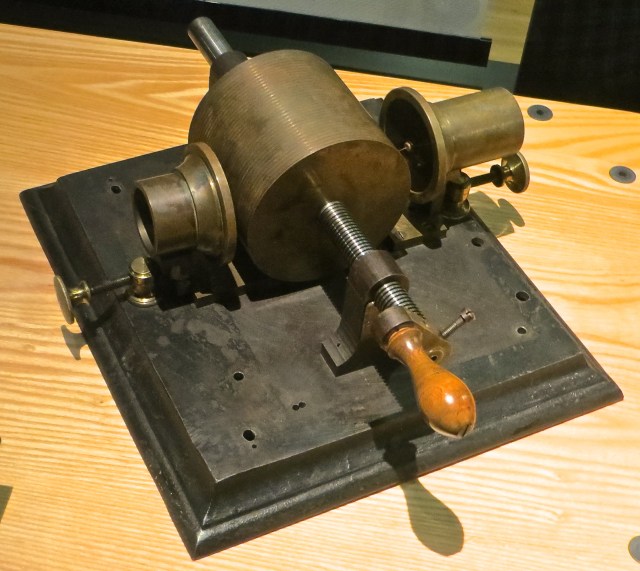
Here is a photograph of Thomas Edison’s first phonograph as displayed at Thomas Edison National Historic Park in West Orange, New Jersey.
IMG_2381 - Version 2

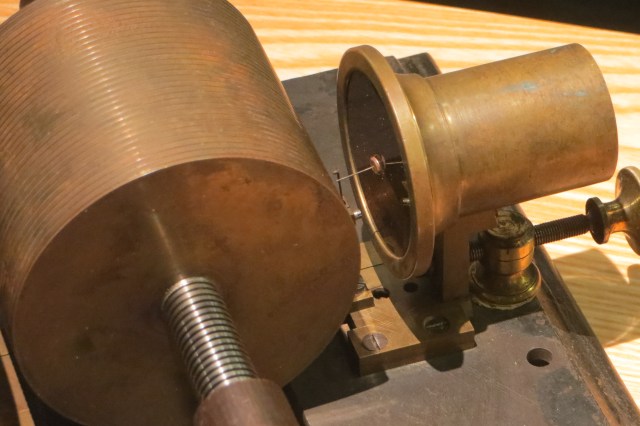
The “cylinder provided with grooves around the surface” is in the middle of the machine. The cylinder’s surface is inscribed from end to end with a helical or spiral “indenting groove.” A screw-threaded shaft runs length-wise through the center of the cylinder. Each end of the shaft is held by a vertical support, keeping the cylinder suspended above the base plate. A wooden crank handle is attached to one end of the shaft. When the crank is turned, the cylinder/shaft unit simultaneously rotates and moves horizontally between the two vertical supports.

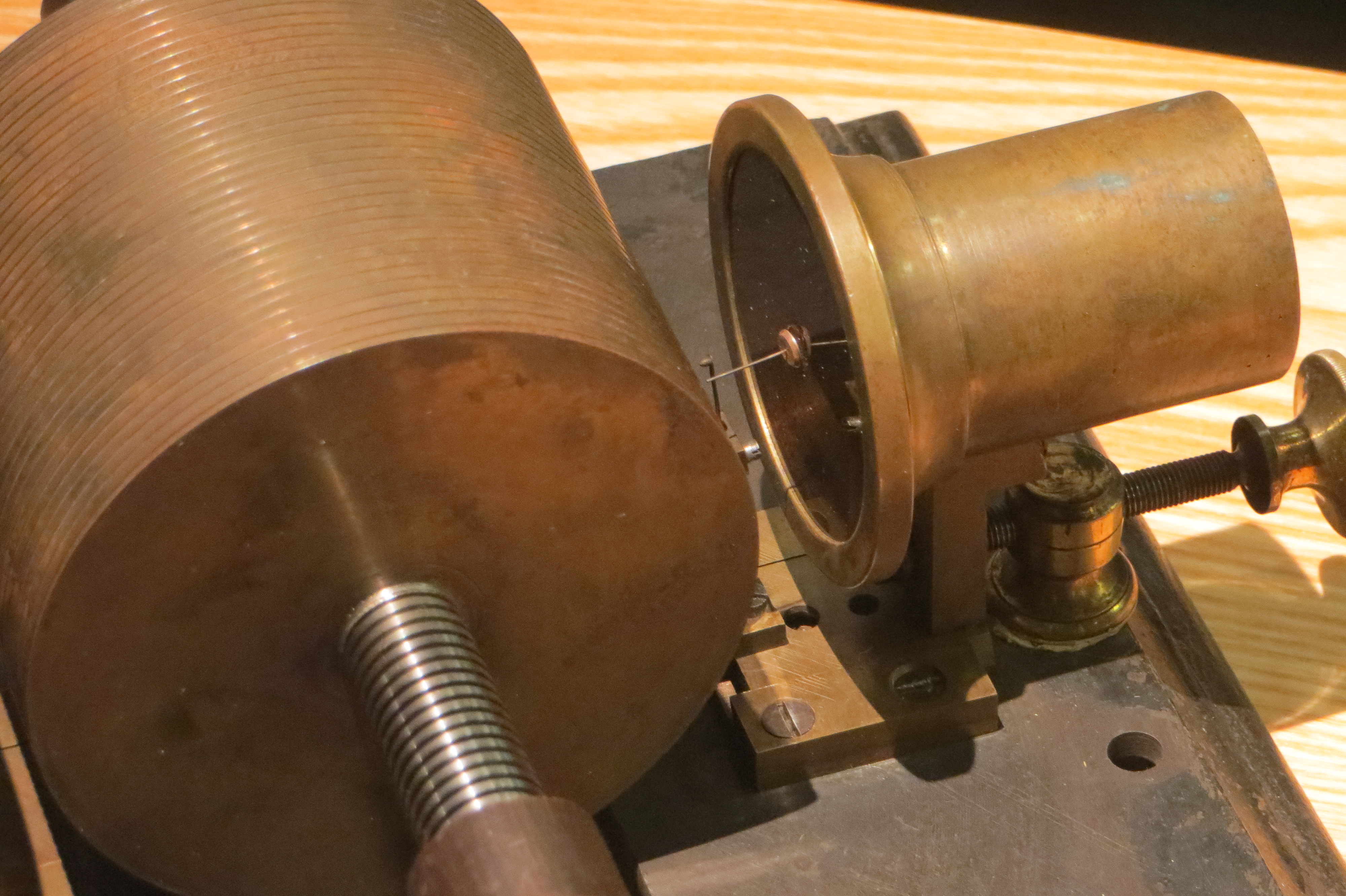
To the right of the cylinder stands the mouth piece or “speaking tube.” A metal diaphragm with a metal “indenting-point” attached to its center covers the end of the speaking tube closest to the cylinder.

To the left of the cylinder is the shorter “reading tube.” This tube is also outfitted with a metal diaphragm and an attached indenting-point on the end facing toward the cylinder.

Here’s a close-up of the speaking tube and part of the cylinder and the threaded shaft.
IMG_2418

“So,” John Kruesi might have asked, “how does this machine record talking?”

“Well,” Thomas Edison might have replied, “hopefully, like this…”

Position the cylinder so that the beginning of the indenting groove is opposite the indenting-point on the speaking tube’s diaphragm.

Wrap a thick sheet of tinfoil smoothly and completely around the cylinder.

Adjust the speaking tube towards the cylinder so that its indenting-point makes contact with the tinfoil and presses the tinfoil slightly into the indenting groove.

Begin turning the crank handle.

Lean over and speak loudly into the open end of the speaking tube.

The resulting sound waves within the speaking tube cause its diaphragm to vibrate. The indenting-point pulsates in and out against the moving tinfoil, forming a continuous trail of hill-and-dale-like indentations along the track provided by the indenting groove on the rotating and horizontally-moving cylinder.

When finished, the “recording” of the sound of the operator’s voice will lie in the spiral groove that has been “easily received” by the tinfoil.

“How then,” the still-doubtful Kruesi might have continued, “does the machine talk back?”

Adjust the speaking tube back away from the cylinder.

Turn the crank in the opposite direction until the cylinder is rewound to its original position.

Adjust the reading tube towards the cylinder so that its indenting-point is resting in the beginning of the spiral groove inscribed into the tinfoil.

Turn the crank handle in the same direction and at the same speed as during the recording process.

As the cylinder revolves, the indenting-point of the reading tube’s diaphragm traces the hill-and-dale-like indentations in the groove on the tinfoil. The diaphragm vibrates and the reproduced sound of the operator’s voice emanates from the open end of the reading tube.

“Anyway, that’s the plan,” Edison might have concluded.

Well…

The very first time Thomas Edison tried his phonograph – he recorded himself reciting the poem “Mary Had A Little Lamb” – it worked.

“I was never so taken aback in my life,” Edison later recalled. “I was always afraid of things that worked the first time; but here was something there was no doubt of.” Thomas Edison’s first phonograph showed “that speech and song could be actually recorded, preserved and reproduced” by the same machine.

On Friday, December 7, 1877, Thomas Edison demonstrated his phonograph in the New York City office of the esteemed publication Scientific American – “A Weekly Journal of Practical Information, Art, Science, Mechanics, Chemistry and Manufactures.”

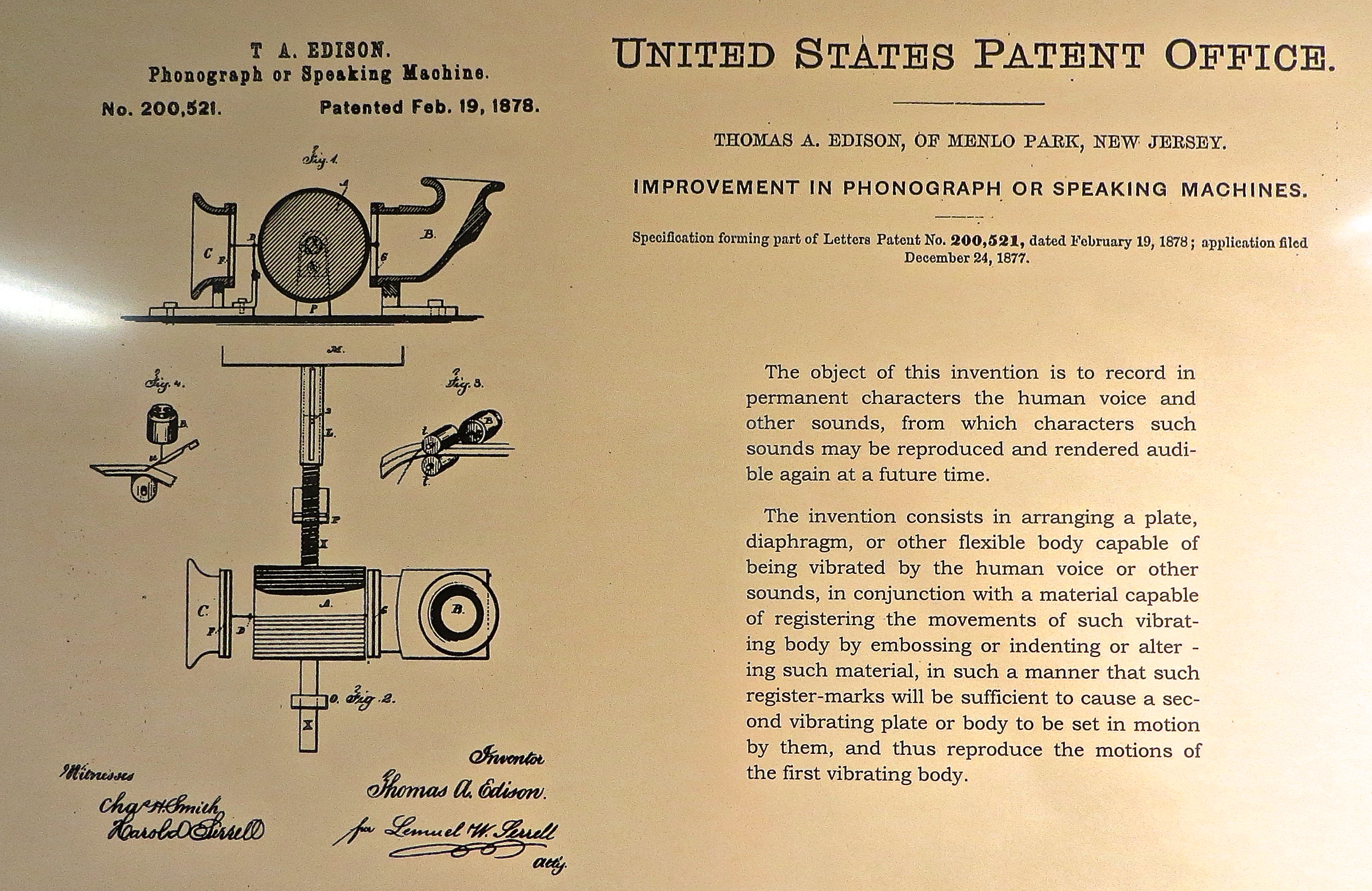
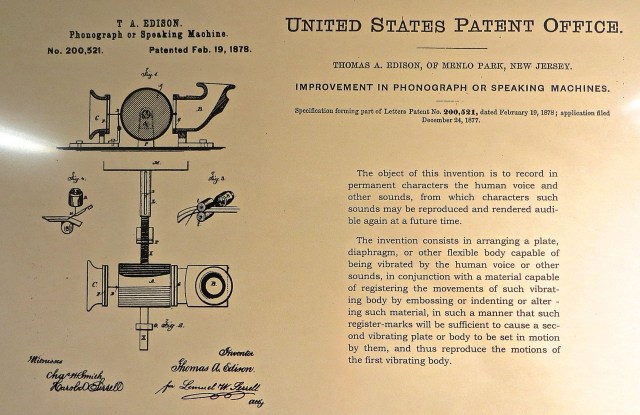
On December 15, 1877, Thomas Edison signed an application to the United States Patent Office asking to be awarded a patent on his invention of a “Phonograph or Speaking Machine.” (The date on which an application for a patent is signed is known as the “execution date.” It is considered to be “the date in the patenting process that comes closest to the time of actual inventive activity.”)

In the application, Edison makes this opening statement about his phonograph:

“The object of this invention is to record in permanent characters the human voice and other sounds, from which characters such sounds may be reproduced and rendered audible again at a future time.”

In its December 22, 1877 edition (Volume 37, Number 25), Scientific American recounted Thomas Edison’s December 7th visit in the first paragraph of an article on page 2 titled “The Talking Phonograph.”

“Mr. Thomas A. Edison recently came into this office, placed a little machine on our desk, turned a crank, and the machine inquired as to our health, asked how we liked the phonograph, informed us that it was very well, and bid us a cordial good night.”

Towards the end of the article, Scientific American summarizes Thomas Edison’s phonograph as being: “a little affair of a few pieces of metal, set up roughly on an iron stand about a foot square, that talks in such a way, that, even if in its present imperfect form many words are not clearly distinguishable, there can be no doubt that the inflections are those of nothing else than the human voice.”

(FYI: Page 1 of the December 22, 1877 edition of Scientific American featured articles on and illustrations of “The Tuttle Family Knitter” and “The Foster-Firmin Amalgamator And Ore Washer.”)

On December 24, 1877, the United States Patent Office received and recorded Edison’s application.

On February 19, 1878, the United States Patent Office issued/awarded patent #200,521 to “Thomas A. Edison, of Menlo Park, New Jersey” for his “Phonograph or Speaking Machine” and/or “Improvement In Phonograph Or Speaking Machines.”
IMG_2360

Thomas Edison soon became internationally known as “The Wizard of Menlo Park.”

On February 28, 1878 and on March 19, 1879, Thomas A. Edison would execute applications for – and eventually be awarded – two more patents for inventions involving the phonograph and speaking machines.

By the summer of 1879, however, Edison had completely set the phonograph aside and was focusing his energy on perfecting the incandescent lightbulb.

Not until 1887 would Thomas Edison turn his attention back again to the phonograph. Working then in his new and much larger laboratory in West Orange, New Jersey, Edison would be awarded (from May 8, 1888 to May 16, 1933) another 196 patents for inventions concerning phonographs and sound recording.

In conclusion, here is one more quote from Thomas Edison.

“I never did a day’s work in my life. It was all fun.”

Thomas Alva Edison passed away on October 18, 1931 at “Glenmont,” his home in Llewellyn Park, West Orange, New Jersey.


The sources of the quotes, terminology, information and inspiration used in the writing of this post were:

“How Edison Invented The Phonograph” (1922) – an advertising booklet produced by Thomas A. Edison, Inc., Orange, New Jersey.

The text of Thomas A. Edison’s patent application for “Improvement In Phonograph Or Speaking Machines” (December 15, 1877) – as found on the Rutgers University website, The Thomas Edison Papers, at: edison.rutgers.edu.

“The Talking Phonograph” – Scientific American, Volume 37, Number 25 (December 22, 1877)

Famous Quotations from Thomas Edison at: thomasedison.org.

My late-August, 2014 visit (with my cousin, Jack) to The Thomas Edison Center at Menlo Park in Edison, New Jersey and Thomas Edison National Historical Park in West Orange, New Jersey.
Posted in Random Topics | Tagged , , , , , | 1 Comment

On This Historic Day In Music: Columbia Records, PC 33795

“The release date is just one day. The record is forever.” Bruce Springsteen, 1975

Forty years ago today, on August 25, 1975, Columbia Records released Born To Run, the third album by the New Jersey-born, songwriter/singer/guitarist Bruce Springsteen.

IMG_0317

The song “Born To Run” started rather simply.

“One day I was playing my guitar on the edge of my bed, working on some song ideas, and the words ‘born to run’ came into my head. At first I thought it was the name of a movie or something I’d seen on a car spinning around the Circuit, but I couldn’t be certain. I liked the phrase because it suggested cinematic drama I thought would work with the music I was hearing in my head.”

[From: Songs (1998) by Bruce Springsteen and the 48 page booklet included in Bruce Springsteen – Born To Run – 30th Anniversary Edition.]

The album Born To Run was anything but simple.

Writing about Born To Run for the All Music Guide to Rock (2002), William Ruhlmann describes the album as being “an updated West Side Story with spectacular music that owed more to (Leonard) Bernstein than to (Chuck) Berry” and “an intentional masterpiece.”

For Bruce, “The primary questions I’d be writing about for the rest of my work life first took form in the songs on Born To Run (“I want to know if love is real”).”

[Also from: Songs (1998)…]

There are eight songs on Born To Run: “Thunder Road,” “Tenth Avenue Freeze Out,” “Night” and “Backstreets” on Side 1; “Born To Run,” “She’s The One,” “Meeting Across The River” and “Jungleland” on Side 2.

I love them all. But if I had to pick a favorite, the single song and performance that for me really stands out from all of the devastatingly great songs and performances on the album, I would have to say that “Meeting Across The River” is the one.

Stop and listen.


That recording features: Bruce Springsteen, vocals; Roy Bittan, piano; Richard Davis, bass; and Randy Becker, trumpet.

What’s your favorite song on Born To Run?

In 2009, Bloomsbury Press published the book Runaway Dream: Born To Run and Bruce Springsteen’s American Vision by Louis P. Masur.

In this wonderful book, Louis asks: “How do you calculate the influence of a song in your life? We have songs that carry enormous meaning for us, songs we want played at our weddings or at our funerals, songs that every time we hear them, every single time, we pause, we remember, we smile, we sing, we ignite. And maybe even more than that. Maybe we have music that has changed or saved our lives.”

The music of Bruce Springsteen has indeed influenced, ignited and changed my life. His music never fails to make me pause, remember, smile and sing. And as long as Bruce Springsteen continues writing and recording and performing, I will continue to have new music from him to look forward to.

How great is that?

Posted in Posts with Video, This Historic Day In Music | Tagged , , , , , , , , | 1 Comment