As previously reported, I recently had the chance to do transcriptions of two of my older acoustic guitar instrumentals; pieces I have posted recordings of in the past.
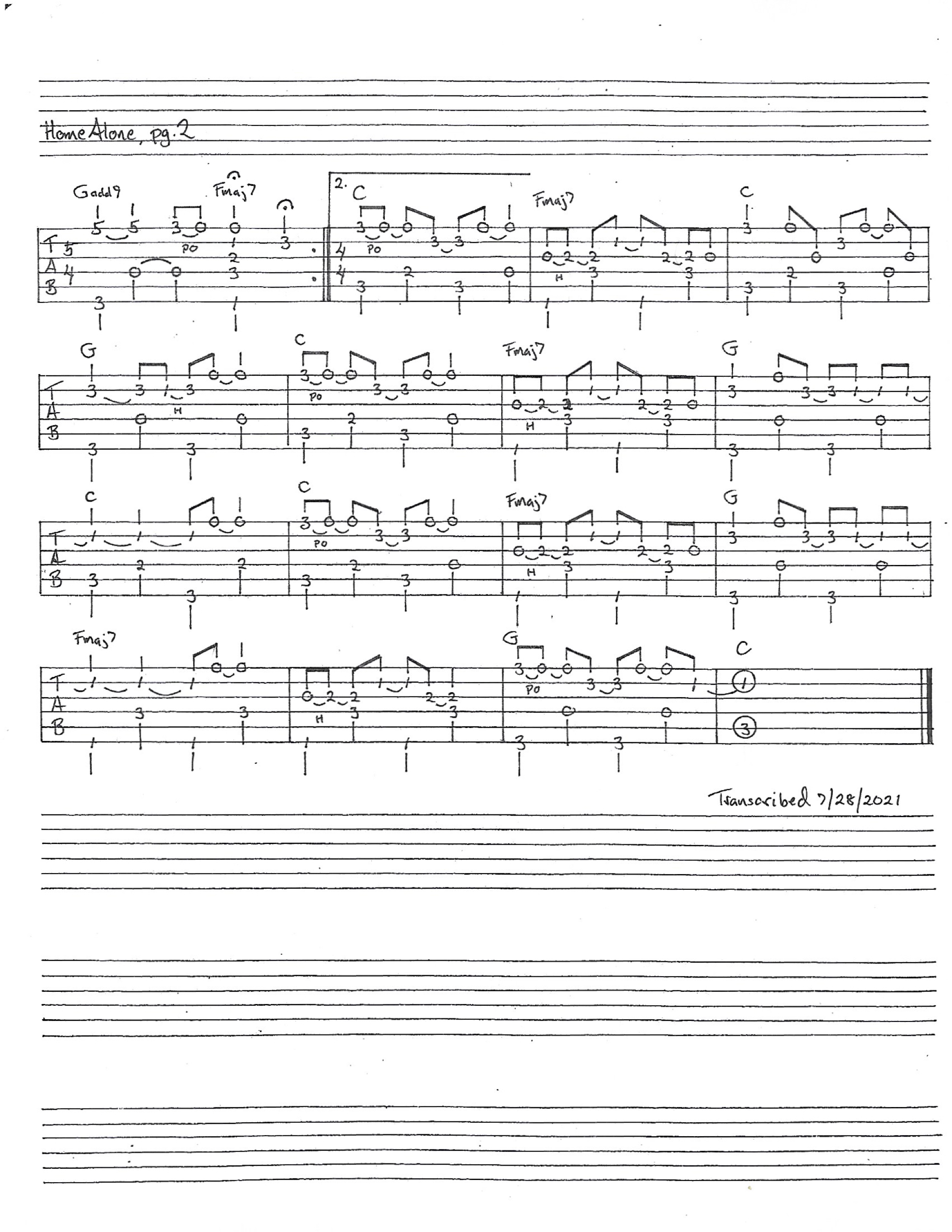
Now coming to the plate: “Home Alone.”
On March 30, 2014, I wrote this about “Home Alone”:
So, here’s a guitar instrumental that I came up with a few years back, inspired by the music and playing of Elizabeth Cotten, Doc Watson and John Fahey.
I called the piece “Home Alone” because I had the house to myself on the afternoon that I created it. I recorded it on a Sony cassette tape deck in my “home studio” on November 9, 2008.
Here (again) is that recording…
“Home Alone” – Written & Performed by: Eric Sinclair
…and here’s the brand new guitar tablature transcription.
There you go! Once more, I hope that all of you fingerpickers out there have fun with this transcription and the one for “Sunday Morning.”
JTLYK: The “Guitar Music” category here on sixstr stories is home to many recordings and hand-written guitar tablature transcriptions of my guitar instrumentals, original and otherwise.
I recently had the chance to do transcriptions of two of my older acoustic guitar instrumentals; pieces I have posted recordings of in the past.
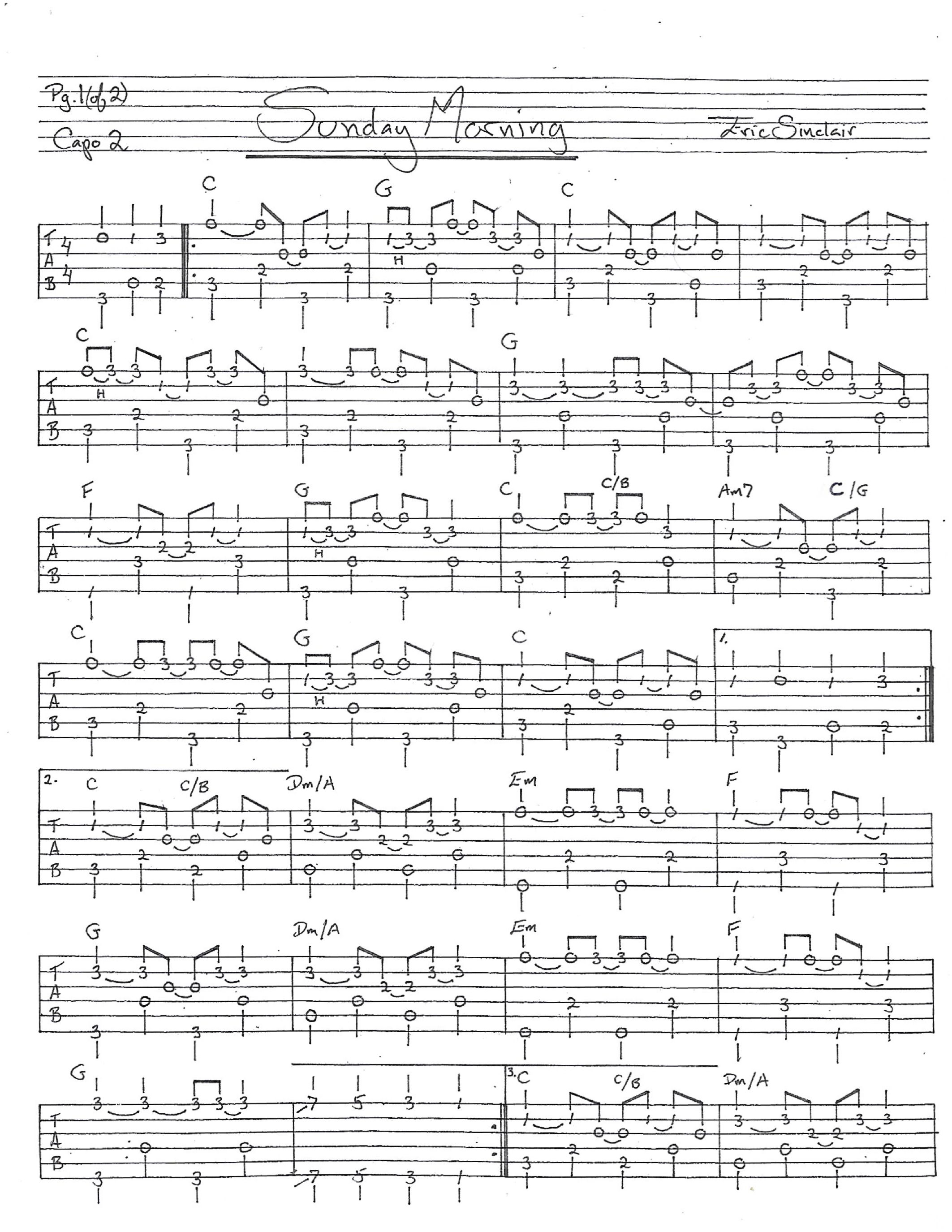
First up: “Sunday Morning”
On October 24, 2010 (sixstr stories’ first year!), I wrote this about “Sunday Morning”:
This is a fingerpicked, acoustic guitar instrumental that first came to life on a Sunday morning back around 2002. I originally played it on a 12-string guitar, but my love/hate relationship with that instrument soon had me hearing it and playing it better on the 6-string. If you’ve heard me play live anytime since then, you probably heard this piece. The recording was done on my home analog equipment in 2007.
Here (again) is that recording…
“Sunday Morning” – Written & Performed by: Eric Sinclair
…and here’s the brand new guitar tablature transcription.
There you go! Have fun all you fingerpickers out there!
As I remember it, I had the tv on one afternoon while I was doing some chores around the house. When the chores were done, I picked up the remote and did some quick channel surfing… until I came upon someone singing and my channel surfing stopped.
Whoa.
“Who is this amazing singer and what’s this incredible song she and that guy are singing?”
I eventually somehow figured out that I was watching and listening to Maura O’Connell and Michael Johnson and the song they were singing was a Nanci Griffith song called “Trouble In The Fields.”
(Only recently have I learned that the show I had stumbled upon was in fact called American Music Shop and it ran on The Nashville Network from 1990-1994. Maura O’Connell and Michael Johnson were the featured guests in an episode that first aired on May 1, 1990.)
Here (and I still can’t believe I actually found it) is a YouTube video with an edited version of that actual show. Maura starts her spoken intro to “Trouble In The Fields” at the .53 mark.
I immediately set about trying to find Maura’s recording of “Trouble In The Fields.” I did, and it was on Helpless Heart, her 1989 release for Warner Brother’s Records. My cassette copy of this outstanding album got quite a bit of airplay around the house as well as in the family station wagon over the following months. My daughter came to especially like the anthemic lead track, “Can’t Stop The Girl” (written by Linda Thompson & Betsy Cook).
(Another interesting fact that I recently learned is that Helpless Heart was originally released in 1987 on Raglan Records in Ireland under the title Western Highway.)
While I was introduced to Maura O’Connell and Michael Johnson that lucky afternoon, I had heard of Nanci Griffith before.
My June 1988 issue of Frets Magazine contained a detailed guitar TAB transcription of Nanci’s wonderful song “Love at the Five & Dime.” Her lovely fingerpicked guitar accompaniment – in open-G tuning and with several effectively-placed harmonics – was (and still is) a joy to play.
(Recently learned interesting fact #3: Nanci Griffith released “Love at the Five & Dime” on her 1986 album The Last of the True Believers. Also on that album was Nanci’s song “Banks of the Pontchartrain” to which Maura O’Connell contributed harmony vocals.)
Here is a really fine live performance of “Love at the Five & Dime” from one of Nanci Griffiths’ many appearances on Austin City Limits.
Though I never got to hear Nanci Griffith in concert, I had the very good fortune to hear Maura O’Connell perform in person once. She played at the Unitarian Universalist Church in downtown Portsmouth, NH, on Friday, October 14, 1994. My then-12-year-old daughter and I went and somehow managed to get seated in the front row. Maura and her band – the brilliantly talented acoustic guitarists Zane Baxter and Richard McLaurin – were very much on their game that night and gifted us with an incredible and well-remembered evening of music and song.
Because of the way these two artists are intertwined in my musical past, all of these memories came flooding back when I heard the very sad news four days ago that Nanci Griffith had died.
Nanci Caroline Griffith was 68 years old, having been born on July 6, 1953, in Seguin, Texas.
Her first album – There’s A Light Beyond These Woods – came out in 1978. Her twentieth and last album – Intersection – came out in 2012 and she officially retired from making music in 2013.
On August 14, the day after Nanci passed, Fiona Whelan Prine shared in a Tweet that her late husband John “had reached out to Nanci in January 2020. He missed her. He tried to persuade her that there were young women who needed her – her experience, friendship, humor and the gift of her singular craft. She was amazed to hear him say those things and said she’d think about it. They spoke one more time before John passed in April.”
I have Nanci Griffith’s two Other Voices albums in my collection and today I listened to the second, Other Voices, Too (A Trip Back To Bountiful), from 1998. Her rendition of Sandy Denny’s “Who Knows Where The Times Goes” resonated especially deeply with me from among the many stunning performances that fill this disc.
Give a listen.
Many thanks, Nanci Griffith, for all the ways that your music touched and enriched my life.
Oklahoma Jazz musician and electric guitarist Charlie Christian turned the nationally renowned Benny Goodman Quintet into a Sextet on August 16, 1939.
Over the course of the next twenty-three months, Charlie’s dazzling contributions to the many live performances, recordings and radio broadcasts by both the Benny Goodman Sextet and the Benny Goodman Orchestra firmly established the electric guitar as a totally viable and exciting voice in Jazz.
Charlie Christian made his first recordings as a member of the Benny Goodman Sextet on October 2, 1939. The other members of the group at that time were:
Benny Goodman – Clarinet
Fletcher Henderson – Piano
Lionel Hampton – Vibraphone
Artie Bernstein – Bass
Nick Fatool – Drums
“Rose Room” – written by Art Hickman in 1917 – was among the three pieces they recorded that day. It had also been the number Charlie played in his audition for Goodman back in August. (Read my post of August 16, 2010, for the full story of that legendary event.)
Check it out. Charlie’s solo starts at the 1:00 minute mark.
Music that incredibly good certainly does not get old.
Charles Henry Christian was born on July 29, 1916 in Bonham, Texas. The family had moved to Oklahoma City, Oklahoma by the time he turned three.
Charlie recorded for the last time on June 11, 1941. In July, he was hospitalized with tuberculosis.
Charlie Christian died in New York City on March 2, 1942.
Scott Yanow wrote in the All Music Guide To Jazz: “Virtually every Jazz guitarist who emerged during 1940-1965 sounded like a relative of Charlie Christian.”
I think every Jazz guitarist since 1939 wishes (or wished) they could sound like Charlie Christian.
Last month, I had the great pleasure of spending an afternoon at the Isabella Stewart Gardner Museum in Boston, Massachusetts. It was my first time visiting this magnificent venue.
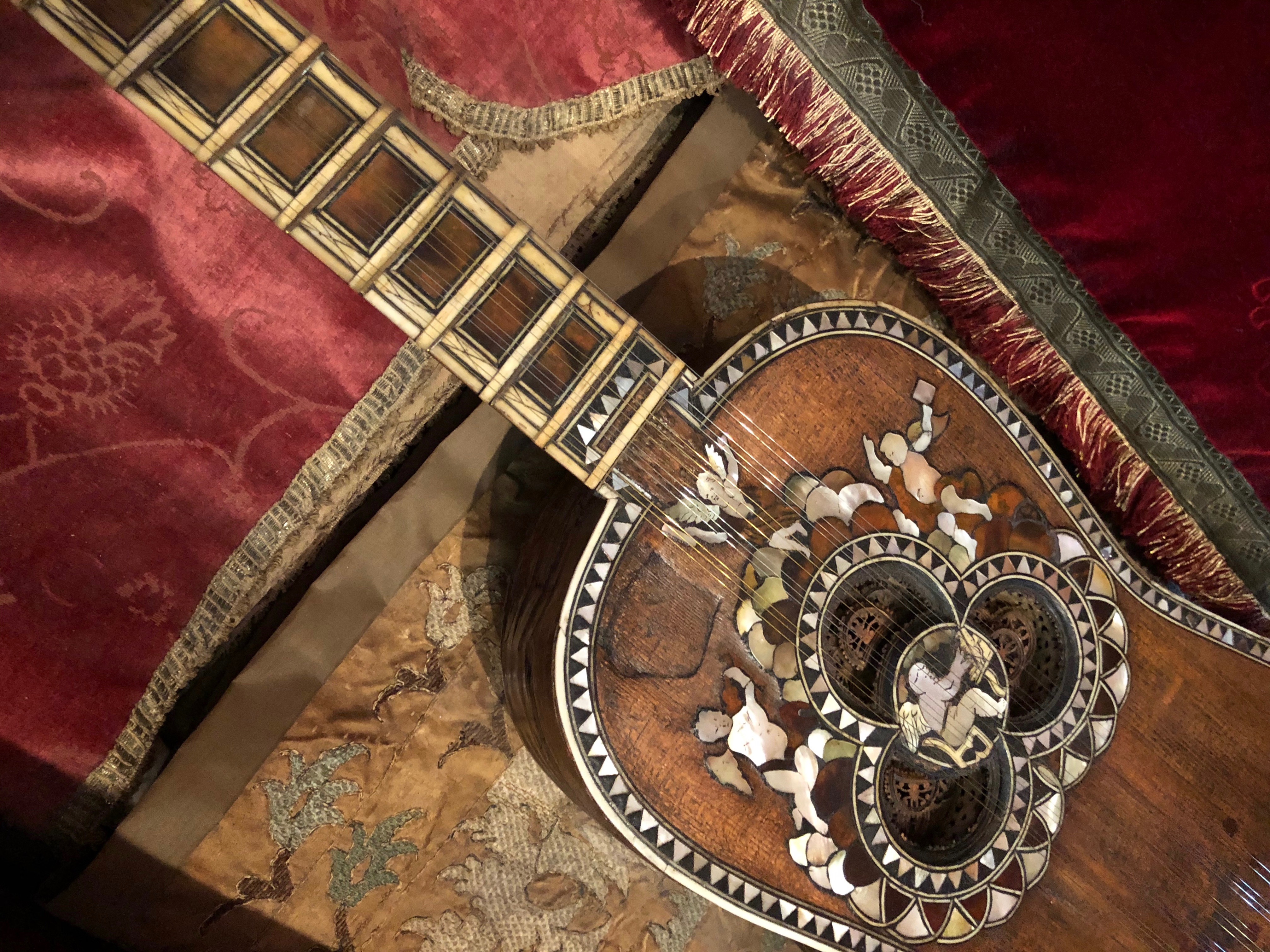
While exploring the Raphael Room on the museum’s second floor, I came upon this guitar.
Since there are no object labels at the ISGM, I had to consult the museum’s website to find out about this fascinating instrument. From there, I learned much. First and foremost, I learned that it is properly known as a Chitarra Battente or “strumming guitar.”
This chitarra battente was built in the 1720s by Jacopo Mosca Cavelli of Perugia, Italy. It is 36 1/4 inches long and made of wood, “elaborately decorated with inlay of mother-of-pearl, bone, and tortoise shell backed with gold leaf to highlight the translucency of this material.”
Isabella Stewart Gardner purchased it in Rome in (approximately) 1895.
The “rare and precious object” has fourteen thin metal strings, arranged in four triple courses and one double course. The chitarra battente was typical of Southern Italian music in the 1700s and often used by street musicians. Its role was “to add rhythm to songs and dances, such as the tarantella.”
Here are a few close-up photos, starting with the headstock.
In 2016, this guitar was the beneficiary of a serious restoration effort by the conservators at the Isabella Stewart Gardner Museum. The first step in this restoration process was to take the Cavelli to Massachusetts General Hospital for a CT scan which produced 1600 images of the guitar’s interior.
The next step was undertaken at Boston Medical Center where an endoscopy was performed on the guitar. This procedure gave a view of the inside of the instrument where, beneath a thick layer of centuries old dust, a paper label was discovered with luthier Cavelli’s signature and the year 172_ (the last number being obscured).
Here is a video of part of the endoscopy.
From the moment I first saw this instrument, I wondered what it would sound like.
I found my answer in the person of Marcello Vitale.
Mr. Vitale – born in 1969 in Benevento, Italy – is a virtuoso performer, recording artist, composer and teacher of the chitarra battente. (His 2002 album is titled ChitarraBattente.)
Here is a video that was posted on YouTube in 2017 of Mr. Vitale performing on a 10-string chitarra battente. After a long spoken introduction – in Italian – his playing begins at 1:34.
Enjoy.
Finally, the Isabella Stewart Gardner website informed me that there is only one other instrument made by Jacopo Mosca Cavelli known to be in a museum’s collection. That fortunate museum is Boston’s Museum of Fine Arts.
Wait. Really? Oh, yes!
I wrote about that instrument in my post “A Trip To The Museum” on March 13, 2014.
Here’s the picture! That other chitarra battente by Jacopo Mosca Cavelli is on the left.
The world of the guitar is a wide and wonderful place.
Ballad: A poem or song narrating a story in short stanzas or verse.
Prelude
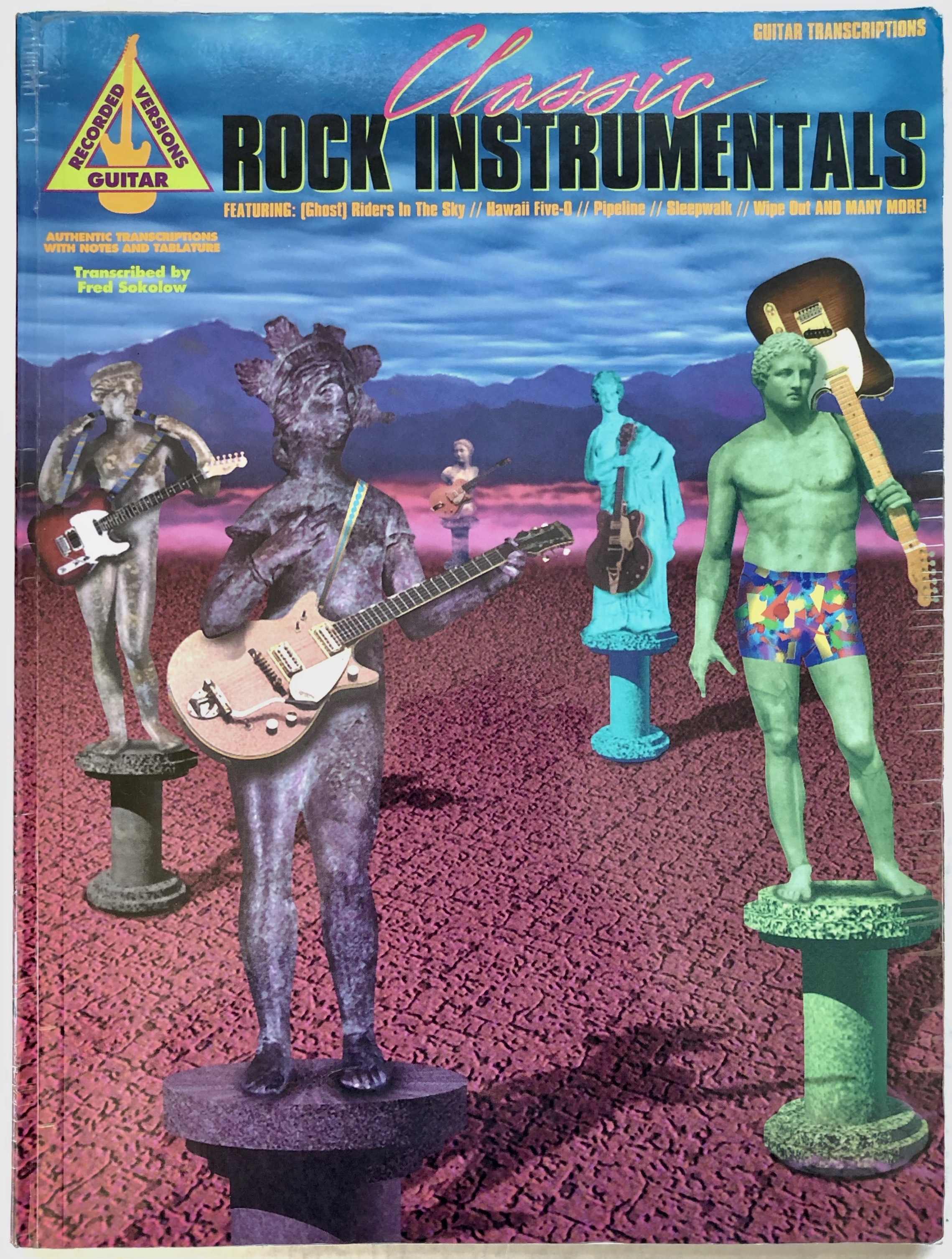
Many years ago, I bought a songbook: Classic Rock Instrumentals.
I bought this book – published in 1992 by the Hal Leonard Publishing Corporation – because it contained “authentic transcriptions with notes and tablature” (by Fred Sokolow) for two 1960s guitar pieces that I grew up with: “Walk Don’t Run” by The Ventures and “Wipe Out” by The Surfaris.
I soon discovered that the book also contained a treasure trove of guitar classics from the 1950s that I was not so familiar with. Among them were “Rumble” by Link Wray & His Ray Men, “Raunchy” by Bill Justis & His Orchestra, “Rebel Rouser” by Duane Eddy and “Guitar Boogie Shuffle” by The Virtues.
“Guitar Boogie Shuffle” has become a big favorite of mine and as tends to happen, it lately became the impetus of a fascinating search that led me down the links of a rather long chain of remarkable music and musicians.
Verse 1
Frank Virtue (1923-1994) and his Philadelphia-based band The Virtues recorded “Guitar Boogie Shuffle” in 1958 for Hunt Records.
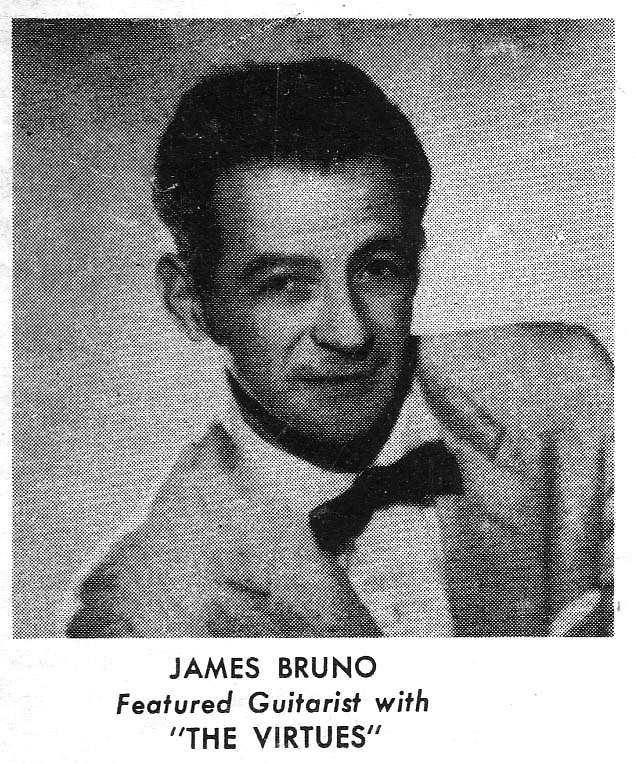
Frank played bass guitar for The Virtues and the lead guitarist – whose spectacular guitar part was transcribed in Classic Rock Instrumentals – was fellow-Philadelphian James Bruno.
I first heard “Guitar Boogie Shuffle” by The Virtues on the 1994 Rhino Records CD Rock Instrumental Classics, Volume 1: The Fifties.
Here it is from the Hunt Records single with the songwriter credit given to “A. Smith.”
Give a listen!
In 1959, “Guitar Boogie Shuffle” (b/w “Guitar In Orbit”) reached #5 on the Billboard Hot 100 chart and #27 on the Hot R&B Sides chart.
Verse 2
In 1953, The Esquire Boys – another Philadelphia-based band – recorded a piece they called “Guitar Boogie Shuffle.” (They gave songwriter credit to “Arthur Smith.”)
The lead guitarist for The Esquire Boys was Danny Cedrone (1920-1954). Danny is now best known as the lead guitarist on “Rock Around The Clock” by Bill Haley & His Comets.
The bass player for The Esquire Boys was Frank Virtue.
Verse 3
South Carolina-born guitarist Arthur Smith (1921-2014) wrote an instrumental he called “Guitar Boogie.” He recorded it in September 1945 accompanied by Don Reno on rhythm guitar and Roy Lear on bass. Originally released on Super Disc Records, the track was listed as being by: The Rambler Trio featuring Arthur Smith – Guitar. In October 1948, “Guitar Boogie” was re-released by MGM Records, but now credited to: Arthur (Guitar Boogie) Smith and His Cracker-Jacks.
In 1949, “Guitar Boogie” spent seven weeks on the Billboard Hot Country Songs chart (peaking at #8) and then crossed over to the Billboard Hot 100 chart, where it reached #25.
In his 2013 book, Before Elvis: The Prehistory of Rock ‘n’ Roll, Larry Birnbaum quotes Arthur Smith in recalling the inspiration for “Guitar Boogie”: “I guess I picked that up from Tommy Dorsey’s ‘Boogie Woogie,’ ’cause I didn’t listen to country or blues, I listened to big band in those days.”
Verse 4
Trombonist Tommy Dorsey (1905-1956) & his Orchestra recorded “Boogie Woogie” on September 16, 1938 in New York, New York for Victor Records. This arrangement of Clarence Smith’s “Pine Top’s Boogie Woogie” – created by Deane Kincaide – put the Dorsey Orchestra on the charts in 1938, 1944 and 1945.
Verse 5
LeMoise Roosevelt Graves (1909-1962) and his brother Uaroy (1912-1959) came from Rose Hill, Mississippi. On September 20, 1929, in Richmond, Indiana, they recorded a piece for Paramount Records called “Guitar Boogie.” On the track, Roosevelt plays guitar, Uaroy plays tambourine and they are joined by Will Ezell on piano and Baby Jay (or James) on cornet.
“Guitar Boogie” was released by Paramount as being by Blind Roosevelt Graves & Brother.
Many years later, Ken Romanowski of Document Records wrote that this “Guitar Boogie” was essentially “a slower, countrified version of ‘Pine Top’s Boogie Woogie.'”
Verse 6
“Pine Top’s Boogie Woogie” was the first recording to have the term “Boogie Woogie” in the title and one of the first recordings of this style of piano music to be a hit.
Alabama-born pianist and composer Clarence Smith (1904-1929) recorded it under the name “Pine Top” Smith on December 29, 1928, in Chicago, Illinois for Vocalion Records.
Verse 7
Chicago pianist Jimmy Blythe (1901-1931) composed and recorded a piece he called “Chicago Stomp” in 1924 for Paramount Records. “Chicago Stomp” is generally considered to be the first example of the “Boogie Woogie” style of piano playing on record.
Verse 8
West African words such as the Hausa “buga” and Mandingo “bug,” both of which mean “to beat” as in “to beat a drum,” may represent the linguistic roots of the word “boogie,” though the words “bogy,” “booger,” and possibly “boogie” have long been common in English slang.
From: Deep Blues (1981) by Robert Palmer.
Boogie Woogie: Originally, a special type of piano blues… characterized by an ostinato bass figure, usually sharply rhythmic, against which the right hand rhapsodizes freely, the sections usually comprising twelve measures and the treatment often being contrapuntal.
From: Harvard Dictionary of Music (1969) by Willi Apel
Postlude
So, there you have it! I hope you enjoyed that little (?) journey as much as I did.
Somewhere, Bob Dylan is celebrating his 80th birthday today.
Bob Dylan’s career as a musician, songwriter, performer and recording artist has spanned a fraction over 60 years. At some point in the midst of his immense success, I wonder if Dylan has ever pondered what turns his life would have taken if that folk singer thing hadn’t worked out all those years ago.
If, for instance, John Hammond, Sr. – producer and talent scout for Columbia Records – had not seen something he liked when the two first met in New York City’s Greenwich Village in the Fall of 1961.
I’ve asked myself lately what would life have been like for me if Bob Dylan had not become …Bob Dylan.
What if there had been no albums…?
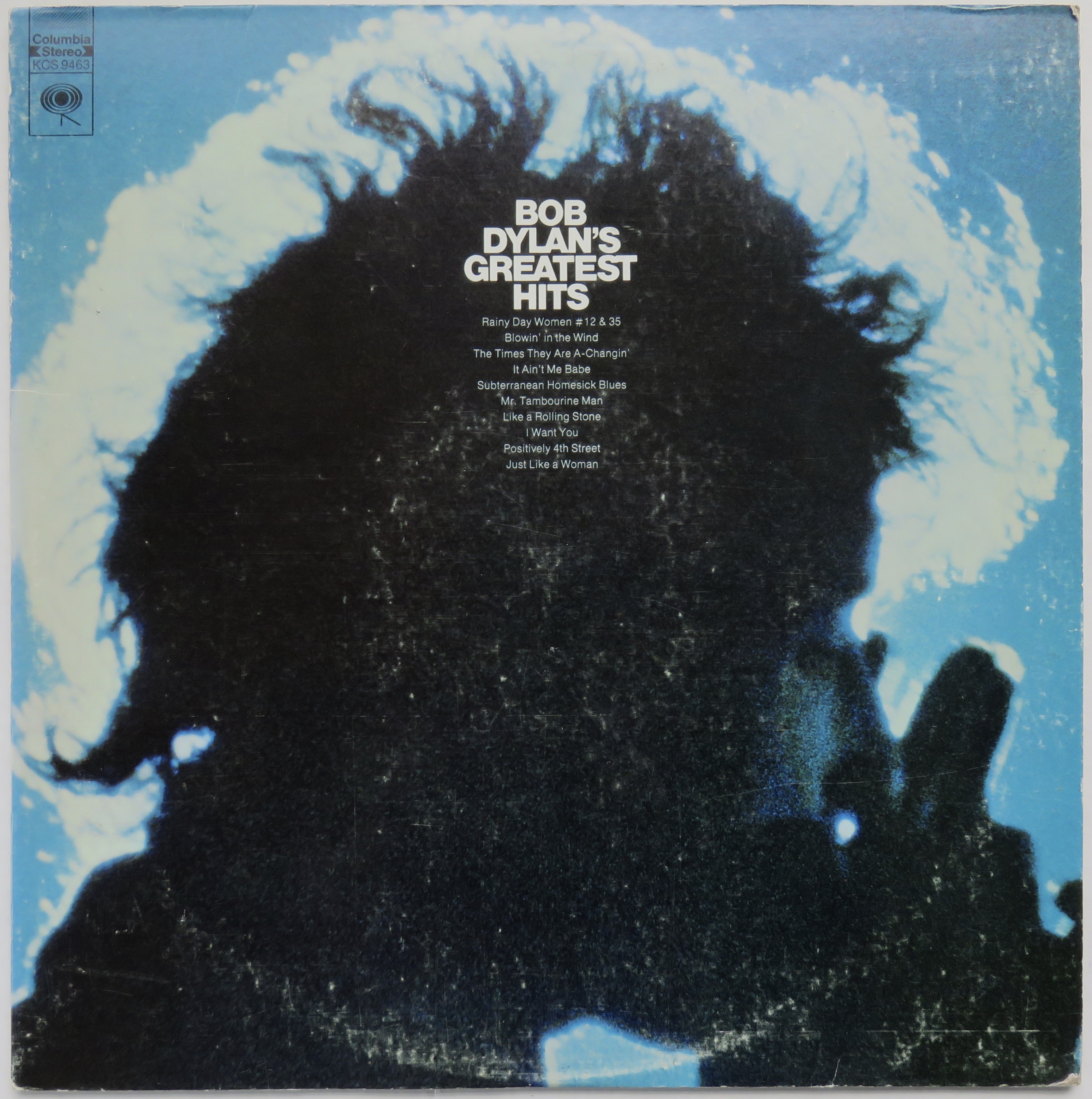
No Greatest Hits (vol.1, 1967)
(With that fabulous Milton Glaser poster!)
John Wesley Harding (1968)
Nashville Skyline (1969)
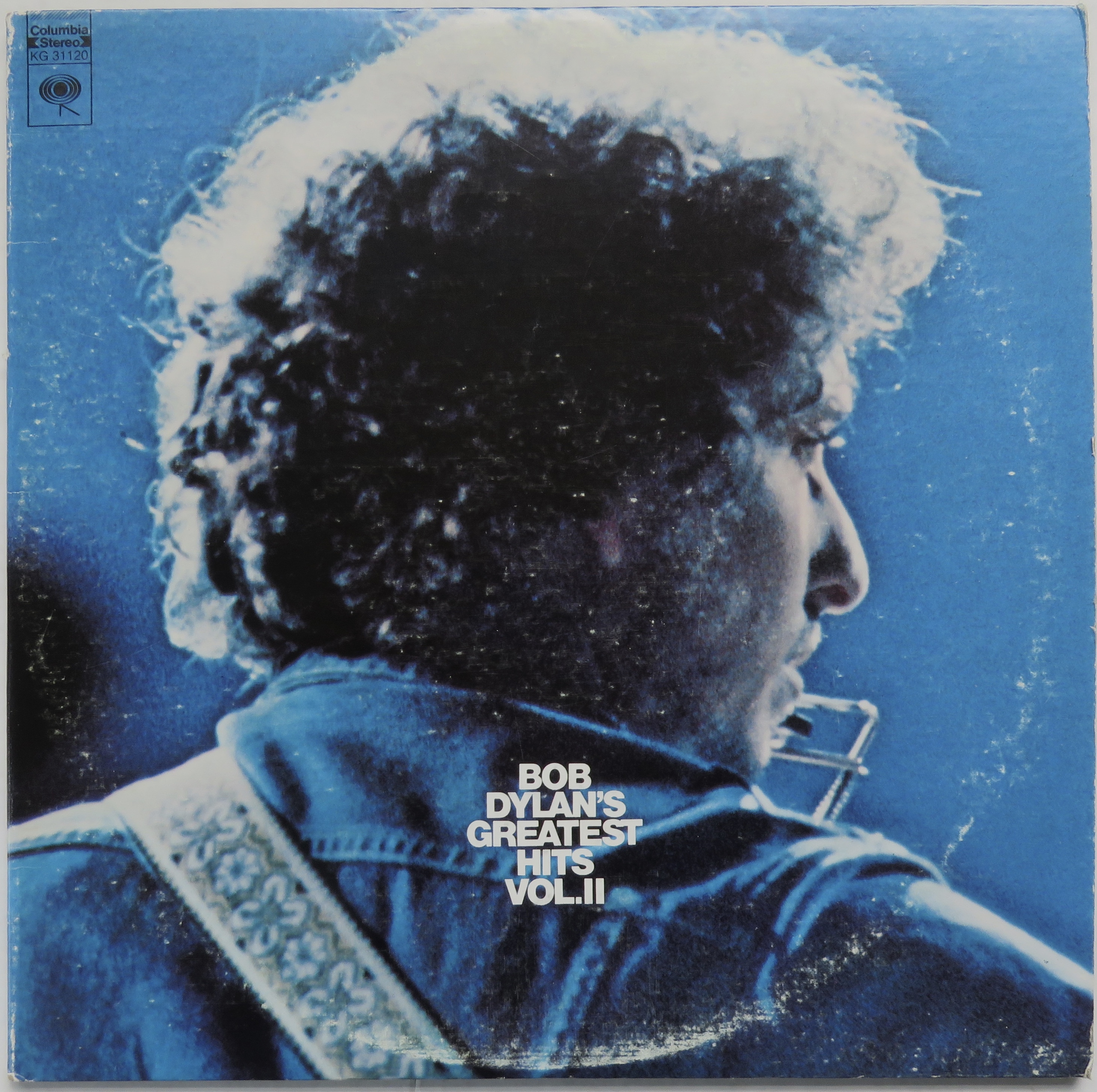
Greatest Hits, Vol. 2 (1971)
No concerts…
Bob Dylan & The Band – January 14, 1974 at the Boston Garden in Boston, Massachusetts.
The Rolling Thunder Revue – November 9, 1975 at the University of New Hampshire’s Lundholm Gym in Durham, New Hampshire.
The Spring Tour of Canada & USA – April 11, 1997 at the University of New Hampshire’s Whittemore Center in Durham, New Hampshire.
No songs…
How many roads must a man walk down before you call him a man?
Goodbye is too good a word, babe, so I’ll just say “Fare thee well”…
Come mothers and fathers throughout the land and don’t criticize what you can’t understand…
Ah but I was so much older then, I’m younger than that now.
Cloud so swift, the rain won’t lift. Gate won’t close, the railing’s froze…
How does it feel?
Kick your shoes off, do not fear. Bring that bottle over here…
I offered her my hand, she took me by the arm…
“There must be some way out of here,” said the joker to the thief…
May you build a ladder to the stars and climb on every rung…
I see my light come shining from the west unto the east. Any day now…
Yes, to dance beneath the diamond sky with one hand waving free…
Sometime in the wee hours of Thursday, March 5, 2021, I had a dream in which I was playing the guitar; slide guitar, actually.
When I awoke, the tune I’d been playing was still in my head. “Nice,” I thought. But work beckoned.
The next morning, the same tune stirred me awake before my alarm did. Hint hint.
“Work can wait.”
I picked up my trusty Tele, found the notes on the fingerboard and captured a quick recording on my phone.
Untitled – 3/5/2021
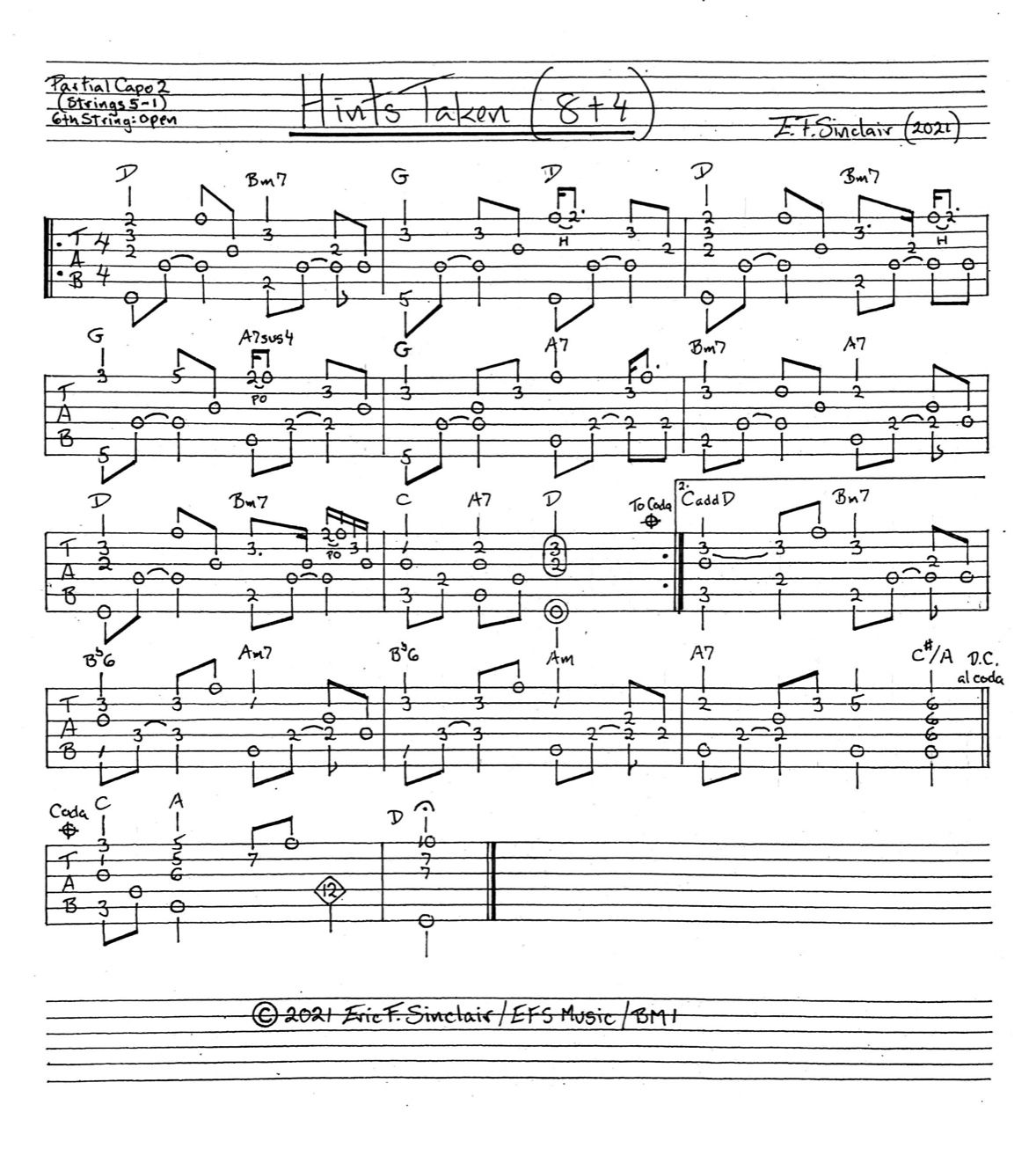
The following Friday – March 12 – I decided that my new (now harmonized) 8-bar composition needed a “B section.” Inspiration struck just as I was heading to bed and an initial 4-bar creation came to somewhat drowsy life on my guitar.
Many more stolen moments of crafting, refining and practicing later, my new Acoustic Guitar Instrumental got a title and a proper recording with my D28.
So, without further ado, let me introduce to you…
“Hints Taken (8+4)”
“Hints Taken (8+4)”
I hope you enjoyed that.
Finally, for all of you guitar players out there, here’s a transcription.
It’s been a while since I’ve posted in this category, so I probably should let you know: the purpose of my Wrestling With The Angel series is to highlight and share individual songs that are on a list of mine entitled: Devastatingly Great Songs. The title phrase, “Wrestling With The Angel,” is my paraphrase of a line from a poem by Herman Melville called “Art.” You can read the complete poem in “The Source,” my archived post of November 4, 2011.
Songs are like old friends.
You know you’ve got a good one when it puts a smile on your face even when you can’t remember how long it’s been since the last time the two of you got together.
“Cold Dog Soup” by Guy Clark is one of those songs.
I’ve been listening – and smiling – to Guy Clark quite a bit lately.
I was inspired to do so after reading the news about and watching the trailer for “Without Getting Killed or Caught,” the documentary film by Tamara Saviano & Paul Whitfield about Guy, Susanna Clark and Townes Van Zandt. Originally scheduled to debut at the 2020 SXSW Film Festival, the movie premiered this week – March 16-20 – at the 2021 SXSW event.
The Guy Clark album I listened to first after reading the news about the film was Boats To Build. That 1992 collection from the American Explorer series on Asylum Records features many outstanding, smile-inducing songs including “Baton Rouge,” “Ramblin’ Jack & Mahan,” “Must Be My Baby” and the title track.
Today however, my hand plucked Cold Dog Soup from the Guy Clark section of my CD rack.
This 1999 album on the Sugar Hill label starts off with the title track and… well, I never did make it to Track #2. The name-dropping, image-rich spoken verses and the harmony-soaked anthemic chorus of this definitely devastatingly great song demanded more than one listen.
And the more I hit “replay,” the more I smiled.
“Cold Dog Soup” – the song – was written by Guy Clark & Mark D. Sanders.
The recording features: Guy on lead vocal & acoustic guitar; Verlon Thompson: harmony vocal & acoustic guitar; and Darrell Scott: harmony vocal & mandolin.
Give a listen.
“Now there’s a pride of lions to draw to.”
Cold Dog Soup – the album – was recorded by Chris Latham at EMI Studio in Nashville, Tennessee. Guy, Verlon, Darrell and Chris shared the production duties. The release date was October 26, 1999.