Songs

Long before I started writing this blog, I wrote songs.

Love songs, story songs, list songs, silly songs, songs about songs, songs without words, songs drawn from the day-to-day of my life.

Thirty of those songs – including tracks from my two self-produced albums: Anytime and (There Are) Songs To Be Sung – can be heard via links embedded into posts here on sixstr stories. Those posts are gathered and easily accessible under the category EFS Music.

These days, however, it seems that my songwriting muse needs a very special occasion to send me a new song. My daughter’s wedding was one of those occasions. (“The Embrace of Love” – posted on October 8, 2012.) My sixtieth birthday was another.

“Best Walked (Life’s A Road)” is one of those songs that I’d finished, but something about it didn’t feel finished. I’d play it, leave it for awhile (another birthday passes), go back to it, tweak the guitar part… almost, but not quite.

A little re-writing of the second verse helped, but the “big” problem was with the segue from the second chorus into the bridge. It went: “Life’s a road that winds through time and tradition…” and as much as I liked the line, every time I sang it, “winds” sounded like “whines.” Then, a few weeks ago, as yet another birthday approached, my muse tapped me on the shoulder on my way to work and the troublesome line became: “Life’s a highway winding through…”

Yes. That did the trick. (Thank you, thank you!)

So, now that it’s done, here’s my “new” song.

(To hear the recording, click on the blue link below and… wait for it!)

“Best Walked (Life’s A Road)” – Words & Music, Guitar & Vocals by Eric Sinclair

Posted in EFS Music, Posts with Audio, Random Topics | Tagged , , , , | Leave a comment

This Historic Day In Music: John & Alan Lomax Meet Huddie Ledbetter

This is a reprise of a post that originally appeared on sixstr stories in July, 2010.

In early June, 1933, Texas-based Folk song collector John Lomax and his 18-year-old son, Alan, drove out of Dallas on a mission. They were going on “the first major trip in the United States to capture black folk music in the field.” (All quotes, unless otherwise noted, are from the 1992 book The Life & Legend of Lead Belly by Charles Wolfe & Kip Lornell.)

The elder Lomax was no stranger to song collecting. In 1910, he had published the results of many years of work in the book Cowboy Songs and Other Frontier Ballads. Through subsequent research in the published and unpublished folk song collections of the Library of Congress and those of several Ivy League colleges, John had found that there was “a dearth of black folk song material.”

John Lomax wanted to rectify this deficiency. He came up with the idea for a new book to be called: American Ballads and Folk Songs. He envisioned that this book would “especially focus on the neglected genre of the black work song.” To collect such music, John decided to visit “sections of the South with a high percentage of blacks.” Specifically, his journey would pinpoint “labouring camps, lumber camps… and eventually, prisons and penitentiaries.”

(Prisons and penitentiaries? Alan Lomax gave this answer to that question in his 1993 book, The Land Where The Blues Began: “We thought we should find that the African-American away from the pressure of the church and community, ignorant of the uplifting educational movement, having none but official contact with white men, dependent on the resources of his own group for amusement, and hearing no canned music, would have preserved and increased his heritage of secular folk music.”)

John Lomax convinced the Macmillan Company publishers to give him a contract and a small cash advance. He also got the Library of Congress to provide research funds and a new disc-based recording machine.

The only recording equipment that John and Alan Lomax had when they started their trip in June, however, was a dictaphone. This machine, originally intended for taking dictation in an office setting, recorded onto metal-coated wax cylinders and made “scratchy and squeaky sounds” at best. The state-of-the-art machine that recorded onto 12-inch annealed aluminum discs that the Library of Congress had promised did not catch up with the travelers until they reached Baton Rouge, LA in early-July.

But it arrived just in time.

On or about the 12th of July, the Lomaxes arrived at the Louisiana State Penitentiary in Angola, LA. They spent four days listening to and recording many talented inmates. But on Sunday, July 16, Captain Andrew Reaux of Camp A introduced them to inmate Huddie Ledbetter. John later wrote that “we found a Negro convict so skillful with his guitar and his strong, baritone voice that he had been made a ‘trusty’ and kept around Camp A headquarters as laundryman, so as to be near at hand to sing and play for visitors. Huddie Ledbetter…was unique in knowing a very large number of songs, all of which he sang effectively while he twanged his twelve-string guitar.”

The Lomaxes recorded Huddie Ledbetter, who went by the nickname “Lead Belly,” playing and singing parts of eight different songs. “Irene,” a song John and Alan had never heard before, warranted three recordings.

In his wonderful book, Delta Blues (2008), Ted Gioia writes: “Prisons are not supposed to play a role in the history of music.”

Good thing John and Alan Lomax didn’t know that.

Posted in This Historic Day In Music | Tagged , , , , | Leave a comment

This Historic Day In Music: “Blowin’ In The Wind” – Take 1

Bob Dylan wrote “Blowin’ In The Wind” sometime in late March/early April, 1962. He used the song “No More Auction Block” – a Civil War-era, African-American marching song/spiritual – as his starting point. (Dylan was a big fan of singer/guitarist Odetta, one of the major artists in the American Folk music revival of that time. Odetta had included her rendition of “No More Auction Block” on her 1960 album, Odetta At Carnegie Hall.)

Dylan gave “Blowin’ In The Wind” its first public performance on April 16, 1962, during a hootenanny hosted by folksinger Gil Turner at Gerdes Folk City, a West Village, New York City music venue.

In early May of 1962, Dylan played “Blowin’ In The Wind” during “The Broadside Show” on New York radio station WBAI-FM. Folksingers Pete Seeger, Gil Turner and Sis Cunningham added their voices to his performance.

Broadside was a New York-based Folk music magazine founded in 1962 by the husband-and-wife team of Sis Cunningham and Gordon Friesen. Cunningham did song transcriptions for Broadside and her transcription of Dylan’s radio performance of “Blowin’ In The Wind” was published in the late-May, 1962, issue of the magazine.

On Monday, July 9, 1962, 21 year old Bob Dylan settled into Columbia Records’ Studio A in New York City for the third of the eight recording sessions that it would take to cut the tracks for his second LP. He recorded four songs that day that would eventually be released as part of that 13-song collection: “Bob Dylan’s Blues,” “Blowin’ In The Wind,” “Honey, Just Allow Me One More Chance,” and “Down The Highway.”

For “Blowin’ In The Wind,” Dylan played a steel-string acoustic guitar in standard tuning with a capo placed at the seventh fret. His left hand fingered open-position chords in the key of G major, his right hand picked out a Maybelle-Carter-by-way-of-Woody-Guthrie bass note/strumming pattern and he soloed at the end of each verse on a key-of-D harmonica mounted in his around-the-neck harmonica rack.

Listen for yourself.


On July 30, 1962, Witmark Music, the company that published Bob Dylan’s songs at that time, registered “Blowin’ In The Wind” for copyright.

Bob Dylan’s second album, The Freewheelin’ Bob Dylan was released by Columbia records in May of 1963.

“Blowin’ In The Wind” backed with “Don’t Think Twice, It’s All Right” was released as a single in August of 1963.

“Blowin’ In The Wind” was inducted into the Grammy Hall of Fame in 1994 and posted as #14 on Rolling Stone magazine’s “500 Greatest Songs of All Time” in 2004.

Posted in Posts with Video, This Historic Day In Music | Tagged , , | Leave a comment

This Historic Day In Music: Stephen Collins Foster

Stephen Collins Foster – America’s first professional songwriter – was born on July 4, 1826 in Lawrenceville, Pennsylvania.

Image

Stephen Foster’s songwriting career started in December, 1844, with the publication of “Open Thy Lattice Love.” Over the next decade he became well known as a composer of both minstrel songs and parlor ballads. His catalogue of original songs included “Oh! Susanna” (1848), “Gwine To Run All Night” aka “De Camptown Races” (1850), “Old Folks At Home” (1851), “My Old Kentucky Home, Good Night!” (1853) and “Jeanie with the Light Brown Hair” (June, 1854). But in December of 1854, Foster wrote his first political protest song: “Hard Times Come Again No More.”

Since the previous October, Foster had been living in Allegheny City (now part of Pittsburgh), Pennsylvania. The area had been hard hit by unprecedented levels of unemployment and a summertime outbreak of cholera that had killed hundreds in two weeks time. Foster was well aware of the poverty, distress and suffering in the world around him.

The first verse of “Hard Times Come Again No More” begins:

“Let us pause in life’s pleasures and count its many tears,

while we all sup sorrow with the poor”

The chorus continues:

“‘Tis the song the sigh of the weary;

Hard Times, Hard Times, come again no more;

Many days you have lingered around my cabin door;

Oh! Hard Times, come again no more.”

The fourth verse concludes:

“‘Tis a sigh that is wafted across the troubled wave,

‘Tis a wail that is heard upon the shore,

‘Tis a dirge that is murmured around the lowly grave,

Oh! Hard Times, come again no more.”

“Hard Times Come Again No More” was published in 1954 by the New York music publisher Firth, Pond & Co. The song was registered for copyright on January 17, 1855.

The song was recorded for the first time in 1905 by the Edison Male Quartette for the Edison Manufacturing Company. It was released on an Edison Gold Moulded cylinder, #9120.

Amazingly, here it is! (being played on an actual Edison Home Phonograph)


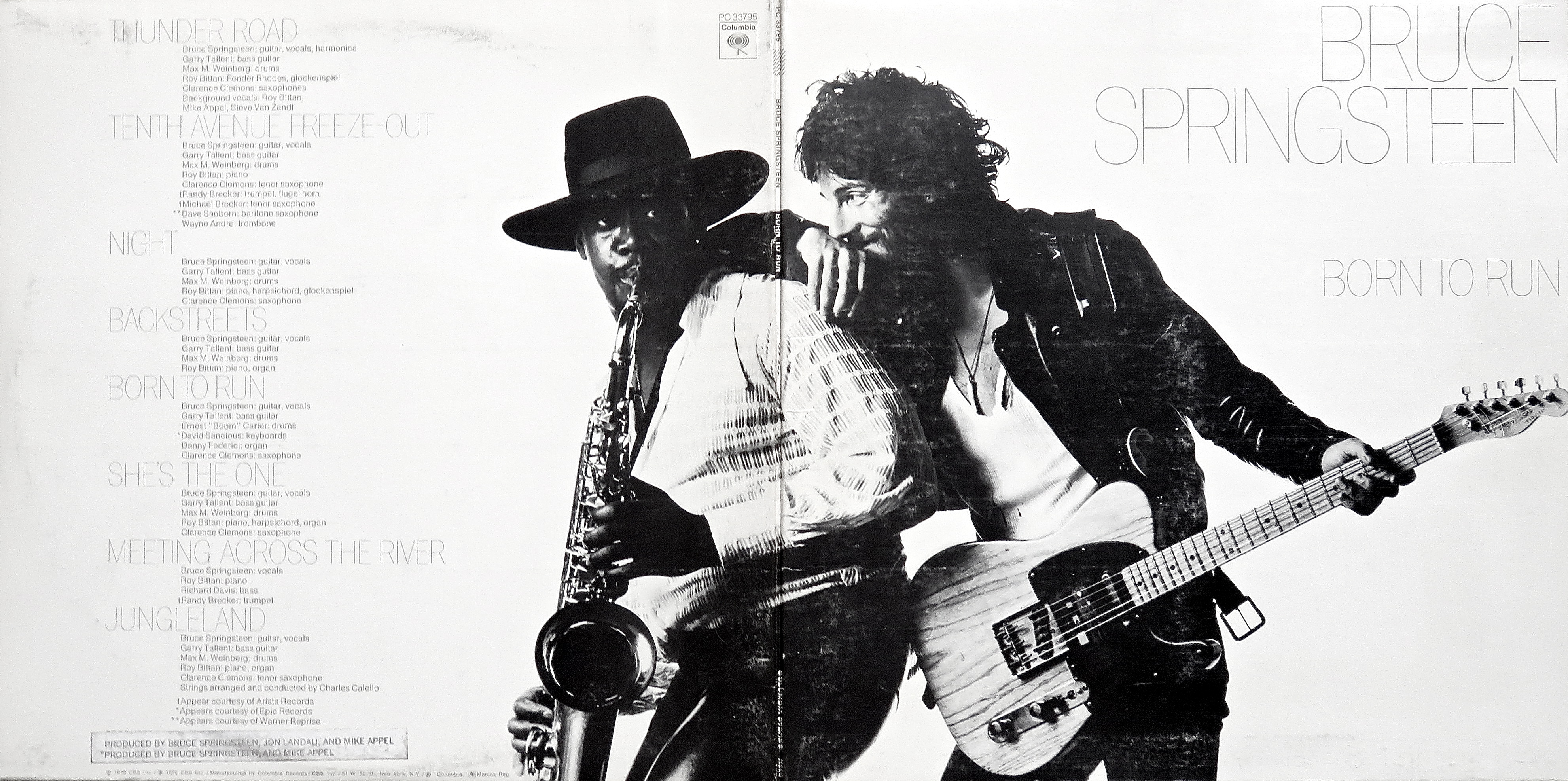
“Hard Times Come Again No More” is today revered as one of Stephen Foster’s greatest songs and has been recorded and performed by a long list of contemporary musicians. Among those on that list are Kate & Anna McGarrigle, Emmylou Harris, Nanci Griffith, Bob Dylan, Johnny Cash, Bruce Springsteen, Mavis Staples, Iron & Wine, Kristin Chenoweth and Mary J. Blige.

One of my favorite renditions of “Hard Times Come Again No More” is from the 2000 album Appalachian Journey. This is the second album by the string trio of fiddler Mark O’Connor, cellist Yo-Yo Ma and bassist Edgar Meyer. The trio is joined on this track by singer/guitarist James Taylor.


Stephen Collins Foster passed away, impoverished and destitute, in New York City’s Bellevue Hospital on January 13, 1864.

The sources for the information used in this post were: Doo-Dah! Stephen Foster and the Rise of American Popular Culture (1997) by Ken Emerson; Stephen Foster & Co.: Lyrics of America’s First Great Popular Songs (2010), edited by Ken Emerson; and the Wikipedia page for “Hard Times Come Again No More.”

P.S.: This is sixstr stories’ 300th post.

Posted in Random Topics | Tagged , , , , | Leave a comment

“Father’s Day”

Eight different musicians/groups have each written and recorded a song called “Father’s Day.”

Rap artist Father M.C. did in 1990 and Hip Hop duo Method Man & Redman did in 1999.

Americana duo Barry & Michelle Patterson did in 2001 and Englishman Frank Turner did in 2007. (Frank Turner is great!)

Portland, Oregon’s Michael Dean Damron did in 2009 and the Waukesha, Wisconsin Rock band, BoDeans did in 2011.

New York rapper Chino XL did in 2012 and the Boston-based Metalcore band ICE NINE KILLS did in 2013.

(That’s some playlist.)

Two entire albums are titled Father’s Day: one by The Starlite Singers, a group of Canadian studio musicians, and one by Michael Dean Damron. Both were released in 2009.

By the way: July 17, 2015 is the release date for the new album by Blues electric guitarist Ronnie Earl and his band The Broadcasters. The album will be titled Father’s Day. (Ronnie Earl is an outstanding guitarist!)

There is an instrumental piece for piano and orchestra called “Father’s Day” composed by Murray Gold. It is part of the 2007 Original TV Soundtrack for the BBC science-fiction series Doctor Who.

There are two books titled “Father’s Day.” Bill McCoy published his in 1995 and Buzz Bissinger’s came out in 2012.

At least twelve television series have had episodes titled “Father’s Day.” Among them are The Fosters, Shameless, Children’s Hospital, The Mary Tyler Moore Show and Tyler Perry’s House of Payne.

Robin Williams and Billy Crystal co-starred in a 1997 movie called “Fathers’ Day” (the position of the apostrophe is correct) and Father’s Day is the title of a 2012 package of the early films by the Japanese director Sion Sono.

But, to the best of my knowledge, “Father’s Day” has never been the title of a solo fingerstyle acoustic guitar instrumental piece… until now.

Here it is!

“Father’s Day” – Composed & Performed by Eric Sinclair

(To listen, click on the blue link and wait for it…)

On this day, as I celebrate my 34th Father’s Day, I dedicate this post and extend my best wishes to all the fathers among the followers, readers and viewers of sixstr stories. 

Posted in EFS Music, Posts with Audio, Random Topics | Tagged , , , | 1 Comment

Wrestling With The Angel, Chapter 10

If you’re a new visitor to this blog, the purpose of my Wrestling With The Angel series (or category) is to highlight and share individual songs that are on a list of mine entitled: Devastatingly Great Songs. The title phrase, “Wrestling With The Angel,” is my paraphrase of a line from a poem by Herman Melville called “Art.” You can read the complete poem in my archived post of November 4, 2011: “The Source.”

1967, 1968 and 1969 were banner years for folksinger and guitarist Sandy Denny.

Sandy – born Alexandra Elene MacLean Denny on January 6, 1947 in Merton Park, London, England – started 1967 as a student at London’s Kingston College of Art (where musicians John Renbourn, Eric Clapton and Jimmy Page were among her classmates). She was also a frequent and increasingly popular performer on the London area’s extensive circuit of Folk music clubs.

Sandy made her first professional recordings in early 1967 for Saga Records. Those sessions resulted in the release of two albums: Alex Campbell & Friends in March and Sandy and Johnny in April. (Alex Campbell was a Scottish folksinger/guitarist and Johnny Silvo was a British Folk and Blues singer/guitarist.) Among Sandy’s contributions to those albums were her renditions of “Pretty Polly” and “The False Bride” (both traditional Folk songs) and “The Last Thing On My Mind” by the contemporary American songwriter Tom Paxton.

In mid 1967, Sandy was performing one evening at The Troubadour folk club in London. Dave Cousins, leader of The Strawbs, a British Folk/Rock group, was in the audience. Years later, Cousins wrote about that evening: “She was sitting on a stool playing an old Gibson guitar, about eighteen, wearing a white dress, a white straw hat, with long blond hair and singing like an angel. I don’t know what came over me but I went up to her immediately afterwards, introduced myself and invited her to join The Strawbs.”

Sandy left art school behind and, in July 1967, travelled with The Strawbs to Copenhagen, Denmark to record their first album. Among the 13 songs the band recorded for that album was a Sandy Denny original. That song, only the second song Sandy had written, was called “Who Knows Where The Time Goes?”

That album, All Our Own Work, was unfortunately not released until 1973.

In early 1968, however, a tape of “Who Knows Where The Time Goes?” from the All Our Own Work sessions ended up in the hands of David Anderle, a producer for the Amercian record company, Elektra Records.

In June of 1968, David was producing an album for Judy Collins at Elektra’s studios in Los Angeles, California. He played the tape of Sandy Denny singing “Who Knows Where The Time Goes?” for Judy on a little tape player in his office. In her 2011 autobiography, Suite Judy Blue Eyes: My Life In Music, Judy remembered that time: “I was ready to catch the gems when they fell into my lap.”

“Who Knows Where The Time Goes?” became the title song of Judy Collins’ eighth album, taking its place among songs by Ian Tyson, Leonard Cohen and Bob Dylan. Released in November, 1968, the LP “Who Knows Where The Time Goes” sold over 500,000 copies in the United States and in 1969 was certified as a Gold Album.

Meanwhile in England in June of 1968, Sandy Denny had left The Strawbs and, wanting to “do something more with my voice,” took an audition with the Folk/Rock band Fairport Convention. Fairport Convention had just released their first album and were looking for a vocalist to replace Judy Dyble, their original lead singer, who’d left the band.

Simon Nicol – singer, guitarist and founding member of Fairport Convention – has often recounted that among the many who auditioned, Sandy Denny stood out “like a clean glass in a sink full of dirty dishes.”

Sandy Denny immediately joined Fairport Convention in a London recording studio to begin the five months of work it would take to produce the band’s second album. Released in January 1969, What We Did On Our Holidays featured a new Sandy Denny original, “Fotheringay,” as the first track on the LP.

That same month, Fairport Convention began work on their next album, Unhalfbricking. That album, released in July 1969, contained two songs by Sandy Denny: “Autopsy” and the now internationally-well-known, “Who Knows Where The Time Goes?”

Here is that recording.

Listen, listen.


The musicians on that recording are: Sandy Denny, vocals; Richard Thompson, electric guitar; Simon Nicol, acoustic guitar; Ashley Hutchings, bass guitar; and Martin Lamble, drums. The couple standing by the gate in the picture on the album cover are Sandy Denny’s parents.

In 2007, that recording of “Who Knows Where The Time Goes?” was selected by the listeners of BBC Radio 2 as their “Favorite Folk Track Of All Time.”

“Who Knows Where The Time Goes?” – the Fairport Convention version – has been on my list of Devastatingly Great Songs right from the start. Over the past week though, as I put the finishing touches to my 40th year in the business of being a music teacher, I’ve been thinking about, listening to and singing “Who Knows Where The Time Goes?” quite a bit.

“Across the evening sky, all the birds are leaving…”

P.S.: Sandy Denny has been described as “the pre-eminent British Folk Rock singer.” She was voted the “Best British Female Singer” in 1970 and 1971 by the readers of Melody Maker magazine. In 1971 she became the only guest vocalist on a Led Zeppelin studio album when she sang with Robert Plant on the song “The Battle of Evermore.” Between 1971 and 1977 she recorded four solo albums, each containing mostly her own songs.

IMG_0190

On April 21, 1978, Sandy Denny passed away from injuries sustained as the result of a fall down a flight of stairs at a friend’s apartment in London.

In 2010, Universal/Island Records released Sandy Denny, a limited edition, complete retrospective box set of her work containing 19-CDs and a 72-page hard cover book.

Posted in Posts with Video, Wrestling With The Angel | Tagged , , , , , , | Leave a comment

This Historic Day: Francis Matthew Sinclair

One hundred years ago today, on May 27, 1915, my father was born.

Francis Matthew was the sixth of nine children born to Joseph French Sinclair (Nov. 7, 1877 – Jan. 30, 1961) and Mary A. Winkler (March 25, 1887 – Jan. 30, 1970) of Exeter, New Hampshire. Three of the nine children did not live past the age of two.

Francis’ father was born in Exeter as well. Joseph was an eighth-generation descendant of John Sinkler, a Scottish immigrant “seeking liberty, fortune, and a home” who “appeared” in Exeter in 1658. (The settlement of Exeter had been founded twenty years earlier by Rev. John Wheelwright “in the wilderness about the Falls of Squamscott in New Hampshire.”) Francis’ mother had emigrated from Poland with her family when she was around five years old.

When the time came, Francis, like his older brother John before him, received his secondary education at the boys-only Exeter High School. (The girls in town, including Francis’ sisters: Helen, Dorothea, Gertrude and Patricia, spent their high school years at Exeter’s Robinson Female Seminary.) Francis graduated with the other 24 members of his class in an afternoon ceremony at the Exeter Town Hall on Thursday, June 15, 1933. His diploma states that Francis Matthew Sinclair “honorably completed the Mechanic Arts course of study.”

Sinclair

Whatever Francis was planning to do after graduation – possibly attending The Wentworth Institute of Technology in Boston, MA? – those plans were set aside during the winter of his senior year. That was when his girlfriend, Marjorie, announced to him that she was pregnant.

On April 30, 1933, 17 year old Francis M. Sinclair and 16 year old Marjorie Ann Graves were married by the Rev. Harold W. Curtis at the Middle Street Baptist Church in Portsmouth, NH. The newlyweds moved in with Marjorie’s family in Hampton Falls, NH. Francis went to work at The Wellswood Tavern, an establishment in Hampton Falls owned and operated by Marjorie’s mother Bertha.

On September 21, 1933, Marjorie gave birth to a daughter, Barbara Ann Sinclair, at a hospital in Newburyport, MA. Birth records for Barbara Ann list her mother’s occupation  as “housewife.” Francis’ occupation is listed as “clerk.”

Whatever initially brought Francis and Marjorie together did not last. By the end of February, 1934, they were separated. Francis moved back home to Exeter, getting a job stocking shelves at the First National grocery store downtown. Marjorie remained in Hampton Falls, raising Barbara with her family’s help. In October of 1937, Marjorie filed for divorce and full custody of Barbara Ann.

Marjorie eventually remarried. Marjorie and her new husband, George M. Eames, moved to Albany, NY, sometime between 1941 and 1943. Most likely, George adopted Barbara Ann.

Unfortunately I didn’t know that I had a half-sister until 1998. (Thank you, Aunt Gertrude!) I was only able to piece together the info above from researching public records at that time. All my attempts to find Barbara were unsuccessful. I wish I had known about her when I was younger. Maybe we could have gotten to know each other. I have never been able to get a good explanation from anyone as to why I had not been told about Barbara.

Sometime in 1938, Francis met Avis Louise Foss through a mutual friend, Anne Miles Kucharski. Avis was a registered nurse, working at Exeter Hospital. She’d grown up in Center Strafford, NH, the first born of George and Stella (Libby) Foss’ six children. Francis at that time was a truck driver, delivering Squamscot Beverages for the Conner Bottling Works in Newfields, NH. He also worked evenings as an usher at Exeter’s Ioka Theater. During their courtship, Francis would occasionally sneak Avis into the theater to see a movie for free.

Francis and Avis were married on Tuesday, May 27, 1941 at 2:30 pm in the Parish House of St. Michael’s Catholic Church in Exeter. The Rev. Daniel J. Cotter officiated. The happy couple made their home at 14 Green Street, the left-hand-side apartment in a two-story duplex not far from downtown Exeter.

Over the next decade, Francis held several different jobs while Avis continued to work at the hospital. From 1942 – 1943, for instance, Francis was a machinist at the  Portsmouth Naval Shipyard in Kittery, ME. From 1945 – 1947, he was a mechanic at Don Chase’s Amoco Gas & Service Station on Main Street in Exeter.

During these years, Francis also had his first taste of the two jobs that came to mean the most to him and that he would continue to do for the rest of his working life.

In 1942, Francis received his first, small annual paycheck as a “call fireman” for the Exeter Fire Department. He quickly rose to the rank of Captain with Engine Company #1, a position he held until he retired from the Fire Department in 1980. (Francis also held the position of Sargent-At-Arms with the NH State Fireman’s Association from Sept. 1960 – June 1998.)

In 1947, Francis started doing “nursery work” at Charles H. Williams Nurseries – “The Home of Wild Flowers” – out on Newmarket Road, in Exeter. This part-time job for Mr. Williams turned full-time in 1948.

During these years as well, Francis and Avis were trying to start a family. Finally though, they joyfully welcomed their first and ultimately only child – me – into the world in August of 1953.

Image 1

Not long after I was born, my father took a full-time, year-round job at the new Simplex Wire & Cable facility in Newington, NH, loading ships with mile after mile of transatlantic telephone cable. He picked up some additional work, when he could, back at Don Chase’s Amoco Station. After a few more years at 14 Green Street, Dad, Mom and I moved down and across the street to #19, a small but single-family house.

In 1961, my father and mother were presented with a unique opportunity.

Charles H. Williams was ready to retire and he approached Dad about taking over his well-regarded-but-declining nursery and wildflower business. Dad greatly enjoyed the work he had done over the years for Mr. Williams and was more than ready to go to work for himself. So, on September 27, 1961, the paper was signed and Charles H. Williams Nurseries officially became Francis M. Sinclair Wildflowers.

On June 11, 1962, my father and mother took ownership of the land and buildings located on the outskirts of Exeter where Mr. Williams had lived and operated his business for many years. Come August, we said “goodbye” to Green Street and moved to the place that would eventually come to be known as “Newfields Road.”

Year after year, Dad did everything he could to build up the business and keep his ever-growing list of customers happy. He’d never enjoyed any other job he’d ever had as much as he enjoyed being – as his friends gleefully called him – a “bush crook.” As the business thrived and our family prospered, my father was free to use the down time of the “off seasons” as he wished. During the summers, he would immerse himself in planting and maintaining a large vegetable garden. During the winters, he would go ice fishing in his hand-made smelt shack.

When I got to be old enough, Dad started to take me with him; to the garden, to the river, to the fire station and to work.

On many a warm summer evening, I crouched beside him, pulling weeds and picking whatever vegetable was ready to be picked in that large garden that he planted on a piece of land owned by his Uncle Matt Winkler – Mary’s youngest brother – just off Route 108 in Newfields.

On many cold winter afternoons, I sat next to him in that two-person, kerosene stove-heated smelt shack out on the ice in the middle of the Newmarket River, lines baited and down the hole, waiting for the fish to bite.

Countless times, I tagged along when he would stop by the Exeter Fire Station to either take care of some bit of fireman business or just to go in and give his firefighter buddies a “hard time.”

And every summer, from the one before my freshman year of high school to the one after I graduated from college, I went to work for him – for Francis M. Sinclair Wildflowers – full-time, 40 hours a week.

I can’t begin to calculate the number of miles we put on the odometers of his (always) dark green Chevrolet pick-up trucks traveling the highways, byways and very back roads of New Hampshire, Maine and Vermont in search of some tree, shrub, fern, wildflower or plant (“There’s no such thing as a weed.”). That last summer, in 1975, Dad gave my girlfriend Andrea a job, too. Never had the cab of that truck been filled with so much laughter or bug spray as it was during those three months.

The time that Dad and I spent together wasn’t always about working or gardening or fishing. Dad taught me how to play cribbage and whenever we played, we played on an engraved, oak and steel cribbage board that he’d made back in high school.

During baseball season, we both enjoyed catching a Sunday afternoon Boston Red Sox game on TV. Dad even knew a guy who could get us tickets to see a game at Fenway Park any time we wanted to go. I clearly remember he and I watching a Red Sox – Yankees game from seats located only a few rows back from the field; right behind the visiting teams batting circle.

In 1978, Andrea and I got married. We invited Dad to share a few thoughts during a special part of the ceremony that Andrea and I created to give recognition to a few special friends and members of the family. Here are the words Dad stood and spoke that day:

“This is the day Mother and I have wanted for you – we have tried to be patient and understanding. Some people tell us we’re losing a son – No – we think we are gaining a daughter. Our hearts are full of love as we bless you on your way to a bright new beginning. And if we shed a tear you will know it is of gratitude for all the yesterdays we’ve shared, pride for the fulfillment of this day and joy for the promise and beauty of your love. Our best wishes are with you always.”

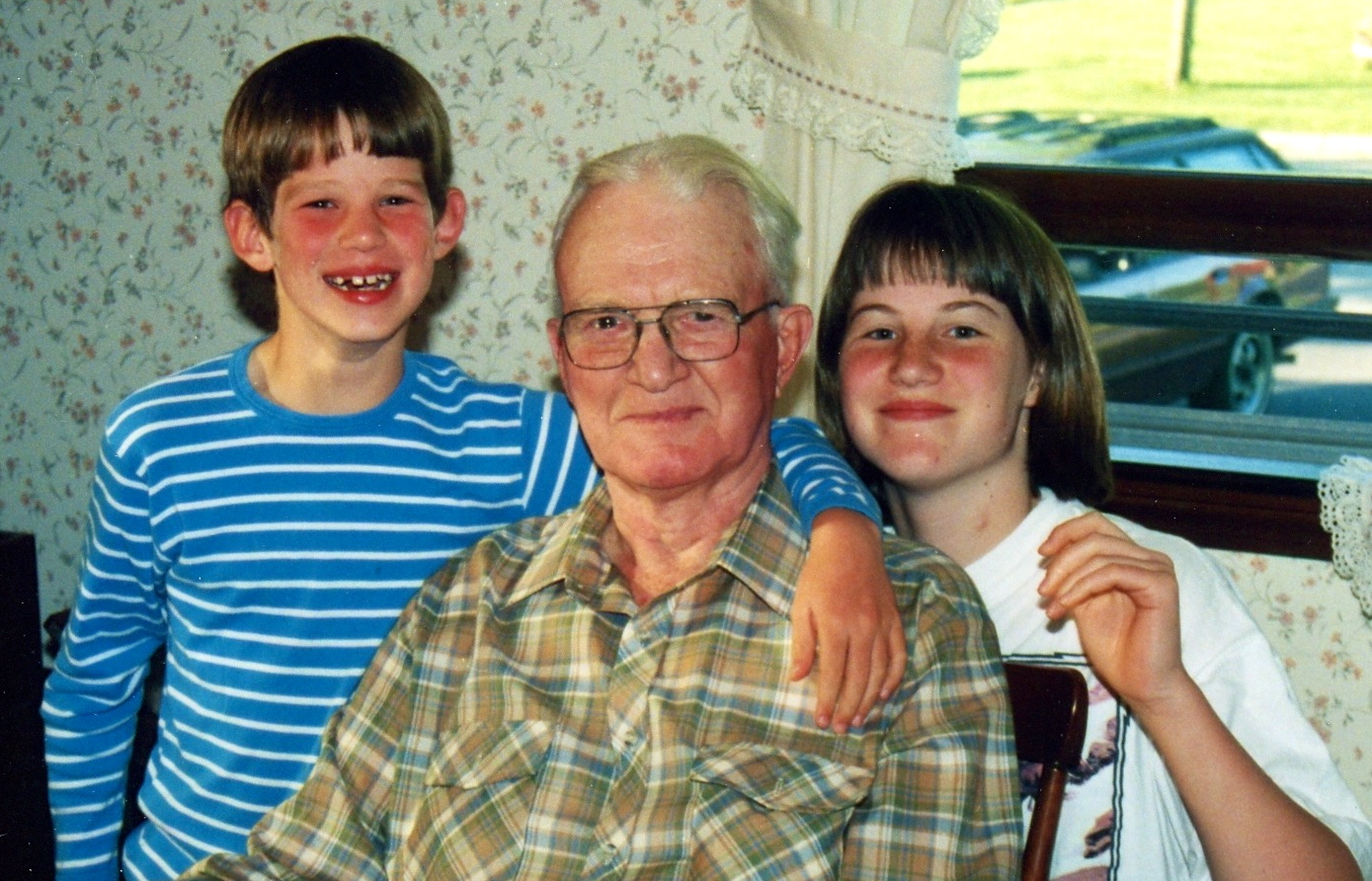
As happy as Dad was being a father-in-law – finally there was a good card player in the family! – he was absolutely thrilled when we told him he was going to be a grandfather. Dad became “Grampa” first in 1982 with the birth of our daughter and again in 1987 with the birth of our son.

Becoming a grandfather came at the perfect time in my father’s life. He’d retired from the fire department in 1980 and from his beloved wildflower business in 1981. He was also near the end of his last three-year term as an elected member of the board of trustees of Exeter’s Swasey Parkway. My father became an attentive, loving and exuberant grandfather. He was greatly enjoyed and deeply loved by his grandchildren.

Image

In the mid-1990’s, however, both Dad’s and Mom’s health started to fail. Dad had had both knees replaced a few years after our son was born and the unexpected aftereffects of such highly invasive surgery hit him hard. But watching my Mom’s more precipitous decline was devastating. It left my father frustrated, confused and completely broken hearted.

Francis Matthew Sinclair passed away on January 26, 2000.

As I’ve said before, the most valuable lesson that I learned from my father was the incalculable importance of making your living doing something that you love to do.

I would be remiss if I did not include a few of my father’s favorite sayings in this post. (These should be read aloud with a decidedly “New Hampsha” accent.)

“I wouldn’t walk across the street to hear him.”

“I’m not trying to tell you what to do, but…”

“You’re improving with age and pestilence.”

“Your kindness is exceeded only by your extreme beauty.”

Happy 100th Birthday, Dad! You’d have been a great centenarian.



Posted in Random Topics | Tagged , , , | 7 Comments

The Thrill Is Gone

B.B. King passed away yesterday, Thursday, May 14, 2015, in Las Vegas, Nevada.

He was born Riley B. King on September 16, 1925 in Berclair, Mississippi, near the small town of Itta Bena.

In 1950, while working as a DJ for radio station WDIA in Memphis, Tennessee, King was known as the “Beale Street Blues Boy.”  That title was shortened first to “Blues Boy,” and then became simply, “B.B.”

B.B. King made his first record, “Miss Martha King,” for Bullet Records in 1949. His first Number 1 hit on the Billboard magazine Rhythm & Blues chart was “3 O’Clock Blues,” released on RPM records in 1951.

B.B. King’s forty-second and last studio album was One Kind Favor. This extraordinary album came out on August 26, 2008 on Geffen Records.

B.B. King was, and forever will be, The King of The Blues.

No question.

Long live The King. Long live the Blues.

Posted in Posts with Video, Random Topics | Tagged , , | Leave a comment

This Historic Day In Music: The King Of The Delta Blues Singers

One of the first times I heard the words and music of Robert Johnson, I was listening to a Rolling Stones album.

It was December 1969. I was listening to Let It Bleed, the new album by the Stones. The second song on the first side was called “Love In Vain.” With its gorgeous acoustic guitar part, evocative lyrics and passionate Mick Jagger vocals, the recording was a real stunner. The songwriter was listed as “Woody Payne.”

Listen for yourself.


Robert Johnson wrote that song. He recorded it during his last recording session on June 20, 1937 in Dallas, Texas. It was released as “Love In Vain Blues” on the Vocalion label in 1939. In 1970, Columbia Records released the recording, retitled “Love In Vain,” as the last track on the album, King of the Delta Blues Singers, Vol.2.

Here’s that recording.


Robert Johnson was born on May 8, 1911, in Hazelhurst, Mississippi.

To list but three of his many accolades, Cub Koda, writing in The All Music Guide to the Blues said that Robert Johnson is “certainly the most celebrated figure in the history of the Blues.”  Author Peter Guralnick wrote: “Robert Johnson created music of the highest sophistication, music in which not a single note is misplaced, in which metaphor can become meaning without the need for explanation.” Keith Richards once proclaimed that Robert Johnson was “The Bach of the Blues.”

Robert Johnson recorded a grand total of 29 songs or “sides” over the course of five recording sessions. The first three were held on Nov.23, 26 & 27, 1936 in San Antonio, Texas and the last two sessions were held on June 19 & 20, 1937 in Dallas, Texas.

Robert Johnson’s records – 10-inch, 78-rpm discs with one song per side – sold mostly to an African-American audience in the rural South and Southwest. At the time, the total sales from the sides released from his first sessions numbered around 5000 discs.

In 1961, John Hammond and Frank Driggs of Columbia Records gathered 16 of Johnson’s sides together and released them on a 12-inch LP, entitled The King of the Delta Blues Singers. Volume 2 was released in 1970. Both albums are available on excellently remastered CDs and in a boxed set.

Robert Johnson died of mysterious circumstances on August 16, 1938.

Posted in Random Topics | Tagged , , , , , , , | Leave a comment

Quotations Marked 5

“A guitar sounds good even if you drop it on the floor. A beginner can find music in the guitar that has escaped the virtuoso. It’s a magical instrument, constrained by a short range and a peculiar tuning, that produces music beyond the limits of its own nature.”

Leo Kottke

From: Dangerous Curves: The Art of the Guitar by Darcy Kuronen.

This book was published in 2000 by MFA Publications and produced in conjunction with the now-legendary exhibition of the same name that ran from November 5, 2000 to February 25, 2001 at The Museum of Fine Arts in Boston, MA. “Dangerous Curves…” presented an array of over 130 guitars spanning four centuries of the instrument’s very colorful history. It was the first major art exhibit dedicated to the visual design and evolution of the guitar.

Leo Kottke (born September 11, 1945 in Athens, Georgia) is an acoustic guitarist, composer, singer, performer and recording artist.

If you’ve ever had the very good fortune to see Leo Kottke in concert, then you know that he is not only a truly dazzling fingerstyle acoustic guitarist but an entertaining and very funny storyteller as well. Leo’s unpredictable sense of humor also emerges when he’s being interviewed – thus the quote above – and, every now and then, in one of his songs.

“Jack Gets Up” is a song that Leo Kottke wrote and first released on his 1989 album, My Father’s Face. The recording below was made at The Fox Theater in Boulder, Colorado on Easter Sunday, April 16, 1995 and released later that year by On The Spot Records on the album, Live. (Highly recommended)

Posted in Posts with Video, Quotations Marked | Tagged , , , , | 1 Comment